
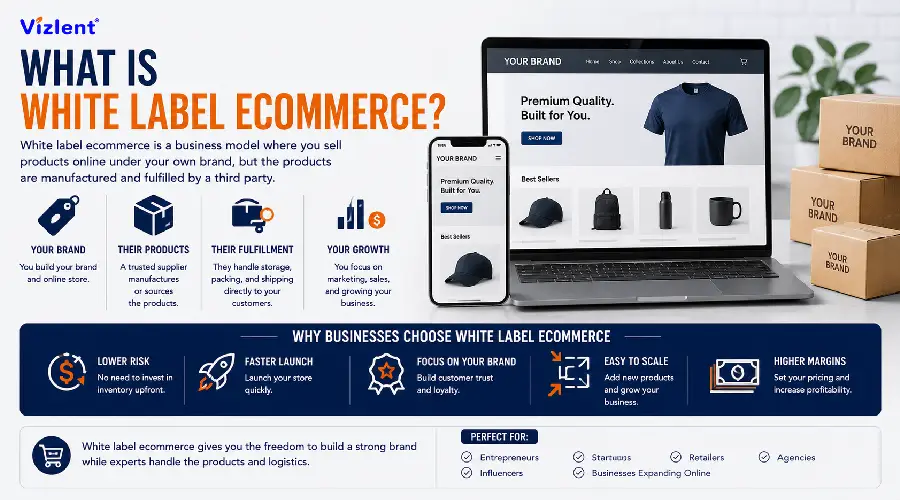
White label ecommerce is a business model in which one company manufactures or supplies a product and a second company sells that product under its own brand name, packaging, and storefront. The manufacturer never appears on the customer-facing listing, and the seller controls pricing, marketing, and the buyer relationship from start to finish. This structure is the simplest way to answer what is white label ecommerce for anyone comparing it against building a product from scratch.
What Is White Label Ecommerce? A Direct Definition
What is white label ecommerce, in practical terms, comes down to three things happening at once: a supplier produces a generic or lightly customizable product, a retailer applies its own branding to that product, and the retailer lists it for sale without disclosing the original manufacturer. The retailer never touches raw materials or production lines, which means the entire business can run from a laptop with a supplier relationship on one side and a storefront on the other. This is why so many new entrepreneurs research what is white label ecommerce before deciding if they should build a manufacturing operation or simply brand an existing one.
The appeal is speed: a founder can launch a fully branded store in weeks rather than the months or years needed to design, tool, and certify an original product. Ecommerce sellers commonly apply this model to supplements, cosmetics, apparel, electronics accessories, and home goods, where the underlying formulation or hardware is already proven. Understanding what is white label ecommerce is the first step for any founder deciding between this model and building a private label ecommerce business from the ground up.
White Label vs Private Label Ecommerce: Key Differences
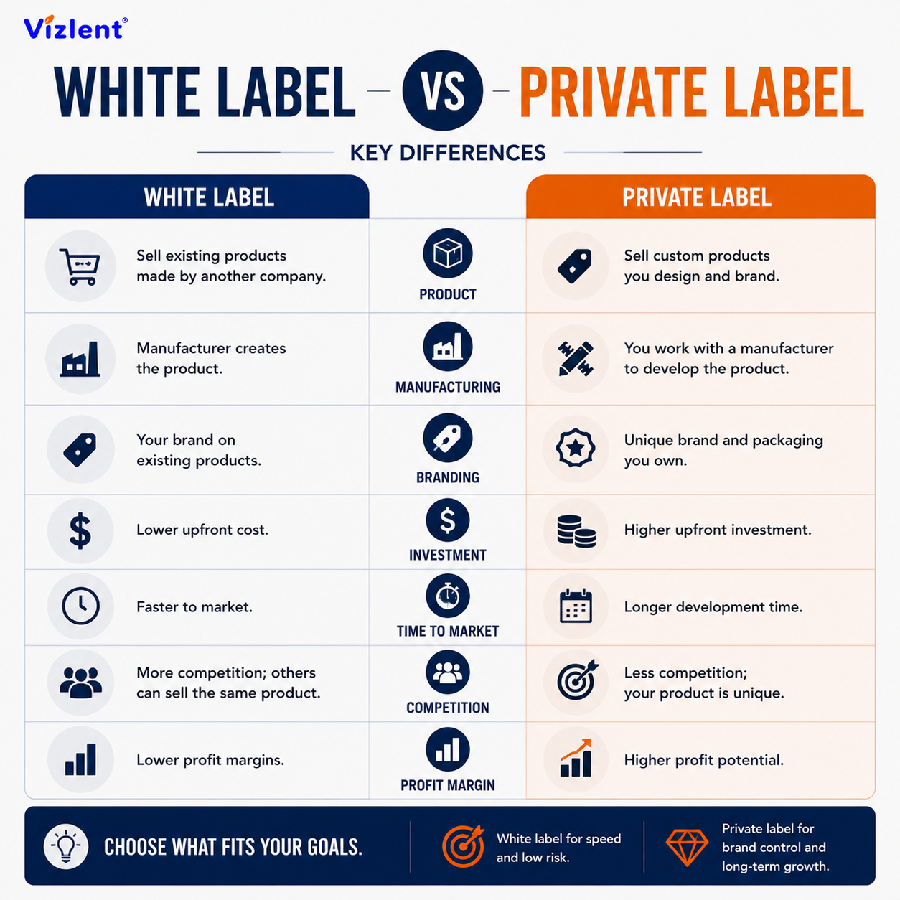
White label and private label ecommerce are frequently used as interchangeable terms, but the distinction matters once a brand starts negotiating with suppliers. In a true white label arrangement, the same base product is sold to multiple retailers, each applying its own label and packaging to an otherwise identical item. Private label for ecommerce typically involves a retailer contracting exclusive rights to a formulation or design, so no competitor can source the identical product under a different brand.
A private label ecommerce business usually requires a higher minimum order quantity and a longer supplier relationship, since the manufacturer is dedicating production capacity to one client. White label products, by comparison, are often available off a supplier’s existing catalog with minimal customization beyond a swapped label and box. Retailers weighing white labelling companies against private label manufacturers should consider how much brand exclusivity and product differentiation they actually need before signing a supply agreement.
Answering what is white label ecommerce fully also means recognizing that the two models can overlap within a single business, since a retailer might sell some products under a shared white label arrangement while negotiating exclusivity on a flagship item. This hybrid approach lets a growing brand test new categories cheaply through white label sourcing while investing private label resources only in the products that prove their sales potential. Many successful ecommerce brands start entirely white label and gradually shift their best sellers toward private label agreements as volume justifies the investment.
How a White Label Ecommerce Platform Works
A white label ecommerce platform is the technology layer that lets a business run its own branded storefront without building software from scratch. These platforms handle catalog management, checkout, payment processing, and often shipping integrations, while allowing the retailer to apply its own domain name, logo, and color scheme throughout the customer experience. Many white label ecommerce platform providers also offer built-in supplier directories, connecting sellers directly to product sources for dropshipping or bulk fulfillment.
Choosing a white label ecommerce platform typically comes down to catalog size, payment processor compatibility, and how much design flexibility the storefront builder allows. Some platforms specialize in a single vertical, such as beauty or supplements, bundling supplier connections with the storefront software itself. Sellers evaluating a white label ecommerce solution should request a demo store and test the checkout flow before committing to a long-term contract.
Comparing multiple white label ecommerce solutions side by side before committing is worth the extra week it takes, since migrating a live storefront to a different platform later is far more disruptive than testing thoroughly up front. Founders should specifically confirm that a candidate platform supports the payment methods and shipping carriers relevant to their target market, since gaps here are difficult to work around after launch. This upfront comparison is one of the most overlooked steps by first-time sellers researching what is white label ecommerce platform selection actually involves.
Building a White Label Ecommerce Store: Core Components
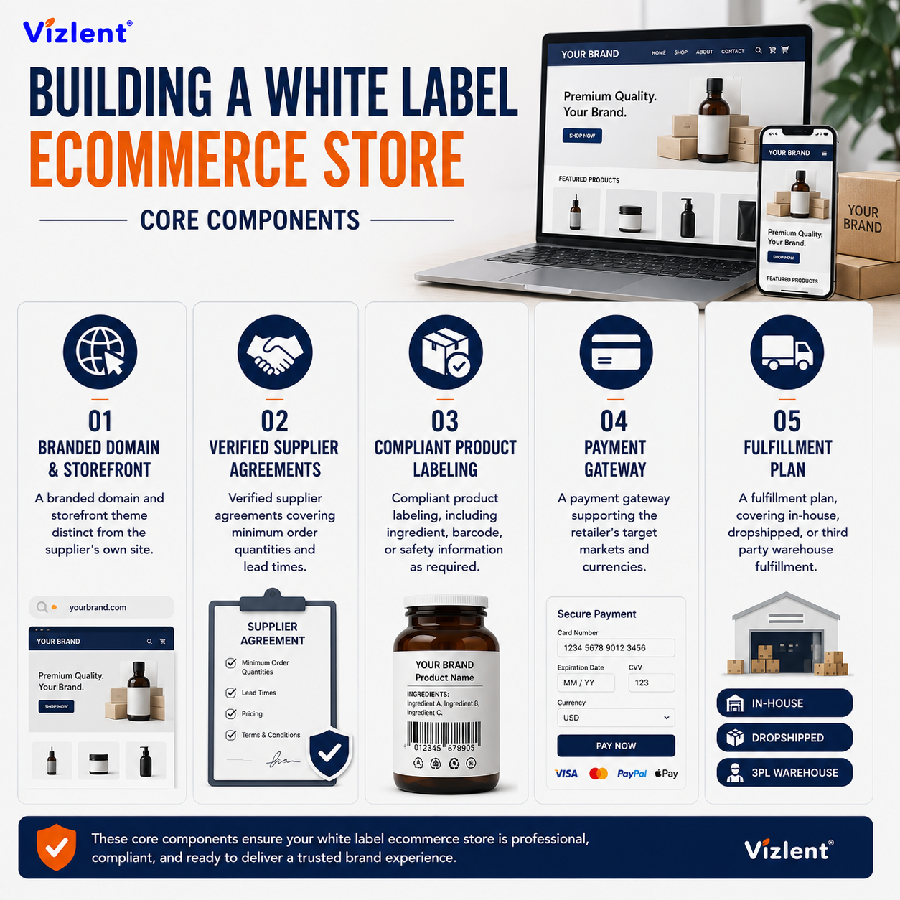
A white label ecommerce store needs more than a product and a logo to function as a credible retail brand. Domain registration, SSL security, a payment gateway, tax calculation, and a returns process all have to be configured correctly before the first sale goes through. Product photography, packaging design, and a compliant labeling strategy round out the pieces that separate a professional white label ecommerce storefront from a bare-bones reseller page.
Common components required to launch a functioning white label ecommerce store include:
- A branded domain and storefront theme distinct from the supplier’s own site
- Verified supplier agreements covering minimum order quantities and lead times
- Compliant product labeling, including ingredient, barcode, or safety information as required
- A payment gateway supporting the retailer’s target markets and currencies
- A fulfillment plan, covering in-house, dropshipped, or third party warehouse fulfillment
Skipping any one of these components tends to surface as a customer complaint later, from a mislabeled ingredient list to a checkout page that fails on mobile devices. Sellers who map out every component before launch avoid the scramble that comes from discovering a compliance gap after orders start arriving.
White Label Ecommerce Development: In-House vs Agency
White label ecommerce development refers to the technical work of building or customizing the storefront, integrations, and supplier connections that power the business. Some founders handle basic white label ecommerce development themselves using no-code storefront builders, particularly when the product catalog is small and the customization needs are minimal. Larger catalogs, custom checkout flows, or multi-currency requirements usually require dedicated white label ecommerce development services from a specialized team.
Working with white label ecommerce development services can shorten the timeline from months to weeks, since an experienced team already understands common integration pitfalls with payment processors and shipping carriers. In-house development gives a founder full control over the roadmap but requires either hiring developers or learning the platform deeply enough to make changes independently. Balancing speed, cost, and long-term flexibility is the central decision point when comparing in-house builds against outside development support.
Choosing a White Label Ecommerce Development Company
Selecting a white label ecommerce development company involves reviewing past client stores, checking references, and confirming the team has direct experience with the specific platform being used. A qualified white label ecommerce development company should be able to walk through prior projects showing storefront customization, supplier API integrations, and post-launch support commitments. Cost estimates should include not just the initial build but ongoing maintenance, security patching, and feature updates as the store scales.
Red flags when evaluating a development partner include vague project timelines, an unwillingness to share references, and pricing that seems disconnected from the scope of work described. A strong white label ecommerce development company will ask detailed questions about target markets, expected order volume, and compliance requirements before quoting a project. Taking time to vet a development partner properly reduces the risk of a costly platform migration later.
White Label Business Models Beyond Retail Storefronts
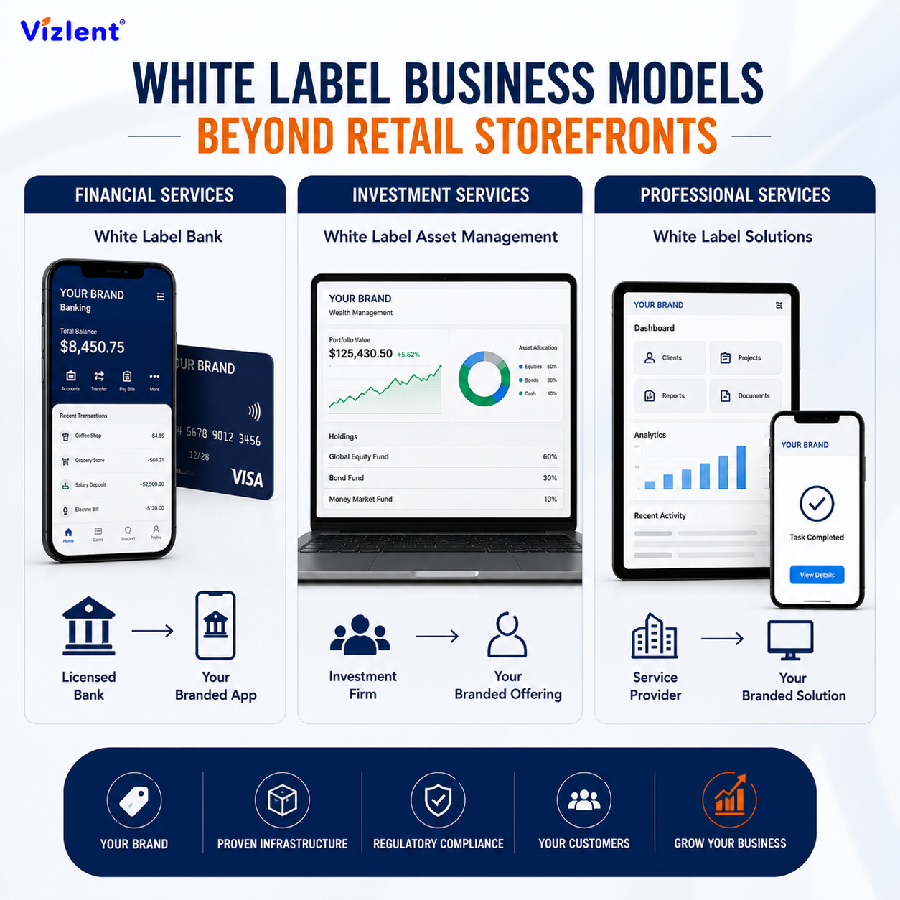
White label business arrangements extend well beyond consumer product stores into financial services, technology, and professional services. A white label bank, for example, is a licensed financial institution that provides the regulatory backing and infrastructure behind a branded banking app offered by a non-bank company. White label asset management works similarly, where an investment firm builds and manages portfolios that a financial advisor or fintech company offers to clients under its own branded name.
These arrangements illustrate that white label business opportunities are not limited to physical products; software, financial products, and professional services all use the same underlying structure of one company supplying the substance and another supplying the brand. Entrepreneurs researching white label business opportunities should evaluate the regulatory requirements carefully, since financial and healthcare white label arrangements carry compliance obligations that a simple consumer goods store does not face. Understanding these adjacent models helps clarify why what is white label ecommerce is really one branch of a much broader white labeling practice used across industries.
Risks and Compliance Considerations in White Label Ecommerce
Every white label ecommerce business depends on a supplier relationship, which means supplier due diligence is one of the most important steps a retailer can take before launch. Sourcing from an unverified or undisclosed supply chain increases the risk of receiving counterfeit, mislabeled, or non-compliant goods, which can expose a retailer to returns, chargebacks, and regulatory penalties. Retailers should request factory documentation, safety certifications, and traceable sourcing records before committing to a bulk order with any new supplier.
Legitimate white labeling companies operate transparently and provide documentation on request, which is a useful way to separate a credible manufacturing partner from a supplier connected to a white label black market or counterfeit goods network. A retailer that cannot verify where a product is actually manufactured, or that is offered pricing far below the market rate for a comparable item, should treat that as a warning sign rather than a bargain. Building compliance checks into the supplier vetting process protects both the retailer’s brand and the customers who ultimately purchase the finished product.
Steering clear of a white label black market supplier is not just a legal safeguard; it also protects the retailer from the reputational damage that follows a recalled or mislabeled product reaching customers. Due diligence should include checking business registration records, requesting third party lab or safety test reports, and confirming that the factory named on paperwork matches the one actually producing the goods. Retailers that build this verification step into every new supplier relationship rarely encounter the counterfeit or diverted goods problems that plague less careful sellers.
Why Product Labeling and Packaging Matter for White Label Brands
Once a white label ecommerce store has a verified supplier, the next major decision point is how the product itself will be labeled before it reaches a customer. Every white label product needs a compliant label covering ingredients, barcodes, safety warnings, or country of origin information depending on the product category and target market. A private label ecommerce business selling supplements, cosmetics, or food items faces stricter labeling requirements than one selling general merchandise, making label accuracy a direct compliance concern rather than a cosmetic detail.
Packaging and label quality also shape how a customer perceives a white label ecommerce store, since a smudged barcode or a label that peels off in transit undermines the branding investment a retailer has already made. Retailers sourcing high volumes of white label products need a label material that survives warehouse handling, last mile shipping, and the temperature swings common in logistics and ecommerce fulfillment environments. Choosing the right facestock and adhesive early prevents costly relabeling runs after a product has already reached a fulfillment center.
How VIZLENT Supports White Label and Private Label Ecommerce Brands
VIZLENT manufactures the self adhesive label stock and lamination film that white label and private label ecommerce brands rely on to get products to market correctly labeled and ready for distribution. Brands launching a white label ecommerce store can source barcode-ready label stock optimized for thermal printing, along with brand protection and security label materials for categories where counterfeiting or diversion is a concern. This combination lets a retailer control both the compliance and the authenticity side of the product at the same time.
For sellers building a private label ecommerce business around a proprietary formulation or design, tamper evident security constructions such as VOID stickers help protect against product substitution and unauthorized resale of empty packaging. VIZLENT works directly with brand owners and converters to match facestock, adhesive grade, and print method to the specific product category, covering bottles, cartons, and polybag shipments alike. Teams researching what is white label ecommerce for their own product line can request free sample rolls to test label performance before committing to a bulk production run.
Retailers comparing white label ecommerce solutions from different suppliers should ask each one the same set of questions: what facestock and adhesive options are available, what lead time applies to custom print runs, and what documentation supports compliance claims. A supplier unwilling to answer these questions clearly is not a reliable long-term partner regardless of the pricing offered. VIZLENT answers each of these questions directly during the sample and quoting process, so brand owners can make an informed decision before committing to a production order.
Conclusion: What Is White Label Ecommerce, and How to Move Forward
What is white label ecommerce ultimately comes down to a simple trade: a retailer gains speed to market by branding an existing product, while giving up some of the differentiation that comes from building something proprietary. Retailers who vet suppliers carefully, invest in compliant labeling, and choose the right ecommerce platform can build a durable brand on top of a white label product line. Those exploring a private label ecommerce business instead should weigh the higher upfront investment against the stronger brand exclusivity that model provides.
VIZLENT supports both paths by supplying the label stock, barcode materials, and brand protection constructions that white label and private label ecommerce brands need to get products to market compliant, authenticated, and ready for retail. Founders who treat labeling as a core part of the launch checklist, rather than an afterthought handled at the last minute, consistently avoid the compliance delays and customer complaints that slow down less prepared competitors. Contact our team to discuss label material options for your white label ecommerce store, or visit our blog for more guidance on product labeling and brand protection strategy.
Frequently Asked Questions
What is white label ecommerce?
White label ecommerce is a business model where a retailer sells a product manufactured by a third party under its own brand name and packaging. The manufacturer’s identity is not disclosed to the end customer, and the retailer controls the storefront, pricing, and marketing. This structure allows a business to launch a branded product line without owning any manufacturing infrastructure, which is the core reason so many first-time founders start by asking what is white label ecommerce before choosing a supplier.
What is white label goods and how does that differ from a custom product?
What is white label goods comes down to a product that a supplier manufactures generically and then brands to order for multiple retail clients, rather than designing something exclusive to a single buyer. A custom product, by contrast, is developed specifically for one company and typically cannot be purchased by a competitor under a different label. Most white label goods only change at the label, packaging, and sometimes color or scent level.
Is a white label ecommerce store the same as dropshipping?
Not exactly, though the two models often overlap. A white label ecommerce store focuses on branding an existing product line, while dropshipping refers to a fulfillment method where the supplier ships directly to the end customer without the retailer holding inventory. Many white label ecommerce businesses use dropshipping as their fulfillment method, but a retailer can also white label a product and hold their own inventory.
What should I look for in white labelling companies before signing a contract?
Look for verifiable factory documentation, clear minimum order quantities, transparent lead times, and a willingness to provide product samples before a bulk commitment. Reputable white labelling companies will also disclose relevant safety certifications and compliance documentation for the target market. Avoiding suppliers who resist providing this information reduces the risk of receiving non-compliant or counterfeit goods.
Do I need a white label ecommerce development company to launch a store?
Not always; many founders launch a basic white label ecommerce store using no-code platform tools without hiring a development company. Larger catalogs, multi-currency requirements, or custom integrations usually justify bringing in a white label ecommerce development company or dedicated development services. Starting simple and scaling development support as the business grows is a common approach among first-time sellers.
What kind of labeling does a white label product typically need?
Labeling requirements depend on the product category, but most white label products need a barcode for inventory tracking, an ingredient or materials list where applicable, and any required safety or country of origin markings. Cosmetics, supplements, and food items face stricter regulatory labeling requirements than general merchandise. Working with a label material supplier experienced in the relevant product category helps retailers meet these requirements consistently.
Can white label ecommerce work for financial or professional services, not just physical products?
Yes, white label business models extend to financial services through arrangements such as a white label bank or white label asset management program, and to professional services through licensed software or consulting frameworks. In each case, one company supplies the underlying product or license while another applies its own brand to the customer-facing offering. These arrangements typically carry additional regulatory requirements compared with consumer goods.






