
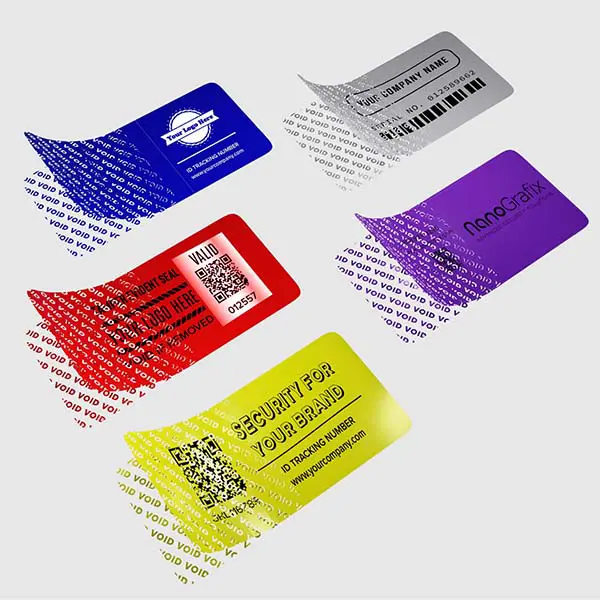
Key Characteristics of the VOID Sticker
The defining characteristic of an industrial VOID sticker is its instant tamper evidence upon removal. Unlike basic destructible vinyl that chips away in pieces, the VOID mechanism provides a clear, highly legible warning message. Furthermore, these labels are engineered with a scuff-resistant topcoat. This coating ensures that barcode tracking data, serial numbers, and company logos applied via thermal transfer, screen printing, or digital printing remain perfectly readable even after enduring severe mechanical abrasion in logistics operations.
Environmental survivability is another critical metric. A premium warranty void if removed sticker must perform consistently regardless of its operating climate. VIZLENT formulations boast an impressive -40°F to 250°F service temperature range. This extreme thermal tolerance, coupled with inherent UV and moisture resistance, ensures that the VOID sticker will not prematurely delaminate, curl, or falsely trigger its security message when exposed to freezing aerospace conditions or the high heat of consumer electronics manufacturing processes.
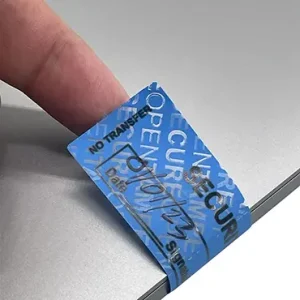
High-tack destructive packaging labels reveal a non-reversible void pattern if breached. Performs securely on corrugated cardboard and LDPE wrap. Designed for secure supply chain logistics.
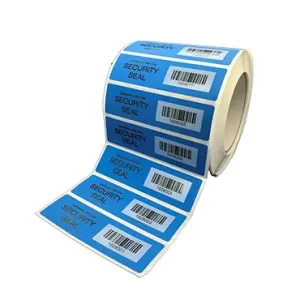
Multi-surface polyester security seals trigger a hidden void matrix upon peeling. Withstands harsh industrial cleaners. Essential for IT asset management and warranty validation on metal enclosures.
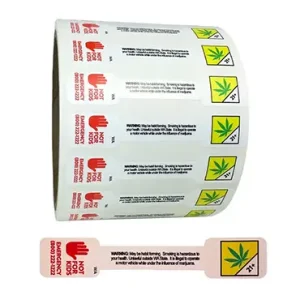
Anti Tamper Labels For Jars VIZLENT Anti-Tamper Labels for jars provide an essential safeguard for food, cosmetic, and pharmaceutical packaging. Engineered to bridge the gap between the jar body and lid, these high-performance security seals instantly fracture or reveal a “VOID” message upon any twisting or peeling attempt. Designed for global supply chains, these labels […]
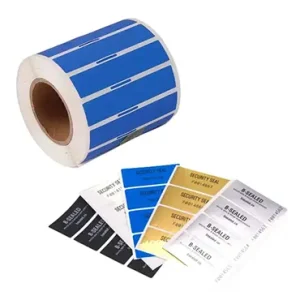
Thermal-transfer compatible tamper-evident stock. Matte topcoat absorbs resin inks for scratch-resistant barcode printing. Ideal for custom serialization and inventory control systems.

Warranty Void Sticker Protect your bottom line and eliminate warranty fraud with VIZLENT’s premium Warranty Void Stickers. Designed specifically for electronics manufacturers, authorized repair centers, and IT hardware refurbishers, these tamper-evident seals provide indisputable visual proof of unauthorized access. Fully compatible with high-resolution thermal transfer printing for serialized tracking and globally compliant with RoHS and […]
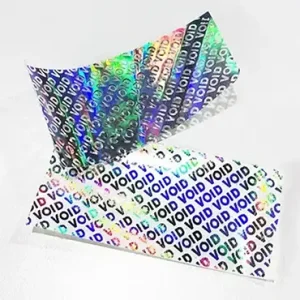
3D holographic tamper-evident seals feature custom micro-text and a hidden void layer. Resistant to solvents and UV exposure. Secures pharmaceuticals and luxury goods against counterfeiting.
Technical Specifications and Compliance
Specifying the correct VOID sticker requires a rigorous analysis of technical parameters and environmental tolerances. Deploying an uncalibrated security label can result in the adhesive failing to bond, or the hidden VOID message failing to activate during a security breach. Below is a detailed technical comparison of our core tamper evident label formats to assist procurement engineers.
| Specification Metric | Total Transfer VOID Sticker | Partial Transfer VOID Label | Non-Residue Security Seal |
|---|---|---|---|
| Face Stock Material | 2.0 mil Premium PET | 2.0 mil Premium PET | 2.0 mil Premium PET |
| Adhesive Residue | 100% Residue Left | Hidden Message Left | Zero Residue Left |
| Service Temperature | -40°F to 250°F | -40°F to 250°F | -20°F to 200°F |
| Substrate Compatibility | Corrugated, LSE Plastics | Metals, HSE Plastics, Glass | Aircraft Aluminum, IT Hardware |
| Primary Application | Cargo & Logistics Securing | Electronic Warranty Seals | IT Ports & Aircraft Doors |
Performance Standards and Material Durability
VIZLENT subjects every batch of VOID sticker materials to exhaustive laboratory testing to validate performance and longevity. We conduct strict peel strength testing (compliant with ASTM D3330 protocols) to ensure the acrylic adhesive achieves the exact shear strength required to activate the hidden release layer without peeling away cleanly. The 2.0 mil polyester (PET) face stock undergoes rigorous tensile strength evaluations to guarantee it will not simply snap or tear under tension, forcing the tamper evidence mechanism to deploy correctly.
Industry Certifications and Global Compliance
In high-security sectors, utilizing certified materials is a mandatory legal requirement to avoid compliance penalties and liability gaps. VIZLENT ensures that our VOID sticker portfolio supports full compliance with global safety identification and security mandates. When printed with appropriate thermal transfer ribbons, our formulations utilize UL Recognized components, certifying their durability and permanence for critical electronic rating plates and warranty seals in the North American market.
Types and Variations of the VOID Sticker
Total Transfer Residue VOID Stickers
The total transfer residue VOID sticker is engineered to leave the maximum amount of adhesive and visual evidence on the application surface. When this label is peeled back, the entire adhesive layer and the hidden security message detach completely from the PET face stock and remain firmly bonded to the substrate. The removed face stock becomes a clear film, while the bold “VOID” text is permanently emblazoned on the package.


Partial Transfer Security Labels
The partial transfer VOID sticker is the industry standard for general-purpose security and warranty enforcement. When removed, this label leaves a partial adhesive footprint on the application surface—typically the exact text of the “VOID” message—while the inverse pattern remains on the peeled label stock. This dual-evidence mechanism ensures that both the product and the removed label clearly display the security breach.
Non-Residue Security Labels
The non-residue security label represents the most advanced engineering in our VOID sticker portfolio. Designed specifically for highly sensitive environments, this label triggers the “VOID” message entirely within the label itself upon removal, leaving zero adhesive residue on the application surface. The substrate remains completely clean, eliminating the need for costly chemical cleanup or surface reconditioning.
How to Choose the Right VOID Sticker
Selecting the optimal VOID sticker demands a systematic analysis of your specific application surface, environmental stressors, and organizational security policies. Utilizing an incompatible tamper evident label will result in a failure to trigger the security message, effectively rendering the seal useless. Follow this structured selection guide to specify the correct consumable for your facility.
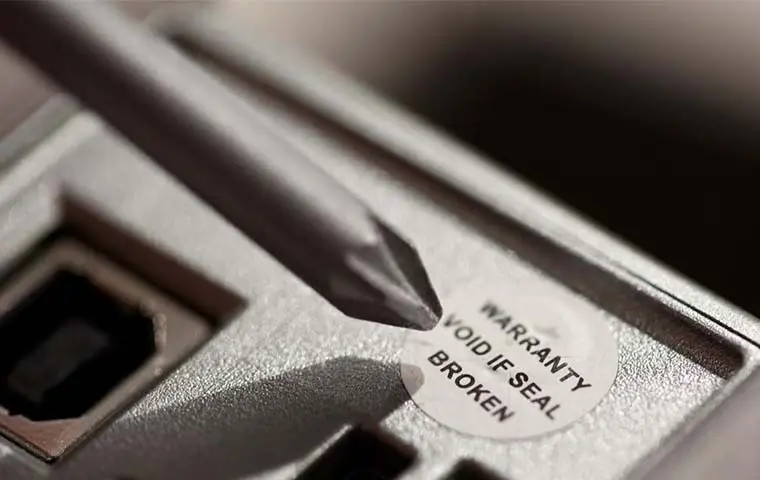
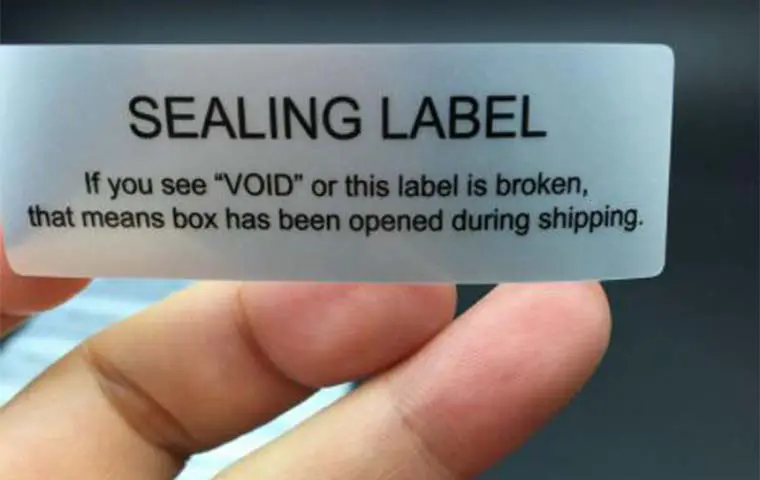
Analyze the Application Substrate: Determine the surface energy and porosity of the material you are sealing. If applying to rough, porous corrugated cardboard or low surface energy (LSE) plastics, a Total Transfer VOID sticker is required to ensure the adhesive bites into the material. For smooth glass, painted metal, or high surface energy (HSE) plastics, Partial Transfer provides optimal security.
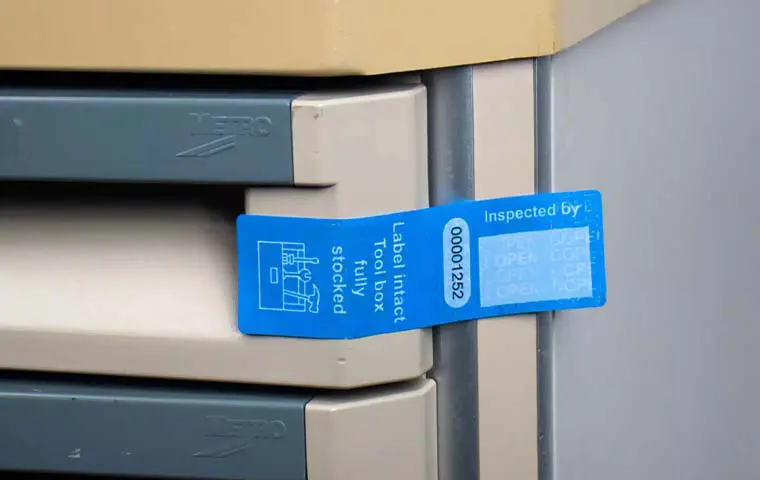
Determine Residue Tolerance: Evaluate whether adhesive residue is acceptable after the seal is broken. If you are sealing expensive reusable assets like aircraft doors, rented server racks, or hospital medicine carts, you must specify a Non-Residue security label to prevent costly cleanup. If the packaging is disposable, Total or Partial transfer provides higher visual deterrence.
Evaluate Environmental and Thermal Stressors: Identify the extremes the label will endure. If the asset tracking label will be subjected to outdoor logistics, ensure the VOID sticker features high UV and moisture resistance. Verify that the -40°F to 250°F service temperature rating aligns with your specific transit environments, such as unheated cargo planes or high-heat manufacturing lines.
Select Optimal Size Options: Choose the appropriate dimensions for your specific application. VIZLENT offers 0.5″ x 1.5″ standard seals for small electronics, 1″ x 3″ warranty labels for IT hardware, and 2″ x 4″ packaging seals for pallet and cargo securing. If utilizing automated applicators, specify continuous roll formats, or request custom die-cut shapes to fit specific hardware contours.

