

Why Beer and Beverage Labels Require Specialized Materials
The filling and packaging environment in a brewery, winery, or bottling facility is fundamentally hostile to standard pressure-sensitive label materials. Lines run continuously, containers arrive cold from pasteurization tunnels or refrigerated storage, and the application zone is perpetually humid from condensation and rinse water. A label that requires 30 seconds of dwell time to build adequate adhesion has no place in an operation where containers are labeled, cased, and palletized in under a minute.
Specialized cold-temperature adhesives—typically aggressive acrylic formulations with low glass transition temperatures—are required to wet out glass or plastic under these conditions.
Ice bucket and cooler exposure adds a second failure mode entirely distinct from cold application.The adhesive must maintain bond strength when fully hydrated, a requirement that eliminates virtually all standard paper-backed constructions and most general-purpose acrylics.
High-line-speed application introduces a mechanical dimension as well. Pressure-sensitive labels applied by high-speed rotary applicators experience significant shear forces at the moment of application, and the label web must track accurately through the applicator at speed without stretching or tearing.
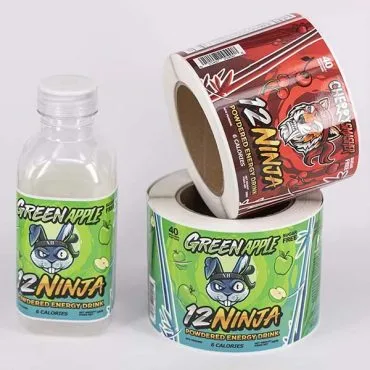
Digital Printing Labels for Food and Beverage Packing from Vizlent deliver sharp color, short-run flexibility, and food-safe materials for every brand size.
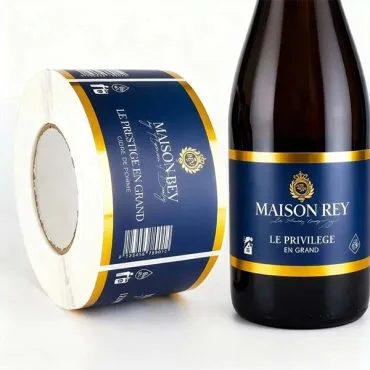
Custom Adhesive Wine Bottle Labels for Wedding from Vizlent: personalized designs, premium finishes, and reliable adhesion for memorable event branding.
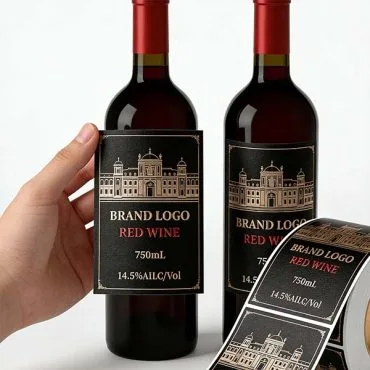
Customized Wine Bottle Labels from Vizlent feature waterproof materials, premium print finishes, and strong adhesive for wineries and private-label wine brands.
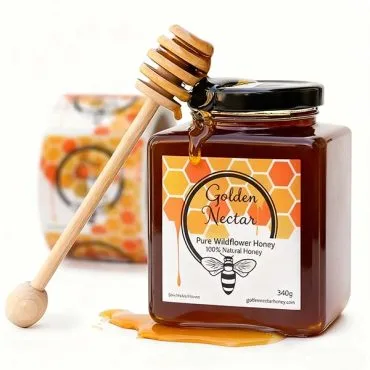
Customized Printed Personalised Glass Jar Labels by Vizlent: vibrant, moisture-resistant designs that adhere firmly to glass for food and cosmetic products.
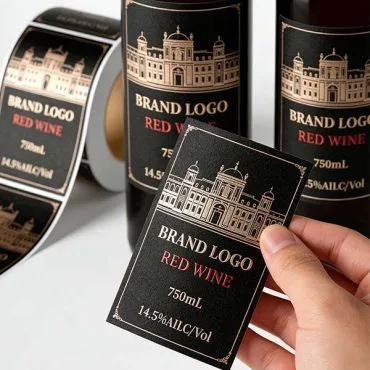
Customized Luxury Hot Stamping Foil Wine Labels from Vizlent deliver elegant metallic finishes, sharp detail, and strong adhesion for premium wine bottles.
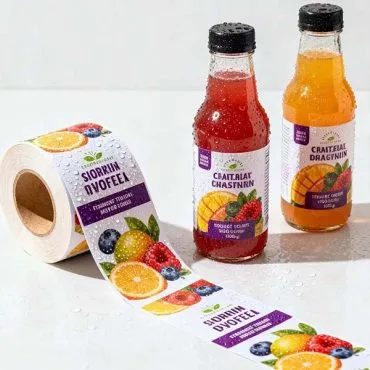
Custom Labels for Food & Beverage Industry by Vizlent: FDA-compliant, moisture-resistant, and fully customizable for bottles, cans, and packaging.
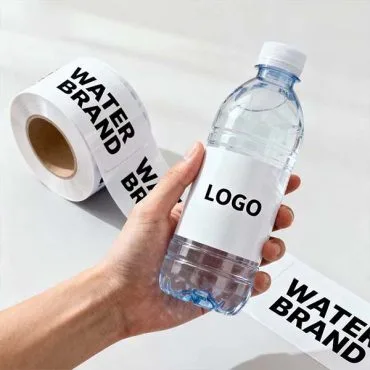
Vizlent Beverage Labels offer durable, waterproof adhesion and vibrant print clarity for bottles, cans, and cartons across food and drink industries.
Key Material Properties for Beer and Beverage Labels
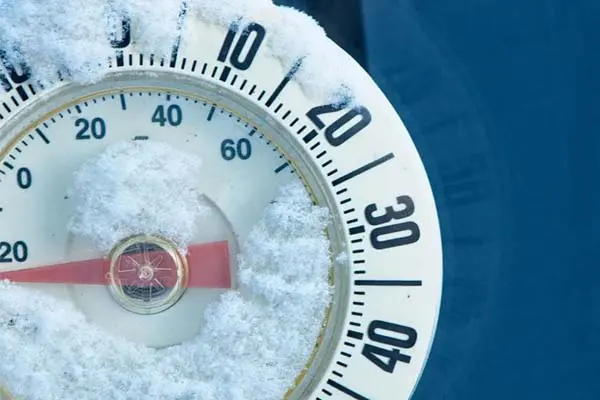
Cold-temperature adhesion is the most critical single property for beverage pressure-sensitive labels and the one most commonly underspecified. It describes the adhesive’s ability to achieve adequate initial tack and develop long-term peel strength when applied to a surface that is cold, wet with condensation, or both simultaneously.

Ice immersion resistance describes the label construction’s ability to maintain adhesion, dimensional integrity, and print legibility after extended submersion in ice water—the condition a label experiences in a retail ice chest or consumer ice bucket.
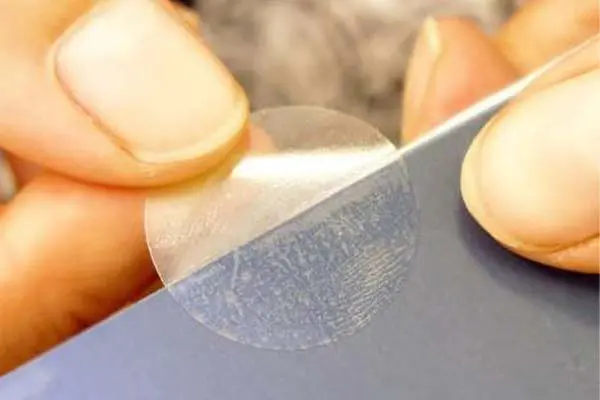
No-label-look (NLL) packaging—where a clear film label on a glass bottle creates the appearance of directly printed glass—has become a significant design direction in premium beer, spirits, water, and cold beverage categories.
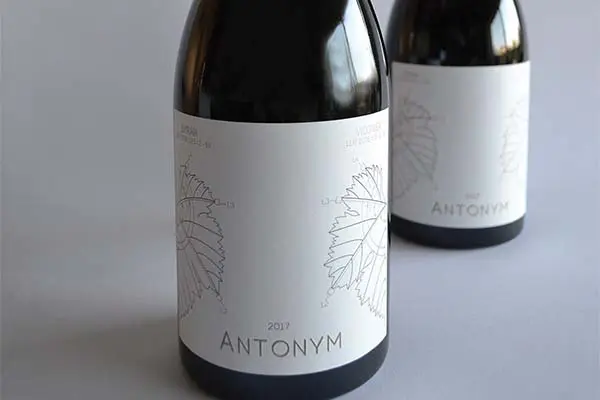
Beer and beverage containers present label application surfaces that are rarely perfectly flat: cylindrical glass bottles, tapered necks, contoured PET shapes, and aluminum cans with slight panel curvature all require a label that conforms without wrinkling, flagging at edges, or stress-cracking.
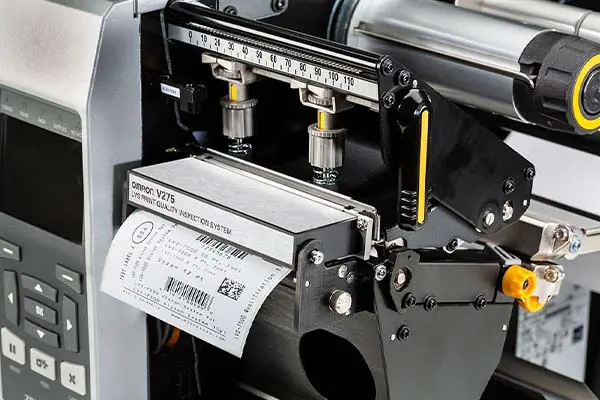
The regulatory and commercial function of a beverage label depends entirely on legibility—a beer label that leaves the TTB-required government warning statement unreadable after cooler exposure is a compliance problem, not just an aesthetic one.
Common Beer and Beverage Label Applications
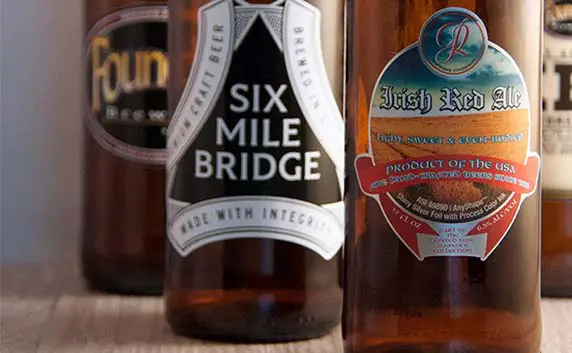
Body labels on glass beer bottles are the highest-visibility, highest-consequence label on the package—they carry brand graphics, regulatory content, and UPC barcodes, and they are the first thing a consumer evaluates at point of sale. For craft beer specifically, the bottle typically passes through refrigerated wholesale storage, retail coolers, and ice buckets, making wet-adhesion and ice-submersion performance non-negotiable.
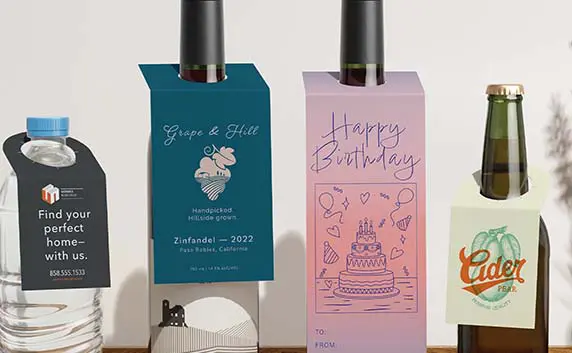
Neck labels on wine and spirits bottles apply to the most challenging geometry on the package: a steeply tapered conical or cylindrical surface, often with a relatively small application area and significant curvature. The label must conform fully without flagging at the lower edge, where the taper creates the most stress on the adhesive bond. A conformable, thin-caliper BOPP or PE film with an aggressive permanent adhesive is typically used, often with an overlapping cut at the label corners to reduce stress concentration.
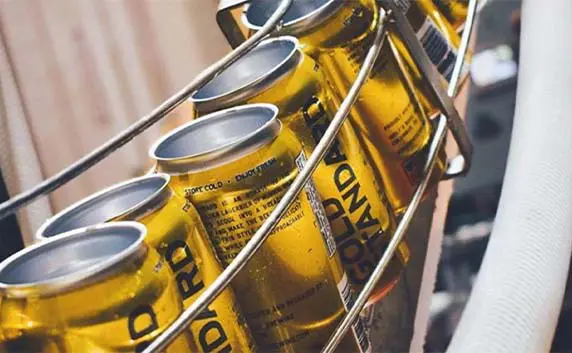
Film facestocks are mandatory for cans; paper cannot conform to the full-circumference wrap without tearing. For applications where the can label must be repositionable or removable (promotional overlabeling), a removable adhesive formulated for metal substrates is used, with the understanding that removability and ice-immersion resistance are in tension and the specific performance balance must be tested.
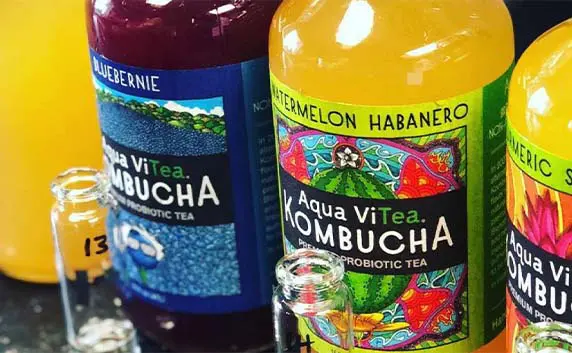
Corona treatment of PET bottles is common in some operations to raise surface energy and improve adhesive wetting, but treatment level decays over time—bottles labeled hours after treatment perform differently than bottles labeled the following day. A pressure-sensitive adhesive formulated for PET and validated on untreated PET (to establish a conservative baseline) is the appropriate specification.
How to Select the Right Beverage Label Material
Beverage label material selection requires balancing brand presentation requirements, line runnability, channel-specific durability, and regulatory content mandates. The following decision criteria provide a practical framework for narrowing material options.
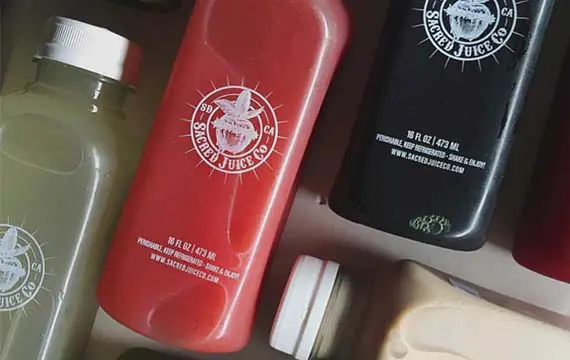

Define the cold-chain and moisture exposure the label will experience. Determine whether the product will be distributed through refrigerated channels, placed in retail ice coolers, or sold warm and consumed quickly.
Decide early between paper and film facestock based on brand and channel requirements. Paper facestocks provide the tactile warmth and traditional aesthetic preferred by craft beer and wine brands, and wet-strength paper constructions perform adequately in short-duration cooler exposure.
Match adhesive specification to the container substrate and application temperature. Glass, PET, HDPE, and aluminum each have different surface energies, and adhesive performance varies across these substrates.
Confirm print method compatibility before finalizing facestock selection. Flexo UV, digital UV, gravure, and screen printing each have specific facestock topcoat requirements for ink adhesion and cure.
Frequently Asked Questions
A BOPP or PE film facestock with a cold-temperature, ice-resistant acrylic adhesive is the standard construction for beer labels destined for ice-channel retail, as film facestocks are dimensionally stable in water immersion while wet-adhesion-formulated acrylics maintain bond strength when the label and substrate are fully saturated. Wet-strength paper constructions can be acceptable for brief cooler exposure but will typically show edge curl and print degradation after more than a few hours of ice submersion that film constructions handle without visible degradation.
The COLA (Certificate of Label Approval) from the TTB approves the label content and design as a whole—it is not specific to the label material or construction, so switching from one approved facestock to another of the same dimensions and appearance does not typically require a new COLA filing. However, any change to the approved label design, mandatory content, or physical dimensions—even if driven by a material change—may require a new or amended COLA, so material changes should be reviewed against the existing approved label artwork before implementation.
Not necessarily without adhesive validation on both substrates, because glass and PET have meaningfully different surface energies and the adhesive that achieves optimal peel strength on glass may underperform on PET, particularly if the PET bottles have variable corona treatment levels or mold release contamination. Testing peel adhesion on both container types at application temperature is the only reliable way to confirm whether a single adhesive construction meets performance requirements across both substrates.
UV-cured flexo and UV-cured digital inkjet printing produce the most moisture-resistant and abrasion-resistant graphics for beverage labels because the UV curing process cross-links the ink into a hard surface layer that resists water penetration and mechanical abrasion far better than water-based or solvent flexo inks. Adding a UV overprint varnish—either gloss or matte—further improves resistance and is standard practice on most production beverage labels regardless of the base print method.
California’s CRV program does not mandate a specific label material or construction, but containers must display the California Redemption Value statement and UPC barcode that remains scannable through the retail and return-sorting process. The practical implication for label material is that the barcode must maintain adequate contrast and print integrity through cooler handling, distribution, and the return journey—a film facestock with UV-cured printing typically provides better barcode durability in this use cycle than paper with water-based inks.

