
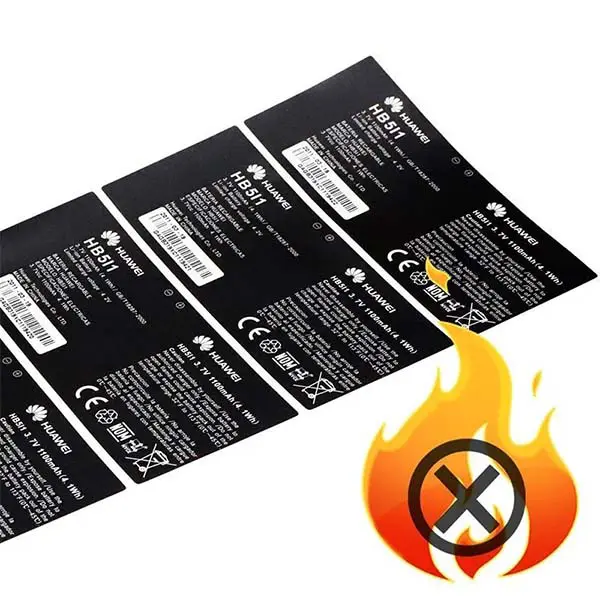
Key Characteristics of Fire-Resistant Labels
The defining characteristic of superior flame retardant labels is their unparalleled temperature resistance. High-grade variants routinely tolerate continuous operating temperatures up to 300°C, with short-term exposures far exceeding that threshold without curling, shrinking, or degrading. This exceptional durability allows the labels to pass through aggressive manufacturing processes, such as the wave soldering and reflow soldering stages inherent in modern PCB fabrication. The facestock maintains complete dimensional stability, ensuring that high-density 2D barcodes remain perfectly scannable after processing.
Another vital characteristic is robust chemical and solvent resistance. Flame retardant labels frequently encounter aggressive cleaning agents, flux removers, hydraulic fluids, and lubricating oils during their service life. The topcoat laminate applied to these labels is meticulously engineered to prevent fluid ingress, protecting both the substrate and the printed data.
Additionally, premium non-flammable identification products are manufactured to be completely halogen-free. This environmental consideration prevents the release of highly toxic, corrosive gases in the event that the material is subjected to extreme thermal decomposition, thereby protecting personnel and sensitive electronic circuitry.
Technical Specifications and Compliance
To ensure absolute reliability, procurement teams must thoroughly evaluate the technical specifications of flame retardant labels before integration into their manufacturing workflows. VIZLENT operates with complete transparency, providing comprehensive data sheets that detail the exact physical, thermal, and chemical properties of our substrates and adhesives. The following table highlights the comparative specifications of our primary fire-resistant materials.
| Specification Metric | Polyimide (Kapton) Flame Retardant Labels | PET (Polyester) Flame Retardant Labels |
|---|---|---|
| Maximum Operating Temperature | Up to 300°C (572°F) continuous | Up to 150°C (302°F) continuous |
| Flammability Rating | UL 94 VTM-0 / Self-Extinguishing | UL 94 VTM-0 / UL 94 V-0 |
| Adhesive Formulation | High-temp fire-resistant permanent acrylic | High-tack fire-resistant permanent acrylic |
| Primary Application | PCB identification, wave soldering, extreme heat | EV battery packs, power panels, wire harnesses |
| Chemical Resistance | Excellent (Resists flux, solvents, Skydrol) | High (Resists oils, mild solvents, electrolytes) |
| Available Size Options | 1″x1″, 2″x4″, 4″x6″, Custom Die-Cut | 1″x1″, 2″x4″, 4″x6″, Custom Roll Widths |
Performance Standards and Testing Methodologies
The designation of “flame retardant” is not arbitrarily assigned; it is earned through exhaustive laboratory testing. The most universally recognized standard for flame retardant labels is the Underwriters Laboratories (UL) 94 standard, specifically the VTM-0 classification for thin materials. During this rigorous test, a vertically oriented label sample is subjected to a calibrated open flame for a precise duration. To achieve the VTM-0 rating, the material must self-extinguish within 10 seconds of the flame’s removal, and it must not produce flaming drips that could ignite secondary materials below.
Industry Certifications and Regulatory Compliance
VIZLENT recognizes that our global partners operate under strict regulatory frameworks. Our complete line of flame retardant labels is heavily certified to meet international compliance standards. Beyond the critical UL 94 VTM-0 rating, our products conform to UL 969 standards for Marking and Labeling Systems, ensuring the complete construction (facestock, adhesive, and ink) functions cohesively as a permanent safety marker.
Types and Variations of Flame Retardant Labels
Because industrial applications present widely varying thermal, chemical, and physical challenges, no single material can fulfill every requirement. Consequently, VIZLENT engineers a comprehensive portfolio of flame retardant labels utilizing different facestocks and adhesive combinations. Selecting the precise type of non-flammable identification depends heavily on the maximum anticipated temperature, the required service life, and the specific regulatory standards dictating the manufacturing environment.
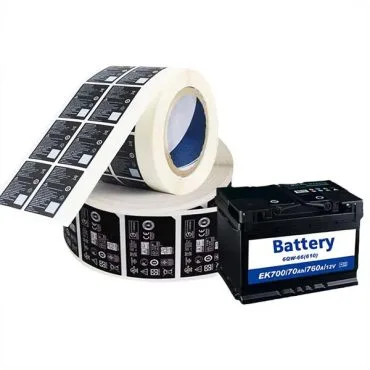
Flame-retardant Polyester Labels For Electronics Industry by Vizlent. UL 94 V-0 PET, durable barcodes, heat and solvent resistant, ideal for OEM traceability.
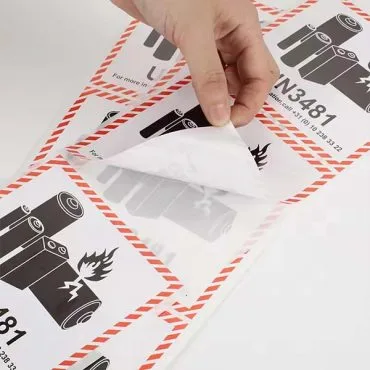
Flame Retardant Label High Temperature Resistant Labels from Vizlent. UL 94 V-0, withstands 260 °C, ideal for PCB, electronics, and battery traceability.
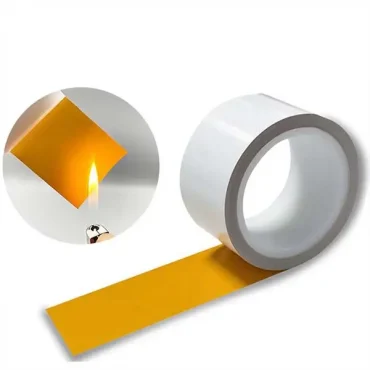
Flame Retardant Polyimide Label Material from Vizlent. UL 94 V-0, withstands 260 °C reflow soldering, ideal for PCB and electronics traceability barcodes.
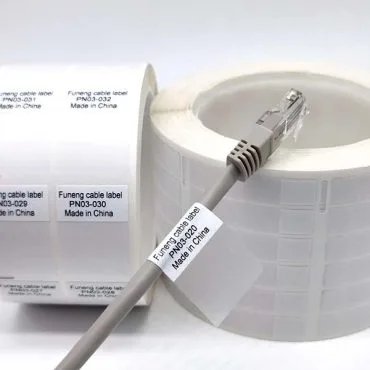
Vinyl Flame Retardant Material Wrap Around Wire Labels by Vizlent. Self-laminating, UL 94 V-0, flexible vinyl, ideal for cable harness ID in electronics.
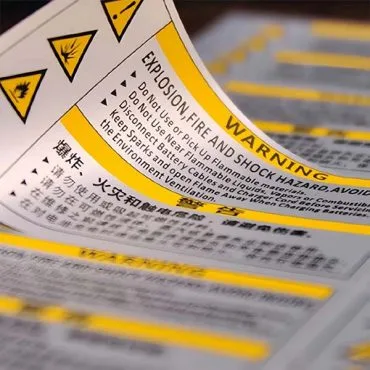
Flame Retardant Identification Labels by Vizlent. UL 94 V-0 face stock, durable barcode printing, resistant to heat and solvents, for electronics and panels.
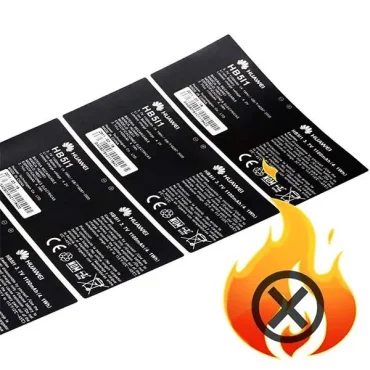
Fire Retardant Labeling from Vizlent. UL 94 V-0 rated material, self-extinguishing, abrasion and solvent resistant, ideal for electronics and electrical OEMs.
Inherently flame-resistant woven or printed labels meet EN 11612 and NFPA 2112 standards. Used for PPE, workwear, and FR garment identification in oil, gas, and electrical industries.

Halogen-free flame-retardant facestock self-extinguishes upon ignition per UL 94 V-0. Suited for upholstery, technical textiles, and protective clothing compliance labeling in regulated industries.
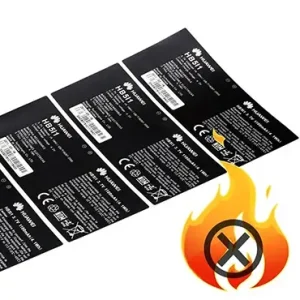
Laser or thermal transfer-compatible FR facestock meets UL 94 V-0 flammability ratings. Used for on-demand compliance labeling of electrical enclosures, cables, and industrial equipment.
Applications and Industries for Flame Retardant Labels
The strategic deployment of flame retardant labels is essential across multiple high-stakes industries where component failure or fire propagation presents severe safety and financial risks. VIZLENT leverages 15 years of direct manufacturing expertise to engineer solutions that specifically address the unique environmental stressors found in these advanced manufacturing and operational sectors.

The rapid expansion of the Electric Vehicle (EV) market has driven unprecedented demand for highly specialized flame retardant labels. Lithium-ion battery packs are susceptible to thermal runaway—a catastrophic event where excessive heat causes adjacent cells to ignite sequentially. Inside these volatile environments, standard asset tracking labels would instantly burn, destroying crucial diagnostic and manufacturing data required for post-incident analysis.

The aerospace sector operates under the most uncompromising safety standards in the world. Every component utilized inside an aircraft, including the identification markers, must actively prevent the propagation of fire. Flame retardant labels used for aerospace wire harnessing, hydraulic line identification, and cabin interior signage must strictly adhere to Federal Aviation Administration (FAA) regulations, specifically the FAR 25.853 standard regarding compartment interior flammability.

The foundation of modern technology rests upon printed circuit boards (PCBs), and the tracking of these boards requires the ultimate in high-heat tags. During surface mount technology (SMT) processes, PCBs are subjected to reflow ovens where temperatures regularly peak at 260°C. Standard identification methods would melt, burn, or outgas, completely contaminating the sensitive electronic components.
How to Choose the Right Flame Retardant Labels
Specifying the correct non-flammable identification system requires a meticulous assessment of your specific operational environment. A label designed for a power distribution panel will fail catastrophically if sent through a PCB wave soldering oven. Procurement and engineering teams should utilize the following structured process to select the optimal flame retardant labels for their application.
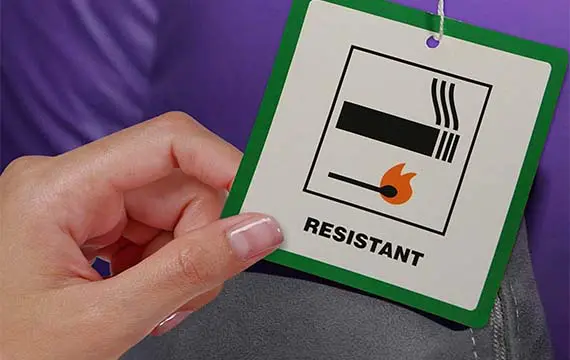
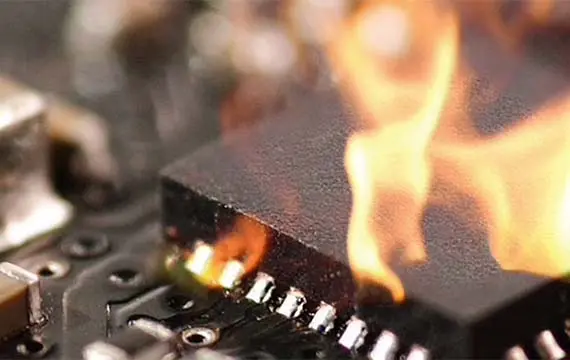
Determine the Maximum Temperature Exposure: This is the most critical metric. If the label will experience temperatures exceeding 150°C, such as in surface mount technology processes, you must select a Polyimide substrate. For environments peaking below 150°C, such as EV battery pack casings, a flame-retardant PET label offers superior cost-efficiency and performance.
Identify Regulatory Compliance Requirements: Review your industry mandates. Does the application strictly require a UL 94 V-0 or VTM-0 certification? If supplying the aviation industry, you must explicitly request materials tested against the FAR 25.853 standard. Ensure the manufacturer can provide the corresponding compliance certificates.
Evaluate Chemical and Environmental Stressors: Assess what fluids the label will encounter. Aerospace applications require resistance to hydraulic fluids, while PCB manufacturing demands resistance to flux removers and ultrasonic cleaning baths. Ensure the selected topcoat and fire-resistant permanent acrylic adhesive are rated for these specific chemical exposures.
Select the Printing Technology: High-heat environments demand durable thermal transfer print retention. Verify that the label surface is highly receptive to specialty resin thermal transfer ribbons. The combination of the label and the specific resin ribbon dictates the ultimate chemical and abrasion resistance of the printed barcode.
Frequently Asked Questions
A label is flame retardant when it is manufactured using specialized polymers, like polyimide or treated PET, that possess a high Limiting Oxygen Index. These materials actively resist ignition and incorporate chemical mechanisms that allow them to rapidly self-extinguish when an open flame is removed, preventing the spread of fire.
The UL 94 V-0 rating is a critical safety certification indicating that a vertically mounted label will stop burning within 10 seconds after a flame is removed. Furthermore, it certifies that the material will not produce flaming drips that could ignite other combustible materials situated beneath the tested component.
While the labels are physically compatible with standard thermal transfer printers, you must use highly specialized, high-durability resin ribbons. Standard wax or wax-resin ribbons will instantly melt or smear under extreme heat. Utilizing the correct resin guarantees durable thermal transfer print retention in harsh environments.
Polyimide labels are mandatory for printed circuit board (PCB) identification because they can comfortably withstand the extreme 260°C to 300°C temperatures encountered during wave soldering and reflow processes. Standard labels would melt, burn, and completely contaminate the sensitive electronic circuitry during these high-heat manufacturing stages.
Yes, VIZLENT manufactures flame retardant labels that are fully RoHS Compliant and REACH Compliant. We utilize advanced halogen-free chemical formulations that prevent the emission of highly toxic and corrosive gases during combustion, ensuring the protection of both human personnel and delicate electronic equipment.

