
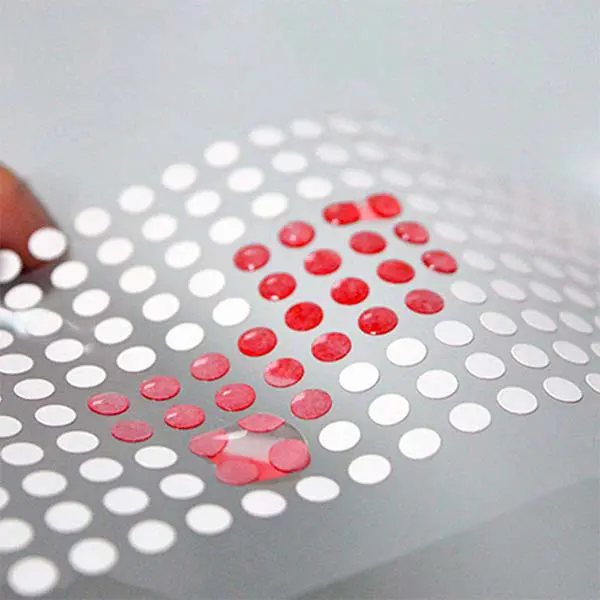
Key Characteristics of Moisture Indicating Paper
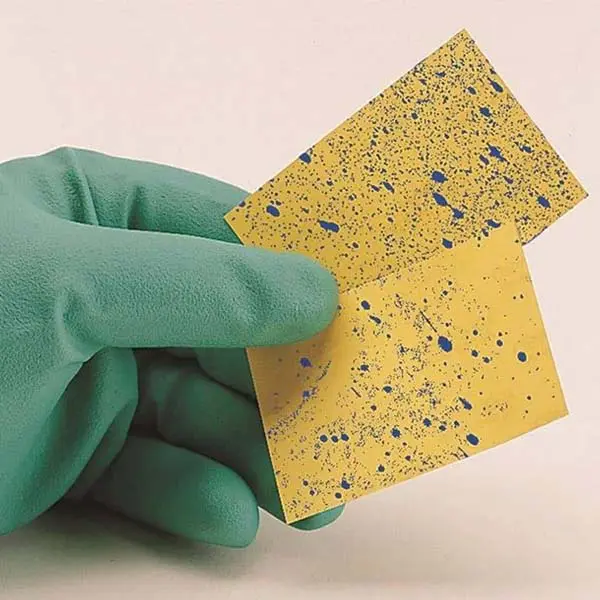
The primary performance characteristic defining premium water sensitive paper is its sensitivity threshold and footprint retention accuracy. Our formulations are engineered to detect micro-droplets as small as 50 microns. Upon contact, the aqueous solution dissolves the active chemical, creating an instant high-contrast blue or red color change against the bright yellow background. Furthermore, the spread factor—the ratio between the actual droplet size and the resulting blue stain—is highly controlled and predictable. This allows engineers to achieve a >95% footprint retention accuracy, which is essential for calculating Volumetric Median Diameter (VMD) and Number Median Diameter (NMD) during stringent droplet size testing protocols.
Another critical characteristic is environmental stability. Field testing often occurs in challenging microclimates with fluctuating temperature and humidity parameters. A substandard spray coverage indicator will absorb atmospheric moisture, causing the edges to turn blue or red and ruining the baseline contrast. VIZLENT counteracts this by integrating a proprietary humidity-resistant backing and optimizing the surface coating to remain stable in relative humidity environments up to 80%. This ensures that the agricultural spray test cards remain pristine until the exact moment of fluid application, providing reliable data regardless of the ambient environmental conditions.
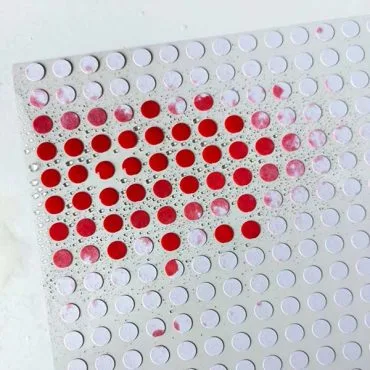
Liquid Sensitive Indicator Labels by Vizlent detect water ingress with permanent color change. Reliable LCI for smartphones, batteries, and OEM warranty use.
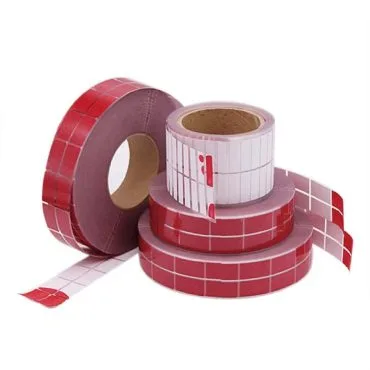
Discolor Water Sensitive Label by Vizlent changes color permanently on liquid contact. Reliable moisture detection for electronics, packaging, and logistics QC.
Custom Die Cutting Water Sensitive Warranty Stickers from Vizlent give tamper-evident proof of liquid exposure. Any shape, size, or logo for OEM warranty.
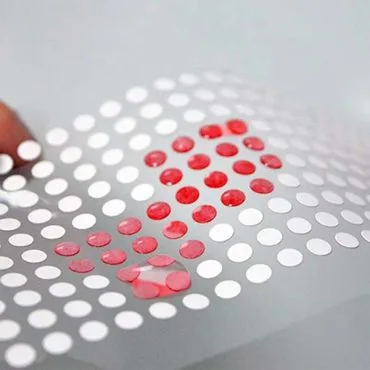
Caution Moisture Sensitive Devices Labels by Vizlent meet IPC/JEDEC J-STD-033 marking for MSD packaging. Durable, clear print for SMT and electronics.
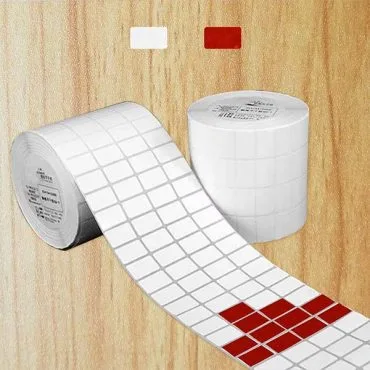
Adhesive Water Sensitive Indicator Labels from Vizlent detect liquid ingress with permanent color change. Ideal for electronics, smartphones, and warranty proof.
Technical Specifications and Compliance
Specifying the correct water sensitive paper requires a rigorous analysis of technical parameters and environmental tolerances. Utilizing an uncalibrated or unstable spray coverage indicator will result in compromised data, leading to incorrect equipment adjustments and subsequent application failures. Below is a detailed technical comparison of our core moisture indicating paper formats to assist procurement and engineering teams.
| Specification Metric | Standard Cards (1″x3″) | Large Cards (2″x3″) | Continuous Rolls |
|---|---|---|---|
| Base Material Substrate | 150 GSM Rigid Cardstock | 150 GSM Rigid Cardstock | 120 GSM Flexible Paper |
| Indicator Chemistry | Bromophenol Blue or Red Formula | Bromophenol Blue or Red Formula | Bromophenol Blue or Red Formula |
| Humidity Tolerance | Operable up to 80% RH | Operable up to 80% RH | Operable up to 75% RH |
| Min. Droplet Detection | 50 Microns | 50 Microns | 50 Microns |
| Primary Application | Agricultural Sprayer Calibration | Orchard Canopy Penetration | Swath Width Uniformity |
Material Performance Standards and Testing
VIZLENT implements exhaustive laboratory testing to validate the performance and stability of our water sensitive test paper. To guarantee >95% footprint retention accuracy, we conduct controlled laboratory spraying using piezo-electric droplet generators. These devices produce exact, known droplet sizes. We then measure the resulting blue stains under digital microscopy to calculate the precise spread factor formula. This rigorous internal calibration ensures that when researchers utilize our droplet size testing paper, the conversion from stain diameter to actual droplet diameter is mathematically sound and reliable.
Environmental Certifications and Global Compliance
Our entire manufacturing process is executed within an ISO 9001:2015 certified facility, ensuring absolute batch-to-batch consistency. Furthermore, our chemical formulations are fully REACH compliant and RoHS compliant, guaranteeing the absence of restricted heavy metals and hazardous substances. By delivering a product that is Non-Toxic Eco-Safe and Halogen-free, VIZLENT provides a comprehensive, risk-free industrial nozzle calibration paper that insulates your organization from complex global regulatory liabilities while supporting sustainable agricultural practices.
Applications and Industries for Droplet Size Testing Paper
Precision Agriculture and UAV Aerial Testing:
Industrial Fluid Dynamics and Nozzle Calibration:

How to Choose the Right Spray Coverage Indicator
Analyze the Droplet Spectrum and Volume: Determine the expected output of your nozzles. If you are utilizing ultra-low volume (ULV) atomizers producing fine droplets, the standard 1″ x 3″ agricultural spray test cards are ideal. If you are testing high-volume airblast sprayers or industrial deluge nozzles, specify the larger 2″ x 3″ cards to prevent immediate oversaturation of the rapid-reaction aqueous sensitive layer.
Evaluate the Target Geometry and Deployment: Consider how the cards will be mounted. For orchard canopy penetration analysis, rigid standard cards can be easily clipped to leaves or branches. If you need to measure the continuous distribution across a wide conveyor belt or test the full boom width of a tractor, the continuous roll format provides the necessary uninterrupted data collection surface.
Assess Ambient Environmental Conditions: Evaluate the humidity levels of your testing environment. If testing in early morning agricultural settings with heavy dew, prioritize cards with a verified humidity-resistant backing. Ensure that the handling of the cards is done with completely dry hands or tweezers, as the bromophenol-coated indicator surface is highly sensitive to the natural moisture found on human skin.
Determine Software Analysis Requirements: If you intend to use digital imaging software (such as DropScope or SnapCard) to calculate coverage percentage and VMD/NMD, ensure you select a premium water sensitive test paper that guarantees >95% footprint retention accuracy. High-contrast edge definition is critical for automated optical scanners to differentiate between individual overlapping droplets.
Frequently Asked Questions
The paper is coated with a specialized yellow bromophenol-blue chemical layer. This pH-sensitive dye reacts instantly to the neutral pH of water or aqueous solutions. When a fluid droplet strikes the surface, it causes a localized chemical reaction, triggering an instant high-contrast blue color change that permanently records the droplet’s footprint.
No, standard water sensitive test paper is exclusively engineered for aqueous (water-based) solutions. The bromophenol coating requires the unique polarity and pH of water to trigger the color change. For oil-based chemical applications, a specialized oil-sensitive paper (which typically turns black upon contact with lipids) must be utilized.
Once the aqueous droplets strike the specialized yellow bromophenol-coated indicator surface and dry, the resulting blue footprints are permanent. However, to ensure maximum data integrity, the cards should be collected, photographed, or scanned shortly after the test. Prolonged exposure to extreme direct sunlight may eventually cause the yellow background to fade.
If your cards are turning blue prematurely, they are being exposed to high ambient moisture. This can result from handling the moisture indicating paper with sweaty hands, or deploying them in environments with relative humidity exceeding 80%. Always store the cards in their hermetically sealed moisture-barrier bags until the exact moment of field deployment.
The blue spot on the paper is slightly larger than the actual airborne droplet due to the fluid spreading upon impact. To determine the actual droplet size, engineers apply a specific “spread factor” mathematical calculation. Advanced users scan the droplet size testing paper into specialized imaging software which automatically algorithms the footprint retention accuracy to output exact VMD and NMD metrics.

