
Why Pharmaceutical and Healthcare Labels Require Specialized Materials
Sterilization exposure: Labels applied before terminal sterilization must survive the full sterilization cycle without adhesive bleed, facestock deformation, print degradation, or barcode distortion. Common modalities include steam autoclave (typically 121°C to 134°C, 15–30 minutes), ethylene oxide (EtO) gas, gamma irradiation (typically 25–50 kGy), and electron beam (e-beam). Each modality imposes different stresses on facestock, adhesive, and ink systems — a material validated for EtO sterilization may be entirely unsuitable for steam autoclave.
Cold-chain and cryogenic storage: Biological products, vaccines, certain oncology drugs, and gene therapies require storage at 2–8°C (refrigerated), −20°C (freezer), or −80°C to −196°C (ultra-low and cryogenic). Adhesives and facestocks must maintain bond integrity and dimensional stability at these temperatures, often through repeated freeze-thaw cycles.
Chemical and solvent exposure: Labels on reagent bottles, IV bags, and laboratory specimens are routinely exposed to isopropyl alcohol (IPA) wipe-downs, disinfectants (quaternary ammonium compounds, bleach solutions), and immersion in liquid nitrogen or saline. Standard acrylic adhesives and paper facestocks will fail under these conditions.
Serialization and track-and-trace requirements: Under the U.S. Drug Supply Chain Security Act (DSCSA) and EU Falsified Medicines Directive (FMD), each saleable unit of prescription drug product must carry a unique 2D DataMatrix barcode encoding a National Drug Code (NDC), serial number, lot number, and expiration date. The label material and print process must reliably produce DataMatrix codes meeting ISO/IEC 15415 quality standards at small symbol sizes — typically 5mm × 5mm or smaller on unit-of-use packaging.
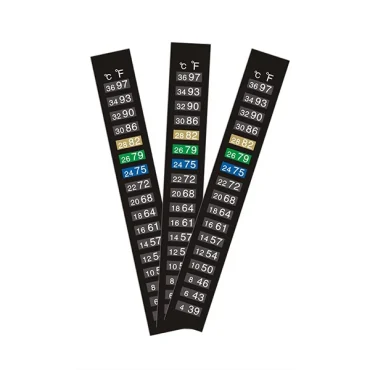
Temperature Labels & Thermal Indicator Color Changing Stickers Thermochromic color-change response Reversible and irreversible grades available Clear visual indication without instruments Multiple temperature thresholds offered Custom sizes and printed legends possible Send Your Inquiry Now Versatile Thermochromic Visual Temperature Feedback Temperature Labels & Thermal Indicator Color Changing Stickers provide a broad family of thermochromic indicators […]
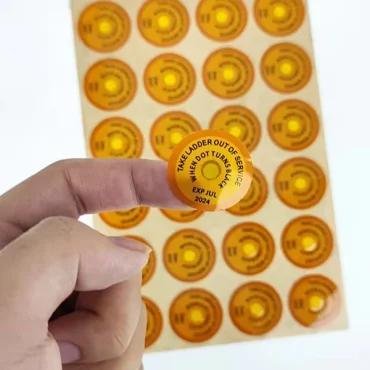
High Temperture Indicator Labels For Temperature Monitor and Record Formulated for elevated temperature ranges Clear color change at high thresholds Irreversible or reversible options available Self-adhesive for equipment and product use Permanent record capability for process verification Send Your Inquiry Now Monitoring and Recording Elevated Process Heat High Temperture Indicator Labels For Temperature Monitor and […]
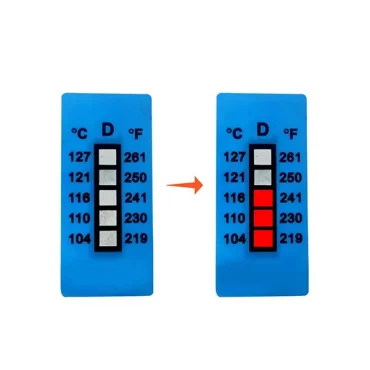
Indicator Strips Labels for Temperatures Measuring Multi-segment strip with sequential thresholds Visual approximation of surface temperature Self-adhesive for direct mounting Clear color change at each calibrated point No instruments required for reading Send Your Inquiry Now Sequential Color Points for Range Assessment Indicator Strips Labels for Temperatures Measuring consist of a series of thermochromic segments […]
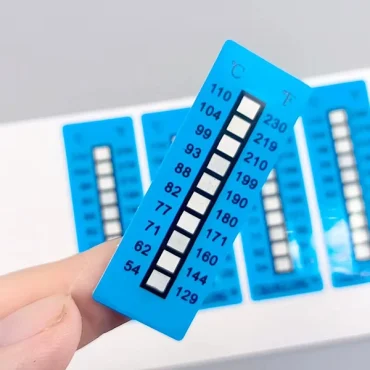
Irreversible Color Changing Temperature Indicator Labels Permanent color change once threshold is exceeded Provides lasting visual evidence of excursion Self-adhesive for product or packaging use Clear high-contrast color transition Multiple activation temperatures available Send Your Inquiry Now Permanent Record of Temperature Exceedance Irreversible Color Changing Temperature Indicator Labels use materials that undergo a permanent chemical […]
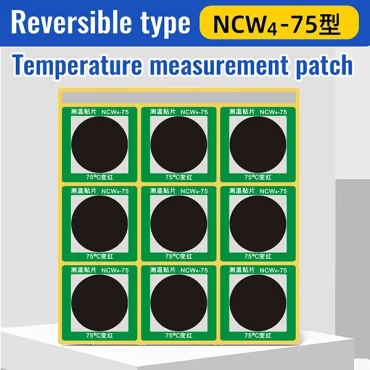
Heat Sensitive Color Changing Reversible Temperature Indicator Sticker Reversible color change on heating and cooling Returns to original appearance below threshold Self-adhesive for direct surface mounting Clear visual indication without instruments Multiple activation temperatures available Send Your Inquiry Now Continuous Monitoring with Color Recovery Heat Sensitive Color Changing Reversible Temperature Indicator Sticker uses thermochromic materials […]
Monitor & Warning Temperature Indicator Strip Stickers Strip format with multiple temperature points Clear color-change warning at set thresholds Self-adhesive for easy surface application Available in reversible or irreversible options High-visibility color transition Send Your Inquiry Now Visual Alerts for Critical Temperature Thresholds Monitor & Warning Temperature Indicator Strip Stickers use thermochromic or phase-change materials […]
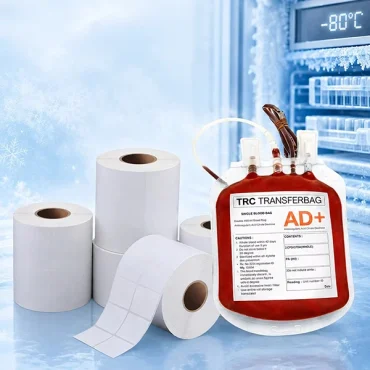
Blood Bag Stickers Customized Waterproof Labels Fully waterproof film and adhesive construction Custom sizes, shapes and printed content Strong adhesion on flexible blood bags Performs in refrigerated and frozen conditions Resistant to condensation and handling fluids Send Your Inquiry Now Waterproof Custom Identification for Blood Bags Blood Bag Stickers Customized Waterproof Labels combine a waterproof […]
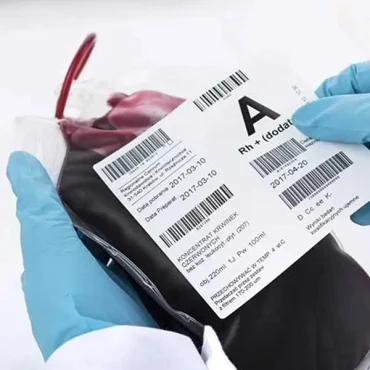
Blood Bag Tags Labels For Hospital Use Designed for hospital blood-bank workflows Strong adhesion on flexible blood bags Performs under refrigerated storage Clear print for patient and unit data Resistant to handling moisture and fluids Send Your Inquiry Now Accurate Unit Identification in Hospital Settings Blood Bag Tags Labels For Hospital Use provide a practical […]
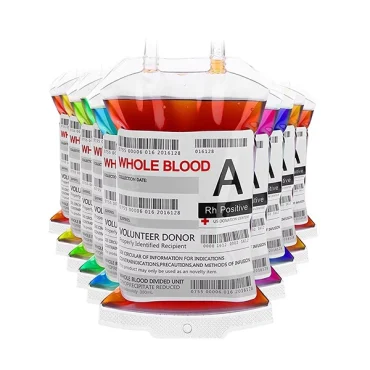
Blood and Plasma Bag Labels Secure adhesion on blood and plasma bags Performs through refrigeration and freezing Resistant to moisture and processing fluids Thermal-transfer or laser printable surface High-contrast barcodes and text remain scannable Send Your Inquiry Now Traceable Identification Across Cold Chain Blood and Plasma Bag Labels are designed to maintain permanent identification of […]
Key Material Properties for Pharmaceutical and Healthcare Labels
Common Pharmaceutical and Healthcare Label Applications


How to Select the Right Label Material for Pharmaceutical and Healthcare
Material selection in pharmaceutical and healthcare labeling must be driven by a systematic evaluation of application conditions, regulatory obligations, and process constraints — not by material availability or cost alone. The following decision sequence reflects how experienced pharmaceutical packaging engineers approach this process.


Define the primary container and surface characteristics. Glass vial, polypropylene cryovial, PVC IV bag, Tyvek pouch, and paperboard carton each present fundamentally different adhesion challenges. Document the substrate chemistry (glass type, polymer resin, surface treatment), outer diameter and curvature, and any surface contamination sources (silicone lubricants, mold release agents, condensation) before evaluating adhesive options. Surface energy testing (contact angle measurement) on the actual production substrate — not a surrogate — is the most reliable input to adhesive selection.
Identify all environmental exposures the label will encounter across its full lifecycle. Map every condition from label application through end-of-use: application temperature, storage temperature range, sterilization modality and parameters, chemical exposures (IPA wipe-down, disinfectants, reagents), physical stresses (centrifugation, abrasion), and duration of each condition. A label for a lyophilized vial product, for example, must survive: glass vial application at room temperature, freeze-drying cycle (sub-zero, vacuum), cold storage at 2–8°C, shipping, and end-user handling — each of which places different demands on the material system.
Establish the regulatory and quality system requirements before specifying a material. Determine whether the label application triggers DSCSA/FMD serialization requirements, UDI/AIDC barcode obligations, sterile barrier compatibility requirements under ISO 11607, or drug labeling change control under 21 CFR 314/601. These obligations define the validation burden associated with material selection and change — understanding them upfront prevents costly late-stage redesign. Involve regulatory affairs early, not after a material has already been selected.
Align facestock surface finish and print process together, not separately. Print quality for serialization DataMatrix codes is a joint function of facestock surface, print process, and print equipment. Semi-gloss or gloss facestocks generally support higher-contrast DataMatrix printing than matte surfaces. Thermal transfer printing requires ribbon chemistry matched to the facestock topcoat. Inkjet printing requires facestock ink receptivity optimized for the specific ink system. Validate the complete print system — printer, ribbon or ink, facestock — on the actual label construction before finalizing the specification.
Frequently Asked Questions
Rarely, because the two modalities impose fundamentally different stresses: EtO uses low-temperature gas exposure, while steam autoclave subjects the label to 121–134°C saturated steam and pressure. Most materials that survive one modality have not been validated for the other, and performance cannot be inferred. If your device requires dual-modality compatibility, request sterilization validation data for both cycles on the same construction before proceeding.
Cryogenic vial labels require a rubber-based or specifically engineered low-temperature acrylic adhesive that remains flexible and tacky at −196°C, combined with a crack-resistant polyester or specialty polyolefin facestock. Standard permanent acrylic adhesives become brittle and lose bond strength at these temperatures, and paper facestocks will absorb moisture and fail during freeze-thaw cycling — neither is appropriate for liquid nitrogen storage.
FDA regulates the content and legibility of drug product labeling under 21 CFR Part 201, but does not prescribe specific material constructions — material selection is the responsibility of the pharmaceutical manufacturer under their quality system. However, any change to the label material on an approved drug product (NDA, ANDA, BLA) is subject to change control under 21 CFR 314 or 601 and may require a prior approval supplement or annual report depending on the assessed risk of the change.
The most common causes are facestock surface reflectance mismatch with the printer’s resolution and ink or ribbon type (producing low-contrast or ragged module edges), symbol size below the minimum for the print resolution in use, and post-print degradation from abrasion or chemical exposure during distribution. Achieving compliant grades requires validating the complete system — facestock surface finish, print engine resolution, ribbon or ink chemistry — together, and should not be attempted by optimizing any single variable in isolation.
Label material changes — including supplier-initiated raw material reformulations, even if the product code remains unchanged — should be managed through the pharmaceutical manufacturer’s change control procedure under 21 CFR 820 or ICH Q10. Changes must be assessed for impact on label performance, printed image quality, serialization compliance, and, where applicable, regulatory filing status. A supplier quality agreement that requires advance written notification of any material change is the most effective mechanism for preventing undisclosed changes that could trigger a change control event or regulatory obligation.