x
Send Your Inquiry Today
Inquiry Form

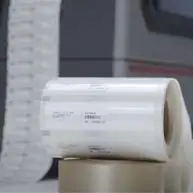
Heat Shrink Label Materials for Industrial Wire, Cable, and Equipment Identification

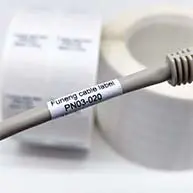
  • Heat shrink labels are widely used in electrical, electronic, automotive, aerospace, and industrial manufacturing environments where long-term identification must remain legible after exposure to heat, abrasion, chemicals, moisture, and vibration.
  • Standard paper labels or conventional pressure-sensitive films often fail when applied to wire harnesses, cable bundles, or curved insulated surfaces.
  • Engineers and procurement teams selecting heat shrink labeling materials must evaluate shrink ratio, thermal stability, print permanence, insulation compatibility, and regulatory compliance together rather than as separate requirements.
  • This guide explains the material properties, application conditions, compliance considerations, and common use cases that influence heat shrink label performance in demanding industrial environments.
heat shrink label materials

Why Heat Shrink Labels Require Specialized Materials

Heat shrink labels are exposed to installation and operating conditions that conventional label constructions are not designed to withstand. During installation, tubing materials are heated to temperatures typically ranging from 90°C to over 250°C depending on the polymer type and shrink ratio. The printed surface must maintain readability without distortion, cracking, or ink migration during the shrinking process.

Many applications involve wire harnesses, battery systems, telecommunications equipment, control panels, aerospace assemblies, and industrial machinery where labels are continuously exposed to oils, fuels, hydraulic fluids, UV exposure, vibration, or elevated temperatures. In these environments, adhesive-backed labels may lift from curved cable surfaces or lose legibility after abrasion.

Heat shrink labels are also frequently used in regulated industries requiring traceability, electrical safety identification, or long-term asset marking. Materials often need compatibility with thermal transfer printing systems, UL-recognized substrates, RoHS-compliant constructions, or low-smoke halogen-free cable systems.

Surface compatibility is another major challenge. Heat shrink tubing must conform tightly around PVC, XLPE, rubber, fluoropolymer, or polyethylene cable jackets without damaging insulation or reducing flexibility. Material shrink performance and wall thickness directly affect installation reliability.

Key Material Properties for Heat Shrink Labels
thermal resistance
Thermal Resistance
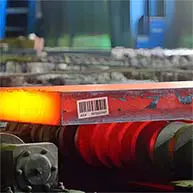
For industrial wire identification, materials typically require continuous operating temperature ratings between 105°C and 135°C, while aerospace or high-performance electronic applications may require ratings above 150°C. Polyolefin and fluoropolymer heat shrink materials are commonly selected for higher temperature environments.
shrink ratio and recovery performance
Shrink Ratio and Recovery Performance
Applications involving uneven connector geometries or varying cable diameters often require higher recovery ratios. Consistent circumferential shrink performance is important for barcode readability and permanent wire identification.
print durability
Print Durability
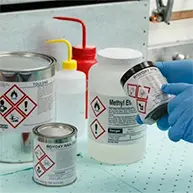
Materials should be evaluated for resistance to abrasion, solvents, oils, cleaning agents, and smearing after shrink recovery. In industrial control systems and transportation equipment, labels often undergo repeated maintenance handling and cable movement.
chemical and fluid resistance
Chemical and Fluid Resistance
Polyolefin tubing is commonly used for general industrial resistance, while fluoropolymer materials may be selected for aggressive chemical exposure. ASTM chemical resistance testing or application-specific validation is typically recommended for harsh environments.
flame retardancy
Flame Retardancy
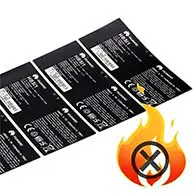
Materials may be evaluated against UL 224 or VW-1 flame testing requirements. Low-smoke, halogen-free constructions are increasingly specified in rail, transit, and enclosed electronic systems.
flexibility and insulation compatibility
Flexibility and Insulation Compatibility
Compatibility with PVC, XLPE, silicone, or fluoropolymer-insulated cables should be verified, especially in applications involving high-density wire harnesses or dynamic cable routing.

Regulatory & Compliance Considerations

Heat shrink label materials used in industrial and electrical applications are often evaluated against multiple regulatory and performance standards.

UL 224: Commonly used for heat shrink tubing performance evaluation, including dielectric strength, flame resistance, and temperature rating.
UL 969: Relevant for marking and labeling systems where permanence and legibility are critical for safety identification.
RoHS: Restricts hazardous substances such as lead, cadmium, and mercury in electronic and electrical products.
REACH: Addresses chemical substance compliance for materials used in global manufacturing and supply chains.
SAE and MIL Specifications: Aerospace and defense applications may require compliance with military or transportation performance specifications for wire identification systems.
Low Smoke Halogen Free Requirements: Increasingly specified in rail, transit, telecommunications, and enclosed electronic environments to reduce toxic smoke generation during fire events.

Compliance requirements vary by region, application, and end-product certification scope. Material selection should always be validated against the final system requirements and applicable regulatory standards.
heat shrink label material

Common Heat Shrink Label Applications


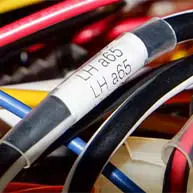
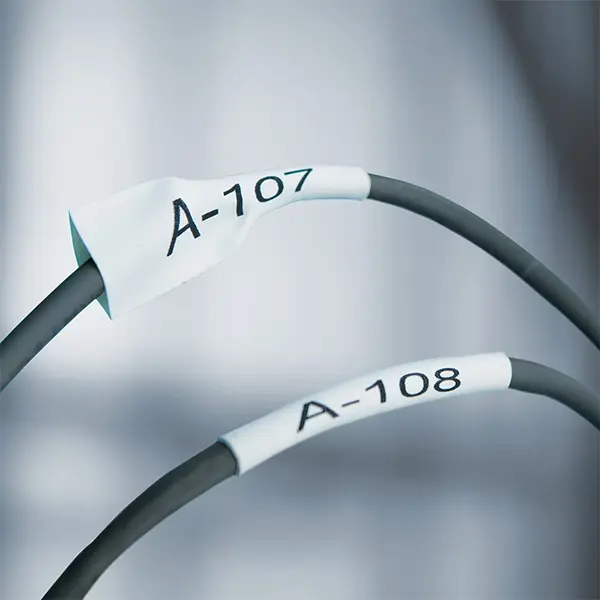
Wire and Cable Identification
Typical constructions include printable polyolefin heat shrink tubing compatible with thermal transfer resin ribbons and 2:1 or 3:1 shrink ratios.
Aerospace and Defense Harness Marking
Fluoropolymer heat shrink materials are often used because they provide high-temperature resistance, low smoke generation, and excellent chemical durability.
Automotive Wiring Systems
Materials typically require abrasion resistance, flame retardancy, and long-term readability under thermal cycling conditions.
Data Center and Telecommunications Cabling
Thin-wall polyolefin tubing is commonly selected for high-density cable management environments where flexibility and compact installation are important.
Industrial Equipment and Control Panels
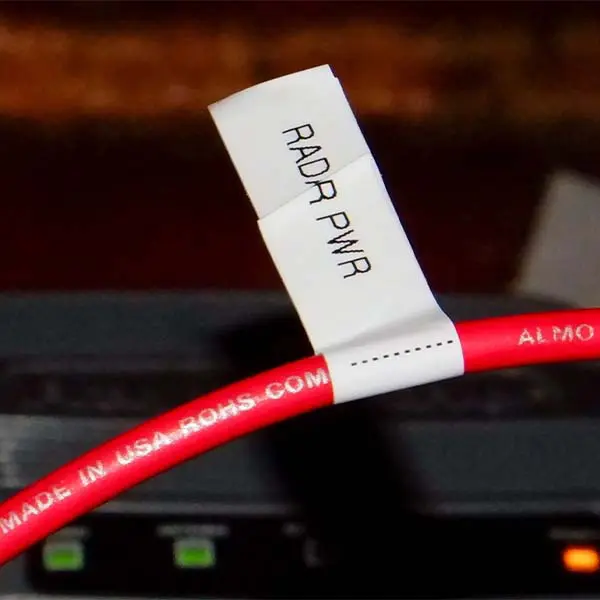
Labels must withstand cleaning agents, vibration, and elevated cabinet temperatures while maintaining readable alphanumeric identifiers.
Medical and Laboratory Equipment
Materials may need compatibility with sterilization procedures, disinfectants, or low-outgassing requirements depending on the application environment.

Frequently Asked Questions

Can heat shrink labels be printed with standard thermal transfer printers?

Many heat shrink tubing products are designed for thermal transfer printing, but ribbon formulation and printer settings must match the tubing surface to achieve durable print performance.

What shrink ratio is commonly used for wire identification?

2:1 and 3:1 shrink ratios are the most common for wire and cable marking because they balance installation flexibility with secure recovery around insulated conductors.

Are heat shrink labels suitable for outdoor applications?

Yes, UV-stabilized polyolefin and fluoropolymer materials are commonly used outdoors where resistance to sunlight, moisture, and temperature cycling is required.

Do heat shrink labels meet flame-retardant requirements?

Many industrial-grade heat shrink materials are manufactured with flame-retardant properties and may comply with UL or VW-1 flammability standards depending on the product construction.

What is the typical service life of industrial heat shrink labels?

Service life depends on environmental exposure, material selection, and installation quality, but properly specified industrial heat shrink labels are commonly designed for multi-year durability in demanding operating conditions.

Scroll to Top