
Key Characteristics of Barcode Printer Ribbons
The defining characteristic of superior thermal transfer ribbons is their ability to produce high-resolution crisp barcode printing. Industrial scanners require sharp, high-contrast edge definition to accurately read densely packed 2D data matrices or standard 1D barcodes.
Low-quality thermal transfer foil often suffers from “bleeding” or “ghosting,” where the molten ink spreads beyond the intended pixel area. VIZLENT’s engineered ribbons maintain strict viscosity controls during the melting phase, guaranteeing exact ink deposition and preventing costly unreadable barcode errors on the production line.
Another paramount characteristic is extreme chemical and solvent resistance, particularly found in full resin formulas. Industrial labels are frequently subjected to harsh conditions, including exposure to brake fluid, industrial degreasers, isopropyl alcohol, and intense UV radiation.
Standard inks will smear, dissolve, or fade when exposed to these elements. High-durability thermal ribbons utilize heavily cross-linked polymer resins that bond permanently with synthetic film substrates, ensuring the printed data remains completely weatherproof and highly resistant to mechanical abrasion over a long service life.
Thermal Transfer Ribbons Specifications and Compliance
Engineers and procurement teams demand precise, quantifiable technical data to validate their supply chain consumables. VIZLENT manufactures every batch of thermal transfer ribbons under strict quality control parameters to ensure repeatable, flawless performance. The following technical specifications outline the foundational metrics of our industrial-grade barcode printer supplies.
| Technical Specification | Premium Wax Ribbons | Wax-Resin Ribbons | Ultra-Durable Resin Ribbons |
|---|---|---|---|
| Ink Melting Point | 65°C (149°F) | 75°C – 85°C (167°F – 185°F) | 110°C+ (230°F+) |
| Base Film Thickness | 4.5 µm PET (Polyester) | 4.5 µm PET (Polyester) | 4.5 µm PET (Polyester) |
| Print Speed Capability | Up to 14 IPS (Inches Per Second) | Up to 10 IPS (Inches Per Second) | Up to 6 IPS (Inches Per Second) |
| Recommended Substrates | Uncoated Paper, Matte Paper | Coated Paper, Glossy Paper, Polypropylene | Polyester (PET), Polyimide, PVC laminates |
| Smudge/Scratch Resistance | Low to Moderate | High | Exceptional / Extreme |
| Standard Roll Lengths | 74m, 300m, 450m, 600m | 74m, 300m, 450m, 600m | 74m, 300m, 450m, 600m |
| Winding Configurations | CSI (Coated Side In) or CSO (Out) | CSI (Coated Side In) or CSO (Out) | CSI (Coated Side In) or CSO (Out) |
Performance Standards and Printer Compatibility
Our high-durability thermal ribbons are engineered to be universally compatible with all major industrial thermal transfer printer brands, including Zebra, Datamax, Sato, and Honeywell. To ensure seamless operation, we offer multiple core sizes (typically 1/2-inch for desktop models and 1-inch for industrial engines) and provide standard widths ranging from 40mm, 60mm, 80mm, to 110mm. Furthermore, ribbons can be manufactured in both Coated Side In (CSI) and Coated Side Out (CSO) configurations to match specific hardware requirements.
Regulatory Certifications and Quality Assurance
Sourcing consumable supplies from an internationally compliant manufacturer is vital for risk mitigation. VIZLENT operates an ISO 9001 certified manufacturing facility, ensuring complete lot traceability and batch-to-batch consistency. All of our thermal transfer ribbons are fully RoHS Compliant and REACH Compliant, guaranteeing they are entirely free from restricted heavy metals, toxic halogens, and environmentally hazardous chemicals.
Types and Variations of Thermal Transfer Ribbons
Because industrial labeling requirements vary drastically—ranging from short-term logistics tracking to decades-long equipment identification—no single ink formulation can efficiently cover all use cases. VIZLENT manufactures three primary types of thermal transfer ribbons. Selecting the correct TTR ribbons depends entirely on the label substrate material, the necessary print speed, and the specific environmental durability requirements of the final application.
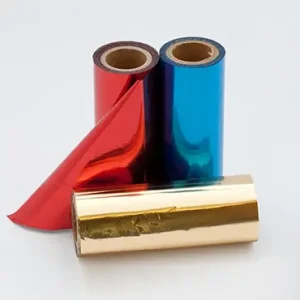
Resin Thermal Transfer Ribbon Engineered for the most demanding industrial applications, VIZLENT’s full resin thermal transfer ribbons deliver uncompromising print durability for extreme environments. Ideal for label converters and manufacturers producing cryogenic barcode labels, automotive under-the-hood tags, and UL-compliant tracking labels. Equipped with an advanced anti-static back-coating, they protect expensive flat-head printheads while delivering flawless, […]
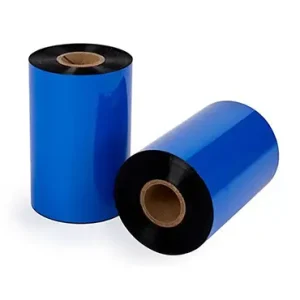
Resin Barcode Ribbon Engineered for the most demanding industrial applications, our premium resin barcode ribbons deliver uncompromising print durability on synthetic substrates. Designed specifically for harsh environments, these thermal transfer ribbons ensure exceptional resistance to chemicals, extreme temperatures, and mechanical abrasion. Whether you are a label converter needing reliable jumbo rolls or an OEM/ODM partner […]
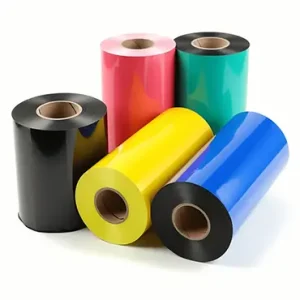
Textile Resin Ribbon Engineered specifically for the rigorous demands of the apparel and garment industry, our premium textile resin ribbons deliver indestructible print quality on wash care labels. Formulated to withstand extreme laundering conditions—including heavy industrial washing, dry cleaning, bleaching, and high-heat ironing—these thermal transfer ribbons ensure permanent brand traceability. Whether you are a label […]
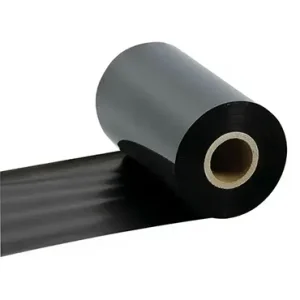
UL-recognized resin formulation offering premium scratch and heat resistance. Delivers crisp, dense barcodes on synthetic films and metallized polyesters. Designed for electronics serialization.
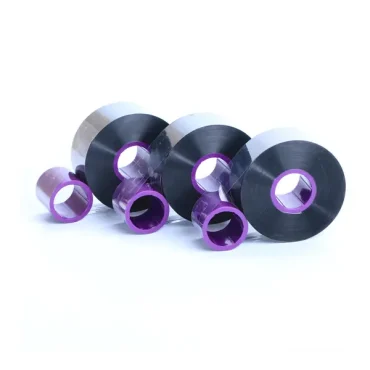
Quick-release wax/resin formulation designed for TTO overprinters at high speeds up to 24 IPS. Adheres instantly to flexible packaging films. Essential for food and medical date coding.
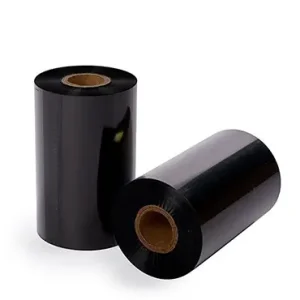
Wax Resin Ribbon Engineered for demanding industrial and commercial applications, our premium wax-resin thermal transfer ribbons deliver the perfect balance of durability, versatility, and cost-efficiency. Designed to perform flawlessly across a wide range of substrates—including glossy paper, BOPP, PET, and synthetic label materials—these ribbons provide exceptional smudge and scratch resistance. With advanced anti-static back-coating technology, […]
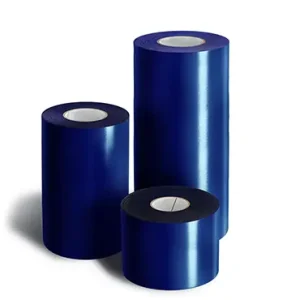
Wax Thermal Transfer Ribbon Engineered for maximum efficiency in high-volume operations, VIZLENT’s standard wax thermal transfer ribbons deliver reliable, dark prints at an unbeatable cost per roll. Designed specifically for standard flat-head thermal printers, these ribbons provide crisp barcodes, text, and graphics directly onto uncoated and matte-coated paper substrates. Backed by advanced anti-static back-coating technology, […]
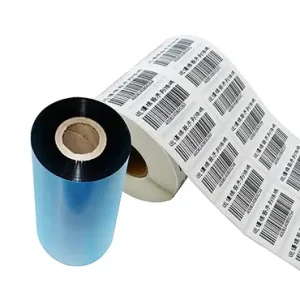
Barcode Wax Ribbon Ensure high first-pass scannability for your logistics and retail operations with VIZLENT’s premium barcode wax ribbons. Engineered for maximum cost-efficiency in high-volume thermal transfer printing environments, our advanced wax formulation delivers deep, high-contrast 1D and 2D barcodes on both uncoated and matte-coated paper substrates. Ideal for wholesalers, label converters, and busy fulfillment […]
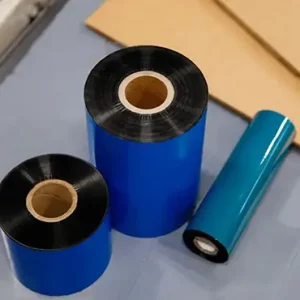
Features an anti-static backcoating and operates at high print speeds up to 12 IPS. Formulated for standard flat-head printers. Designed for general-purpose paper labeling and inventory management.
Best Thermal Transfer Ribbons for Industrial Applications
The successful deployment of thermal transfer ribbons is heavily dictated by the specific industry application. VIZLENT engineers barcode printer consumables designed to conquer the unique environmental and regulatory challenges present in global manufacturing and logistics. By matching the ribbon’s chemical properties to the operational environment, procurement managers guarantee absolute data integrity.

In the Automotive & Aerospace sectors, component traceability is a matter of strict federal compliance and public safety. Automotive VIN labeling, under-hood warning tags, and aerospace wire harnessing require identification that will endure for decades. These environments expose labels to extreme temperature fluctuations, aggressive engine oils, hydraulic fluids, and constant heavy vibration. Pure wax or basic wax-resin ribbons would fail catastrophically under these conditions.

The Electronics Manufacturing industry presents one of the most hostile environments for any printed label. During extreme-heat printed circuit board (PCB) tracking, labels must survive the surface mount technology (SMT) process. This involves passing through wave soldering ovens where temperatures frequently exceed 260°C. Standard inks will vaporize, outgas, or completely liquefy, destroying the barcode and potentially contaminating the sensitive electronic circuitry.

The Chemical Processing sector requires highly specific chemical drum (GHS) identification. The Globally Harmonized System (GHS) mandates that hazard warnings remain perfectly legible even if the label is submerged in seawater or exposed to the harsh chemicals contained within the drum. Premium resin ribbons provide the necessary extreme chemical and solvent resistance to meet international maritime and OSHA 1910.144 regulations.
How to Choose Thermal Transfer Ribbons vs Alternatives
Selecting the incorrect barcode printer ribbons results in unreadable barcodes, supply chain delays, and premature hardware failure. Procurement teams must systematically evaluate their printing environment to specify the correct consumable. By comparing thermal transfer ribbons vs direct thermal alternatives, and assessing substrate compatibility, engineers can ensure maximum data longevity. Follow this structured guide to make the right selection.


Analyze the Application Lifespan: Determine how long the label must remain legible. If the label is for short-term shipping (under 6 months) with no chemical exposure, direct thermal printing may suffice. However, for any application requiring permanent asset tracking, safety identification, or outdoor exposure, you must choose thermal transfer ribbons to prevent the data from fading or blackening over time.
Match Ribbon to Substrate Material: The label facestock dictates the ribbon type. If printing on rough, uncoated paper die-cut labels, specify pure wax ribbons. For coated paper or basic synthetics, choose wax-resin ribbons. If your application requires high-performance polyester or polyimide films with aggressive peel strength adhesive, you must select full resin ribbons to ensure proper ink anchorage.
Assess Environmental Exposures: Evaluate the physical and chemical threats the label will face. For environments involving brake fluid, degreasers, or severe outdoor weathering, only ultra-durable resin formulas provide the necessary extreme chemical and solvent resistance. For general warehouse dust and moderate friction, wax-resin offers adequate protection.
Verify Printer Hardware Specifications: Consult your printer manual to determine the required ribbon dimensions. Identify the necessary core size (1-inch or 1/2-inch), maximum roll length (e.g., 300m, 450m), and the ink winding direction—either Coated Side In (CSI) or Coated Side Out (CSO). Ordering the incorrect configuration will prevent the printer from functioning.
Frequently Asked Questions
Direct thermal printers use heat to activate a chemical layer directly on the label paper, which fades or blackens when exposed to heat and UV light. Thermal transfer printers use heat to melt ink from thermal transfer ribbons onto a substrate, creating permanent, highly durable, weatherproof images.
Ribbon snapping usually occurs due to excessive printhead heat settings or incompatible hardware tension. Our high-durability thermal ribbons utilize a strong 4.5 µm PET base film to prevent snapping. Ensure you are not using high-heat resin settings when attempting to print with lower-melting-point pure wax ribbons.
The printhead protection ribbons feature a silicone-based protective back coating that acts as a physical lubricant and thermal conductor. It prevents static electricity buildup and reduces abrasive friction as the ribbon rapidly passes over the printhead, significantly extending the costly hardware’s operational service life.
For outdoor asset tracking, you must use ultra-durable resin ribbons printed on synthetic polyester (PET) or PVC label stock. Resin formulations offer exceptional UV resistance, extreme chemical and solvent resistance, and heavy-duty waterproofing, ensuring the barcode remains perfectly readable despite years of severe weather exposure.
This refers to how the ink is wound on the ribbon core. Coated Side In (CSI) means the ink faces the inside of the roll, while Coated Side Out (CSO) means the ink faces outward. You must verify your specific printer brand’s requirement, as using the wrong winding will not print.