
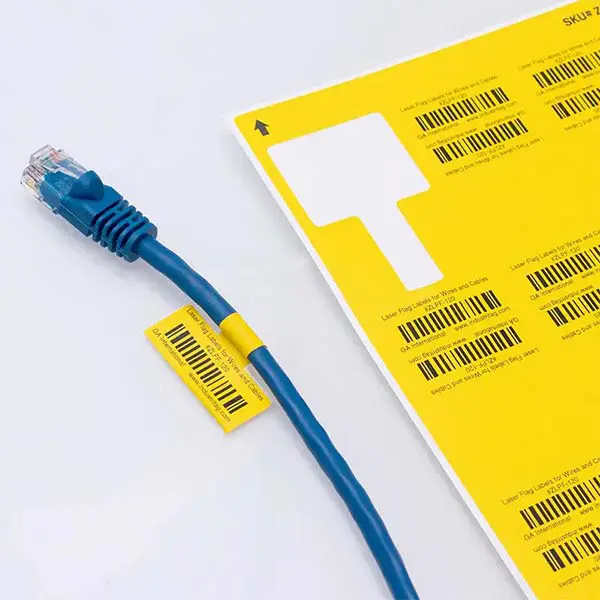
Why Flag Shape Cable Labels Require Specialized Materials
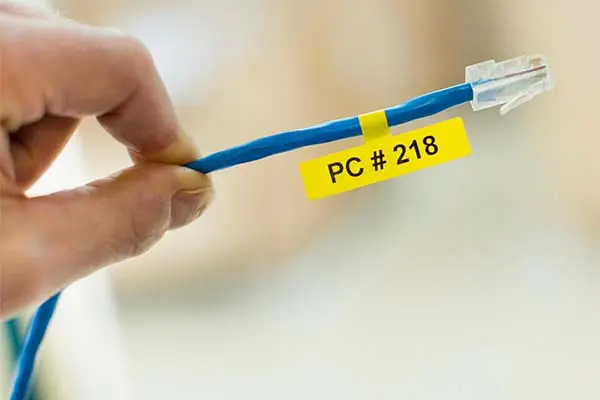
Unlike standard flat product labels, flag shape cable labels must bond securely to curved, low-surface-area substrates while maintaining a readable printable area that extends away from the wire. This creates unique mechanical and environmental demands.
Many cable assemblies are exposed to elevated temperatures, vibration, oils, solvents, humidity, or repetitive handling. In industrial control cabinets and telecommunications infrastructure, labels may remain in service for 10 years or longer. Standard paper labels or general-purpose adhesives typically fail under these conditions due to edge lifting, adhesive ooze, print fading, or delamination.
Wire insulation materials also vary significantly. PVC, polyethylene, TPE, fluoropolymer, and silicone-jacketed cables each present different surface energy characteristics that affect adhesive performance. Some applications additionally require resistance to cleaning agents, UV exposure, or flame-retardant environments.
Because flag labels are often printed with barcodes, serial numbers, or circuit identification data, print durability is equally important. Thermal transfer ribbons, topcoat compatibility, and smudge resistance directly affect long-term readability and traceability.
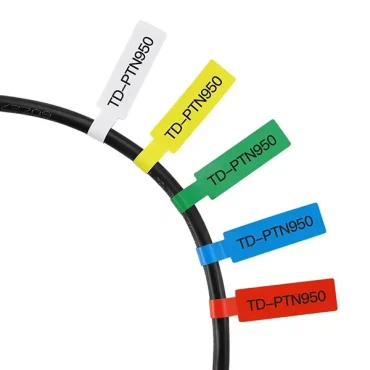
Non-tear Flag Labels for Laser Printers High-strength non-tear film base Resists ripping during handling and service Flag design for wrap-around cable ID Laser-printable surface for sharp text Permanent acrylic adhesive Send Your Inquiry Now Tough Flag Construction That Resists Tearing Non-tear Flag Labels for Laser Printers are manufactured from reinforced or specially formulated film that […]
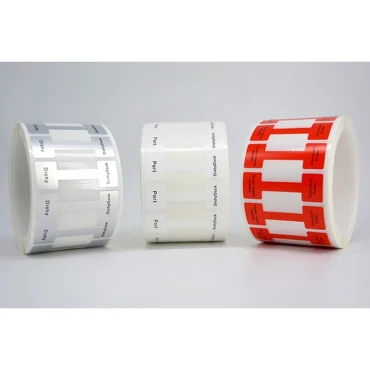
Flag Symmetrical Cable Labels for Laser Printer Symmetrical dual-flag design Readable from either side of the cable Laser-printable A4 or continuous format Durable polyester film base Permanent acrylic adhesive Send Your Inquiry Now Balanced Visibility from Both Sides Flag Symmetrical Cable Labels for Laser Printer feature a balanced construction with equal printable areas on both […]
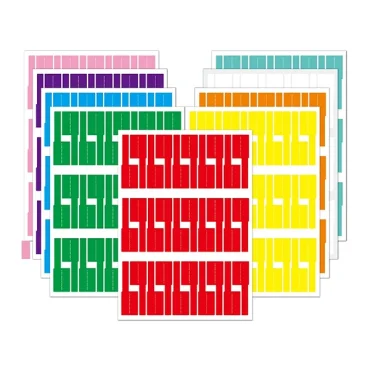
P Flag Labels A4 Laser Printing P-shaped flag design for wrap-around use A4 sheet format for standard laser printers Durable polyester or vinyl film Permanent acrylic adhesive Printable flag area remains visible after wrap Send Your Inquiry Now Clear Wrap-Around Identification for Cables P Flag Labels A4 Laser Printing are designed as wrap-around markers that […]
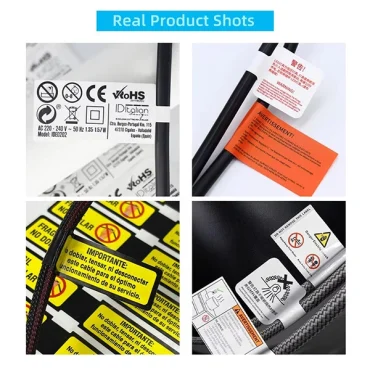
T-Flag Wire Labels for Electrical Cables T-flag fold creates dual-sided readable panel on each cable Wraps and adheres firmly around cable jacket without connector interference Compatible with cable diameters from 2 mm to 20 mm Plasticiser-resistant adhesive maintains bond on PVC wire insulation Printable via thermal transfer, laser, or permanent marker Send Your Inquiry Now […]
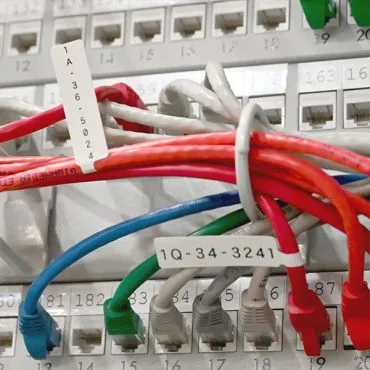
Outdoor utility and overhead power line feeder cables; solar farm DC and AC wiring in exposed array areas; wind turbine nacelle and tower cable identification; marine dock and harbour electrical installations; oil and gas platform topsides cable management; street lighting and traffic control infrastructure wiring; outdoor telecommunications equipment cabinets and street furniture.
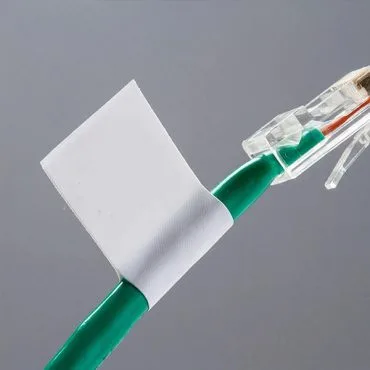
Electrical Cable and Wire Flag Labels by Vizlent provide reliable, high-visibility identification for cables and wires in panels, conduits, and industrial wiring systems.
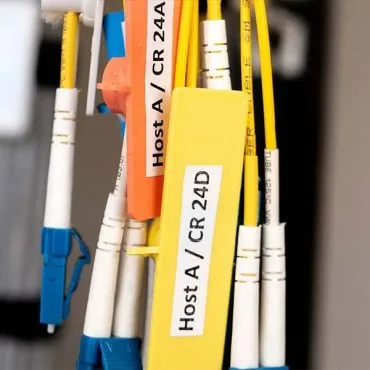
Customized Electrical Wire Management Flag Cable Labels from Vizlent deliver precise wire ID, durable adhesion, and full print customisation for industrial wiring.
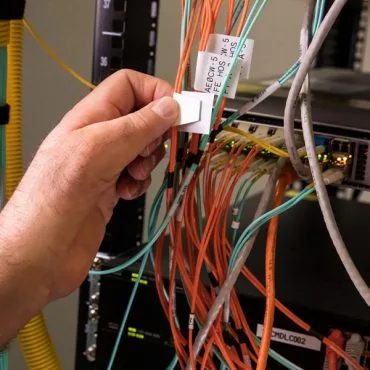
Cable Flags Labels for Fibre Optic Patch Cords by Vizlent offer durable, clear identification for high-density fibre networks in data centres and telecom.
Common Flag Shape Cable Label Applications
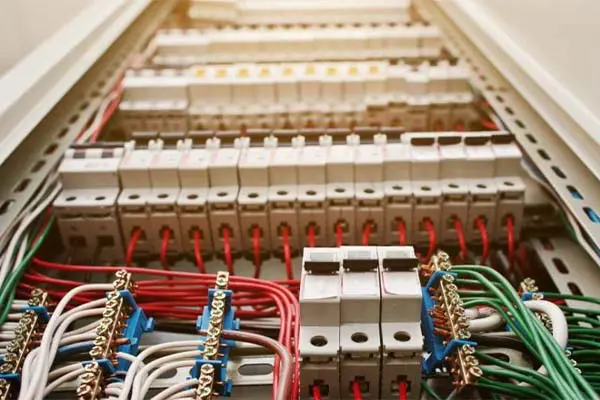
Typical constructions include thermal-transfer printable polyester films with permanent acrylic adhesives designed for long-term indoor industrial use.

Materials used in these environments typically prioritize high print clarity, low-profile flag construction, and resistance to handling abrasion.
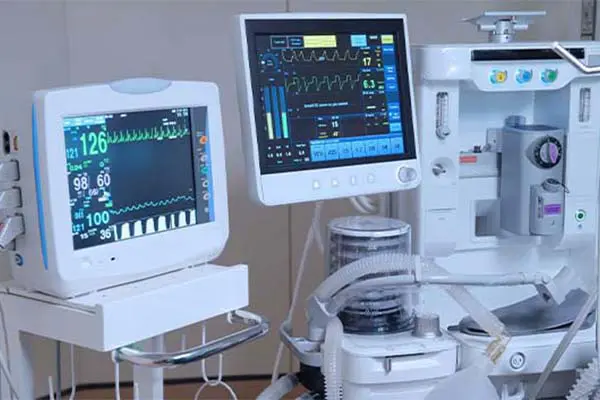
Materials are commonly selected for chemical resistance, flexible adhesion, and compatibility with variable data printing for traceability requirements.

High-performance film materials with aggressive permanent adhesives and solvent-resistant printing are commonly specified for these environments.

Labels used in these environments typically require resistance to alcohol wiping, frequent handling, and fine-detail barcode printing.

Flexible polyolefin constructions are often preferred where cable movement and bending are continuous operational factors.
Key Material Properties for Flag Shape Cable Labels

Thermal transfer printable polyesters and polyolefins are commonly used because they provide abrasion resistance and solvent-resistant imaging when paired with compatible resin ribbons. Engineers often look for smear resistance and barcode scan reliability after environmental exposure testing.

olyester constructions typically support higher temperature environments, while polyolefin materials are often selected where additional flexibility is needed. Depending on the application, materials may be evaluated for service ranges typically extending from sub-zero storage conditions up to elevated continuous operating temperatures.

Topcoated film facestocks combined with resin thermal transfer ribbons generally provide improved resistance to solvents and industrial cleaning procedures. Chemical resistance testing is especially important in manufacturing, aerospace, and medical device environments.
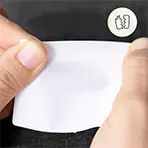
Flexible film materials with good tear resistance help maintain readability and structural integrity during long-term use. Polyolefin-based constructions are commonly selected for applications requiring repeated cable movement or tighter bend radii.
Regulatory & Compliance Considerations
Several industry standards may influence material selection for flag shape cable labels depending on the installation environment and end-use industry.
UL 969: Commonly referenced for marking and labeling systems used in electrical equipment. Evaluates permanence, legibility, and adhesion performance.
RoHS: Restricts the use of certain hazardous substances in electrical and electronic products. Material suppliers may provide RoHS compliance documentation for applicable constructions.
REACH: Addresses chemical substance safety within the supply chain and may affect material disclosure requirements.
CSA Requirements: Canadian electrical equipment applications may require labeling systems compatible with CSA-recognized equipment standards.
Compliance requirements vary by industry, equipment type, and geographic market. Material qualification should always be verified against the final application requirements.
Frequently Asked Questions
Flag labels keep printed information visible without rotating the cable, making wire identification faster in dense cable bundles or confined installations.
Polyester and polyolefin films are commonly used because they provide a balance of print durability, flexibility, and environmental resistance.
Yes, but outdoor applications typically require UV-resistant film materials, durable adhesives, and weather-resistant thermal transfer printing systems.
Most industrial flag labels are designed for thermal transfer printing using resin or resin-enhanced ribbons for improved abrasion and chemical resistance.
Many electrical equipment applications require UL-recognized labeling systems to support marking permanence and equipment compliance requirements.

