
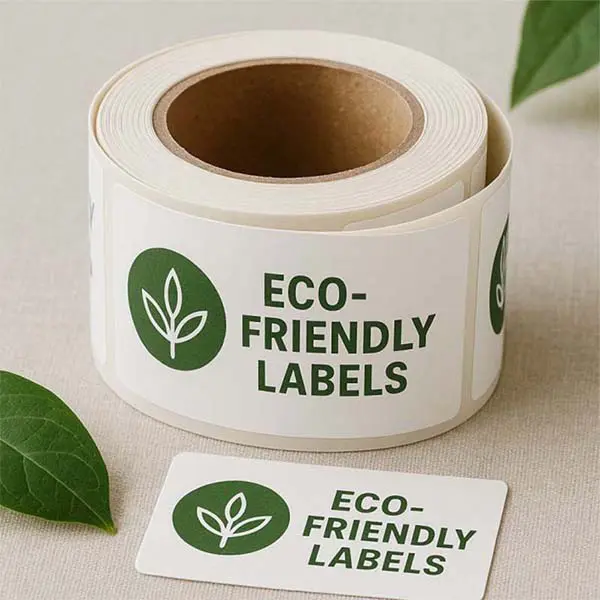
What Biodegradable Label Stock Is
Biodegradable label stock is a pressure-sensitive laminate engineered so that each functional layer — face stock, adhesive, and release liner — breaks down under industrial composting or natural degradation conditions without leaving persistent microplastic residue.
- At the construction level, the face stock is typically a kraft paper, wet-strength uncoated paper, or PLA (polylactic acid) film derived from plant starch, ranging from 60 µm to 120 µm in caliper depending on the application grade.
- The adhesive system is a water-based acrylic or natural rubber formulation applied by slot-die or comma-bar coating at a coat weight of 18–25 g/m² (dry), chosen specifically because solvent-based hot-melts inhibit composting certification.
- The release liner is either a glassine paper with silicone release coating or a compostable PLA liner, both selected to maintain die-cut precision on rotary converting lines while meeting end-of-life degradability requirements.
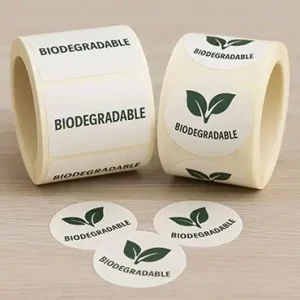
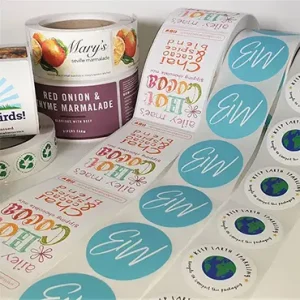
Die-cut round labels on permanent or removable adhesive; available in paper, film, or foil facestocks. Used for product sealing, color coding, promotional stickers, and retail packaging decoration.
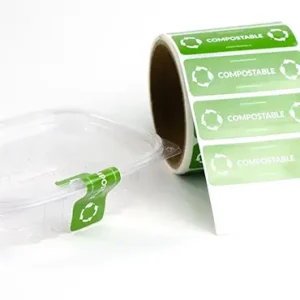
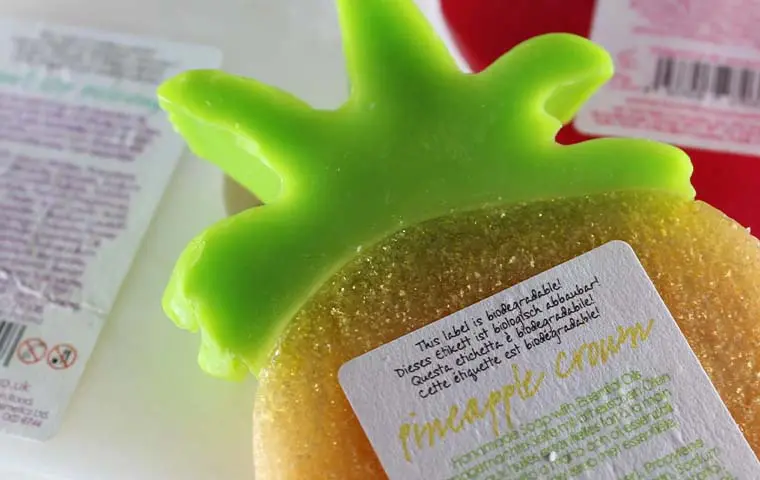
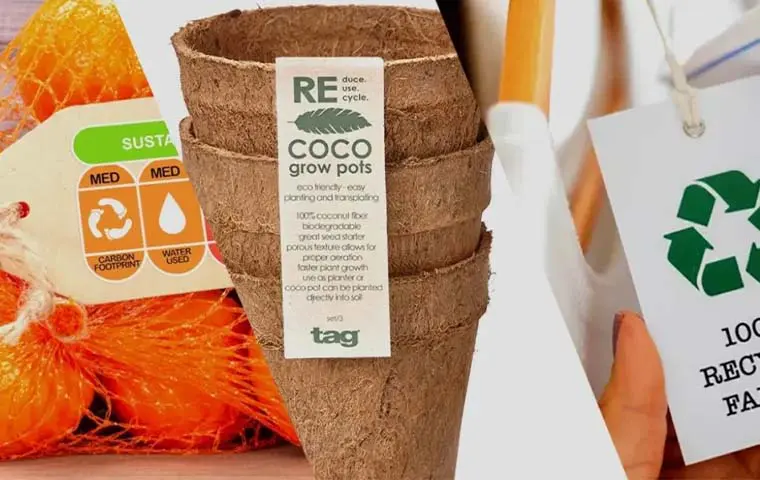
Plant-based or compostable facestock with water-soluble adhesive; meets EN 13432 composting standards. Suited for sustainable product packaging, organic goods, and eco-certified retail labeling.
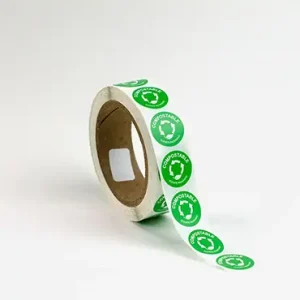
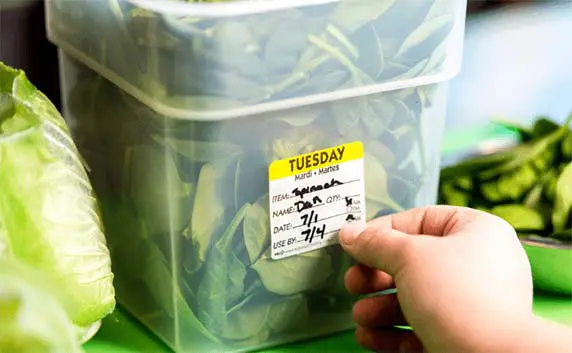
Compostable facestock and adhesive certified food-contact safe; compatible with inkjet and flexo printing. Used for fresh produce, deli packaging, and organic food brands targeting sustainability compliance.
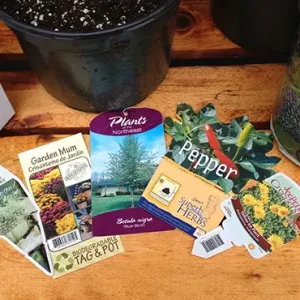
FSC-certified or PLA facestock with compostable adhesive; printable via flexo, digital, or thermal methods. Suited for consumer goods brands meeting extended producer responsibility and eco-label requirements.
Compostable PLA or kraft facestock withstands outdoor moisture and UV for short-term outdoor use. Used for nursery plant identification, seed packets, and garden retail merchandising applications.
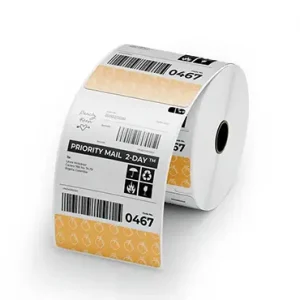
Compostable facestock compatible with inkjet, laser, and thermal transfer printing; meets EN 13432. Used for sustainable on-demand labeling in food service, retail, and eco-certified packaging lines.
Kraft or compostable film facestock with plant-based adhesive; compatible with standard thermal printers. Designed for e-commerce brands and fulfillment operations with sustainability compliance requirements.
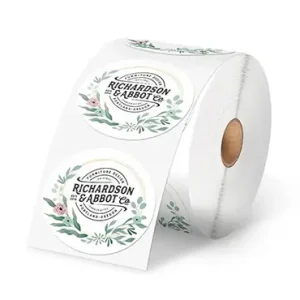
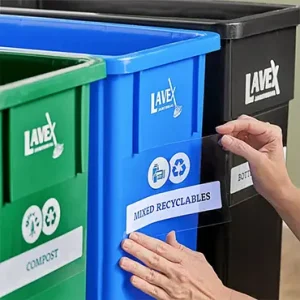
Compostable PLA or kraft facestock with water-resistant coating; adheres to HDPE and metal bin surfaces. Used for waste stream identification and recycling compliance in municipal and commercial facilities.
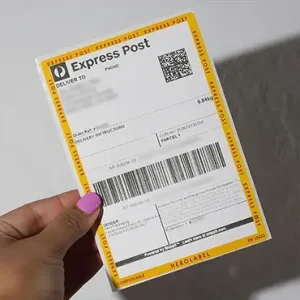
Direct thermal-compatible compostable facestock meets EN 13432; BPA-free coating ensures food-safe printing. Used for POS receipts, fresh food labeling, and sustainable retail packaging operations.
Biodegradable Label Applications
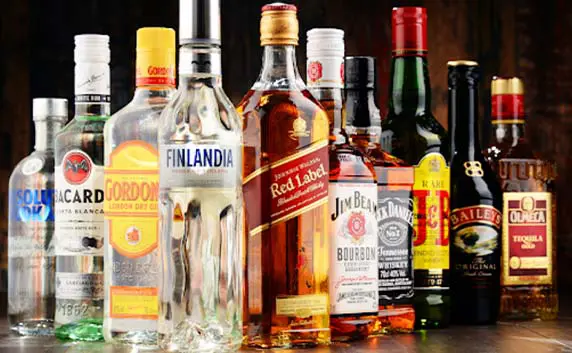
Biodegradable label stock with a water-based acrylic adhesive resolves this directly — the adhesive system carries no solvent residue and is formulated to meet food-contact migration standards, while the kraft or PLA face stock remains within EN 13432 composting parameters. Labels applied to glass jars, paperboard cartons, and compostable trays maintain adhesion through refrigerated distribution at 0°C to 10°C without delaminating at the face-stock-to-adhesive interface.

Prestige personal care brands increasingly require label materials that match a natural or clean-beauty brand narrative without sacrificing print quality.Vizlent’s face stocks are calendered to ±3 µm thickness tolerance across the roll width, keeping registration error within acceptable limits on narrow-web presses running at 60–80 m/min.
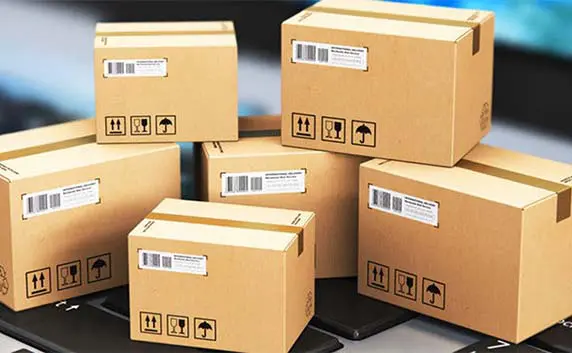
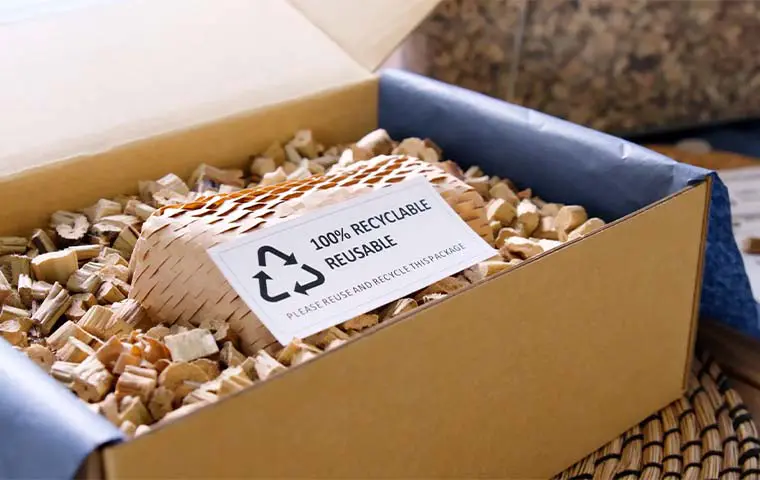
Corrugated and kraft mailer packaging used in direct-to-consumer e-commerce presents an adhesion challenge: the substrate surface is rough, porous, and dimensionally variable. Biodegradable label stock formulated with a higher coat-weight adhesive (22–25 g/m² dry) delivers the initial tack needed to bond immediately to uncoated corrugated without press-down time, while the kraft face stock visually integrates with the outer packaging aesthetic that sustainability-positioned brands require.
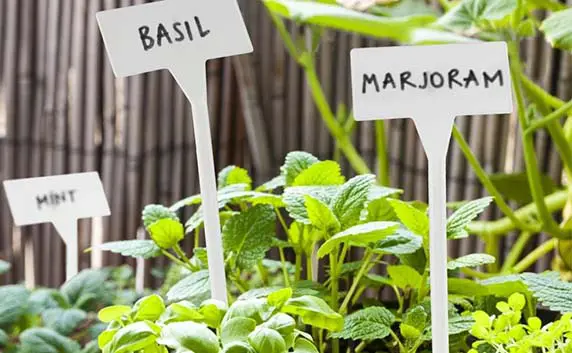
Nursery and horticultural labeling operates under continuous moisture exposure — irrigated benches, humidity tents, and outdoor rain exposure degrade standard paper labels within days. Wet-strength biodegradable face stocks, reinforced with a small proportion of synthetic wet-strength resin (typically PAE-based, biodegradable under composting conditions), maintain tensile strength and print legibility after 72-hour water immersion, which is the standard test condition for this application class.
Ordering Biodegradable Label Material
Formats
Vizlent supplies biodegradable label stock in three formats: jumbo rolls (master width up to 1,050 mm, depending on substrate), slit rolls cut to converter-specified widths with edge quality suitable for direct feeding to narrow-web presses, and custom-cut sheets in A4 and SRA3 for short-run digital printing operations.
MOQ varies by substrate grade and format; buyers should contact Vizlent directly with width, core size, and roll length requirements to receive a format-specific MOQ and pricing confirmation.
Lead Times
Bulk orders ship within 15 days of order confirmation, which covers production, slitting, QC, and export documentation.
Sample Process
For buyers evaluating a new substrate before committing to volume, A4 sample sheets and short sample rolls are available at no charge — sufficient for print trials, adhesion testing on target substrates, and composting certification pre-assessment.
Requesting samples requires only a brief specification: face stock type, adhesive grade, and liner preference.
Why Vizlent Produces Biodegradable Label Stock Differently from Trading Companies
Established as a direct manufacturer in 2011, Vizlent operates a 20,000 sqm production facility in Shenzhen, Guangdong, with additional teams in Hong Kong and Ganzhou — a structure that means technical specifications travel directly from the R&D lab to the coating line without intermediary interpretation.
For biodegradable label materials specifically, this matters because the interaction between water-based adhesive formulation, paper fiber absorbency, and liner release force must be tuned as a system, not assembled from separately sourced components.
Vizlent’s in-house R&D engineers adjust adhesive coat weight, paper sizing level,
Frequently Asked Questions
Compostable means the material degrades within a defined timeframe under industrial composting conditions (EN 13432 / ASTM D6400). Biodegradable is broader and unregulated. For claims-backed packaging, specify compostable with the relevant standard for your target market.
A modified water-based acrylic adhesive with cold-temperature tack formulation, applied at 22–24 g/m² coat weight, maintains bond on wet glass at 0°C to 5°C. Confirm the specific grade with Vizlent based on your dwell time and pull-off requirements.
Uncoated kraft and woodfree grades run on UV flexo with standard anilox volumes (4–6 cm³/m²). For dry toner digital, a light surface sizing improves fusing adhesion. Confirm printability with a sample roll trial before full production commitment.
MOQ varies by substrate and slit width — contact Vizlent with your specification for a direct quotation. Sample rolls and A4 sheets are available at no charge; bulk orders ship within 15 days of confirmation.
Water-based acrylic adhesive grades are formulated to comply with EU food-contact migration requirements. FSC certification covers chain-of-custody for paper fiber. For specific regulation references (EU 10/2011, REACH), request the relevant TDS and compliance documentation directly.

