

What Are Thermal Transfer Wax Ribbons?
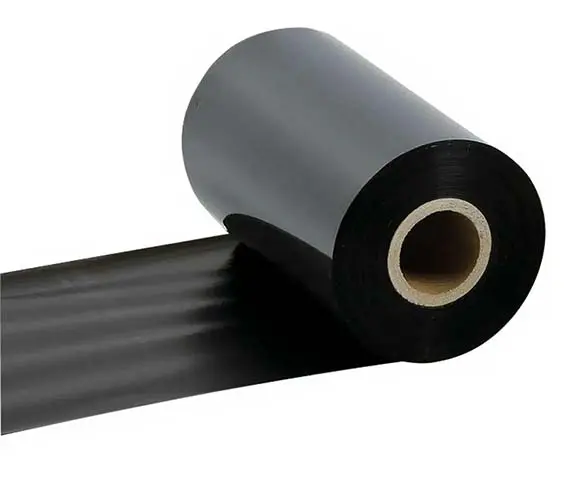
A wax ribbon is a specialized thermal transfer film coated with a wax-based ink formulation designed for printing on paper substrates. Utilizing a low printhead energy requirement, the printer’s heated elements melt the wax ink, transferring high-contrast, black images onto labels, making it the most cost-effective labeling solution for short-term indoor applications.
In high-demand industrial environments and rapid e-commerce fulfillment centers, producing legible, scannable data is a fundamental operational necessity. The thermal transfer wax ribbon serves as the primary consumable driving this data generation. Unlike direct thermal printing, which relies on chemically treated, heat-sensitive paper that degrades quickly under UV light, thermal transfer printing utilizes a substrate and a separate ribbon. This physical transfer of ink from the 4.5 μm PET base film to the label surface creates a highly readable, permanent mark that resists immediate fading, ensuring inventory tracking protocols remain uninterrupted.
The internal engineering behind an industrial thermal ribbon involves a highly calibrated, multi-layered structural composition. At VIZLENT, our standard and premium wax ribbon products are constructed to meet exceptionally tight manufacturing tolerances. The anatomy consists of a proprietary anti-static backcoating, the ultra-thin PET base film, a release layer, and the core wax-based ink formulation. This specialized construction guarantees smooth, frictionless travel through the printer mechanism, preventing static buildup that could catastrophically damage sensitive piezoelectric printheads in high-speed industrial printing scenarios.
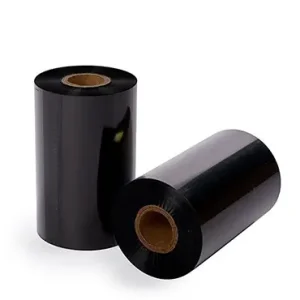
Wax Resin Ribbon Engineered for demanding industrial and commercial applications, our premium wax-resin thermal transfer ribbons deliver the perfect balance of durability, versatility, and cost-efficiency. Designed to perform flawlessly across a wide range of substrates—including glossy paper, BOPP, PET, and synthetic label materials—these ribbons provide exceptional smudge and scratch resistance. With advanced anti-static back-coating technology, […]
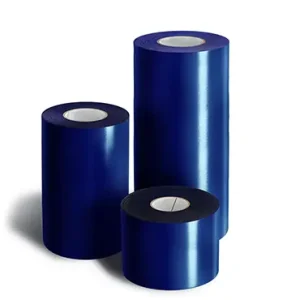
Wax Thermal Transfer Ribbon Engineered for maximum efficiency in high-volume operations, VIZLENT’s standard wax thermal transfer ribbons deliver reliable, dark prints at an unbeatable cost per roll. Designed specifically for standard flat-head thermal printers, these ribbons provide crisp barcodes, text, and graphics directly onto uncoated and matte-coated paper substrates. Backed by advanced anti-static back-coating technology, […]
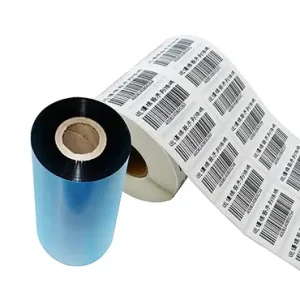
Barcode Wax Ribbon Ensure high first-pass scannability for your logistics and retail operations with VIZLENT’s premium barcode wax ribbons. Engineered for maximum cost-efficiency in high-volume thermal transfer printing environments, our advanced wax formulation delivers deep, high-contrast 1D and 2D barcodes on both uncoated and matte-coated paper substrates. Ideal for wholesalers, label converters, and busy fulfillment […]
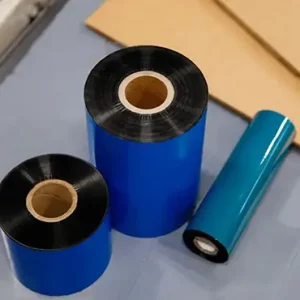
Features an anti-static backcoating and operates at high print speeds up to 12 IPS. Formulated for standard flat-head printers. Designed for general-purpose paper labeling and inventory management.
Technical Specifications and Compliance
Understanding the precise technical parameters and material makeup of a wax ribbon is essential for procurement managers aiming to optimize their thermal transfer printing operations. Utilizing an incompatible ribbon can lead to poor barcode grading, excessive printhead wear, and operational downtime. Below is a comparative breakdown of standard ribbon specifications to assist in proper material qualification.
| Specification Metric | Standard Wax Ribbon | Resin-Enhanced Wax | Pure Resin (For Context) |
|---|---|---|---|
| Base Film Material | 4.5 μm PET | 4.5 μm PET | 4.5 μm – 5.7 μm PET |
| Melting Point | 65°C | 75°C – 80°C | > 100°C |
| Printhead Energy Req. | Low | Medium-Low | High |
| Smudge Resistance | Low to Moderate | High | Extreme |
| Substrate Compatibility | Uncoated / Vellum Paper | Coated Paper / Matte Film | Gloss Synthetic / Polyimide |
Performance Standards and Testing Methodology
Smudge resistance and mechanical abrasion are evaluated using specialized crockmeters. In these tests, a weighted stylus rubs the printed image repeatedly to simulate the friction of shipping and handling. A premium wax ribbon must retain complete legibility and barcode integrity after a specified number of abrasive cycles. By adhering to these strict internal testing methodologies, VIZLENT ensures that every roll of industrial thermal ribbon meets the exact operational tolerances demanded by high-volume manufacturing facilities.
Material Certifications and Global Compliance
While primary safety identification labels must comply with rigorous OSHA 1910.144 and ANSI Z535 protocols using highly durable resin on synthetic substrates, the logistical tracking of those safety components relies on compliant wax ribbons. For the food processing and pharmaceutical logistics sectors, our specialized ribbons carry ISEGA certification, certifying them as safe for indirect food contact. Partnering with an ISO 9001:2015 certified direct manufacturer with 15+ years of expertise ensures your consumables insulate your organization from regulatory liabilities while delivering peak performance.
Key Characteristics of the Wax Ribbon
The primary characteristics that define a premium industrial wax ribbon include its low melting point, exceptional transmission density, and distinct cost advantages over resin counterparts. Operating efficiently with a 65°C to 80°C melting point, a wax ribbon requires significantly less thermal energy from the printer to achieve proper ink transfer. This low printhead energy requirement directly translates to prolonged printhead service life, reducing costly hardware maintenance and minimizing production downtime in heavy manufacturing and logistics operations.
Furthermore, an optimized black wax ribbon provides superior optical clarity and print darkness. VIZLENT ribbons achieve a transmission density greater than 1.5, yielding razor-sharp text, highly defined graphics, and flawless edge detection for scanning hardware. This exceptional barcode scannability is critical for compliance with strict supply chain mandates. While inherent durability against severe mechanical abrasion or harsh chemicals is lower than pure resin, modern resin-enhanced wax formulations offer moderate smudge resistance, perfectly suited for the lifecycle of shipping and routing labels.
How the Thermal Transfer Process Works
The operational physics of printing with a thermal transfer wax ribbon relies on precisely timed thermal dynamics. As the ribbon and the label substrate pass concurrently beneath the thermal printhead, microscopic heating elements (dots) rapidly pulse with thermal energy. This localized heat conducts through the anti-static backcoating and the 4.5 μm PET base film, instantaneously melting the wax-based ink formulation resting on the carrier film’s underside.
Once the wax ink transitions into a molten state, mechanical pressure from the platen roller forces it to physically adhere to the porous surface of the receiving substrate—typically uncoated or matte-coated paper. As the materials exit the printhead zone, the ink rapidly cools and solidifies, permanently bonding to the label fibers. Because a wax ribbon requires minimal heat to activate, it facilitates continuous, high-speed printing compatibility up to 12 inches per second (ips), making it the optimal choice for demanding, high-throughput warehouse bin labeling and flexible packaging barcodes.
Applications and Target Industries
The deployment of highly engineered wax ribbon technology is deeply embedded across numerous critical supply chain and industrial sectors. Any environment where rapid, variable data must be generated cost-effectively relies heavily on the consistent performance of a thermal transfer wax ribbon. VIZLENT provides targeted ink formulations and specific core configurations customized for the rigorous demands of these distinct industrial verticals.


Logistics, Warehousing, and E-commerce Fulfillment:
Beyond external shipping, internal warehouse management relies on thermal transfer printing for structural organization. Warehouse bin labeling, pallet license plating, and cross-docking tags require clear, bold alphanumeric characters. Because these environments are typically climate-controlled and indoor, a resin-enhanced wax ribbon offers the perfect balance of cost-effective labeling and sufficient smudge resistance to withstand the daily friction of forklift operations and manual inventory picking.
Retail Apparel and Food Beverage Packaging:
In food and beverage packaging, specific regulatory guidelines govern material usage. While direct food contact requires specialized containment, indirect labeling on outer cartons, flexible packaging barcodes, and secondary shrink-wrapped pallets heavily utilizes industrial thermal ribbon technology. Compliance is crucial; therefore, our wax ribbons are manufactured under strict environmental controls, holding ISEGA certification for indirect food contact, ensuring absolute safety for consumer goods processing facilities.
Frequently Asked Questions
When stored correctly in a climate-controlled environment—typically between 41°F and 95°F (5°C to 35°C) with a relative humidity of 20% to 80%—a high-quality wax ribbon has a shelf life of up to 24 months. Keep rolls away from direct sunlight, chemical vapors, and extreme heat to prevent the wax-based ink formulation from degrading or melting prematurely.
No, printing on synthetic substrates like polyester, polypropylene, or die-cut vinyl requires a resin ribbon. A thermal transfer wax ribbon is formulated specifically for the porous surface of paper. If applied to a smooth synthetic plastic film, the wax ink will not bond properly, resulting in immediate smudging and an inability to withstand environmental exposure.
Ribbon wrinkling, which causes diagonal unprinted voids through barcodes, is usually a hardware calibration issue. It can be caused by uneven printhead pressure, a worn platen roller, or incorrect ribbon tension settings on the supply and take-up spindles. Ensure your printer is properly calibrated and that you are using a premium wax ribbon with a high-quality PET base film that resists tension distortion.
The anti-static backcoating is an ultra-thin, proprietary layer applied to the side of the 4.5 μm PET base film that physically touches the thermal printhead. It serves two critical functions: it drastically reduces mechanical friction as the ribbon moves, and it dissipates static electricity generated by the high-speed printing compatibility. This prevents static shocks that permanently destroy printhead heating elements.
Poor barcode scannability can result from a mismatch between the printhead energy requirement and your printer’s darkness settings. If the heat setting is too high for a standard wax ribbon, the ink can bleed and spread, thickening the barcode lines and ruining the necessary white-space contrast. Lower the heat settings to match the 65°C to 80°C melting point of the wax formulation.

