
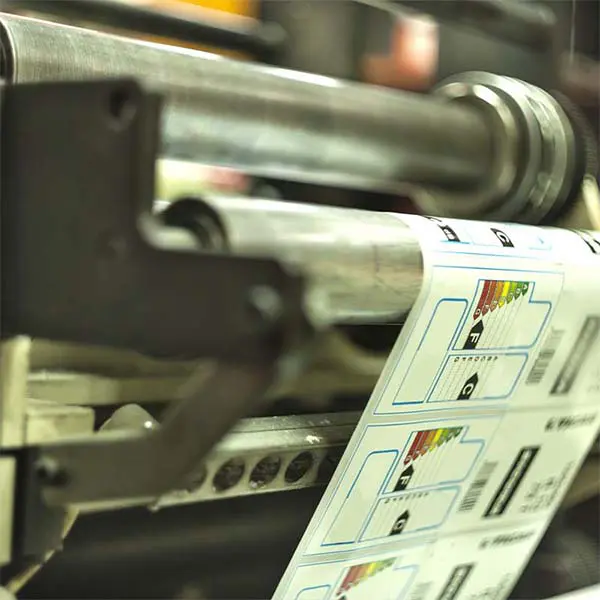
Why Appliance and Industrial Labels Require Specialized Materials
Consumer appliances and industrial equipment occupy a labeling middle ground that is often underestimated. Unlike automotive under-hood applications, most appliance labels are not submerged in fluids or exposed to extreme engine heat continuously—but unlike office or retail labels, they must survive repeated thermal cycling, cleaning chemical exposure, and physical contact across service lives measured in decades, not months.
A polyester or polypropylene label applied near a dryer exhaust duct or dishwasher door seal must not shrink, curl, or lose adhesion under repeated thermal cycling between ambient and elevated temperature. Standard paper facestocks absorb moisture and delaminate in dishwasher or laundry environments; even many synthetic films will embrittle or soften depending on their formulation and the adhesive chemistry selected.
Industrial equipment—motors, pumps, compressors, control panels, conveyors—introduces a different set of stressors. Lubricating oils, hydraulic fluids, cutting fluids in manufacturing environments, and aggressive cleaning agents used for equipment maintenance will degrade most standard adhesives and attack inks that are not chemically hardened. Vibration from rotating machinery challenges adhesive bond integrity on metal and powder-coated surfaces over years of continuous operation. Outdoor or partially sheltered installation adds UV exposure and moisture ingress as additional failure modes.
Perhaps most critically, a significant proportion of appliance and industrial labels carry mandatory regulatory content—UL recognition marks, energy efficiency ratings, electrical safety warnings, GHS hazard information—that cannot legally be absent, illegible, or misrepresented at any point in the product’s service life. A label failure in these contexts is not just an aesthetic problem; it can constitute a compliance violation and create product liability exposure.
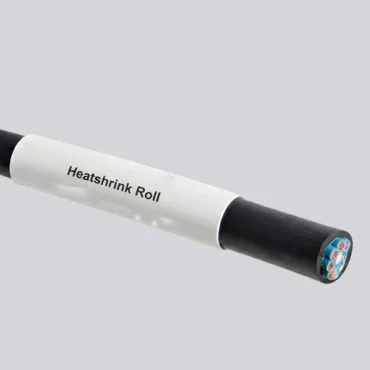
Vizlent Cable Marker Label Sleeve delivers reliable industrial cable identification. Heat shrink design ensures secure, legible marking in harsh wiring environments.
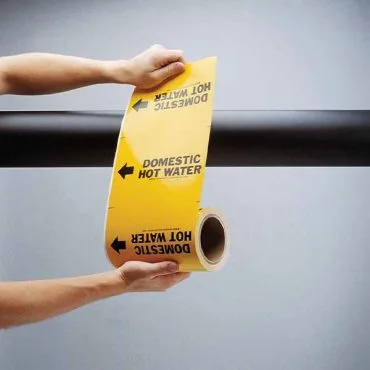
INDUSTRIAL WATER Roll Form Pipe Marker by Vizlent. ANSI/ASME A13.1 colors, UV stable vinyl, abrasion resistant, ideal for plant water line identification.
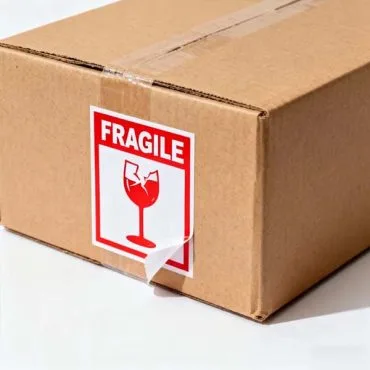
Customized Industrial Warning Safety Labels by Vizlent. UV stable, abrasion and chemical resistant, ANSI/ISO compliant, ideal for machinery and electrical hazards.
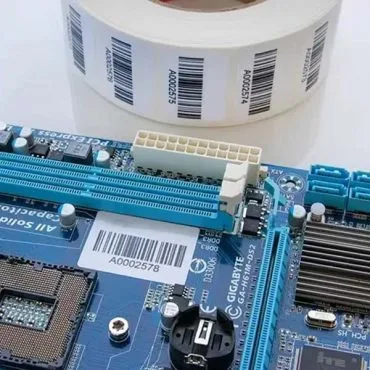
Heat Resistant Polyimide Labels For Industrial Use from Vizlent. Withstand 260 °C reflow soldering, UL 94 V-0, ideal for PCB and electronics traceability.
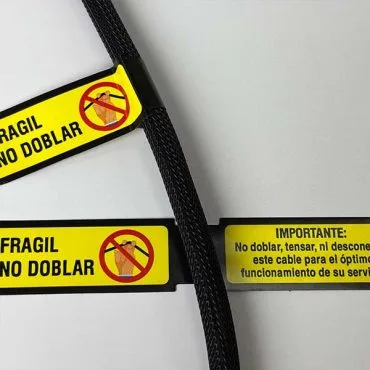
Wrap Around Label Cable Labels for Industrial Identification by Vizlent. Self-laminating, UL 94 V-0, abrasion resistant, ideal for harsh plant environments.
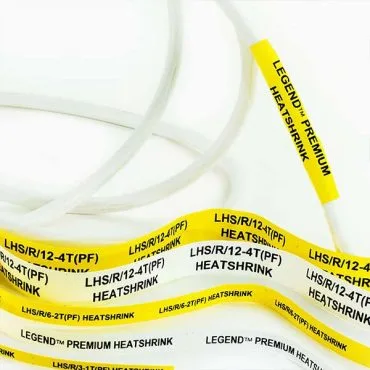
Cable Marker Label Sleeve Heat Shrink Sleeve Label by Vizlent. 2:1 or 3:1 shrink, halogen-free, UL recognized, ideal for permanent wire identification.
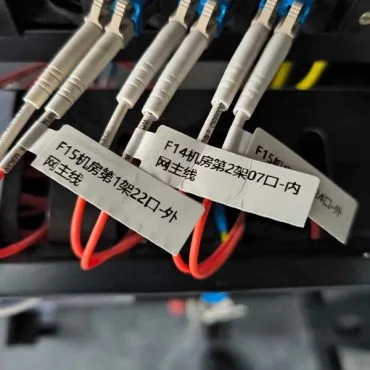
Wrap Around Label for Network Infrastructure and Industrial Electrical Wiring from Vizlent. Self-laminating, durable, UL 94 V-0, ideal for data centers and panels.
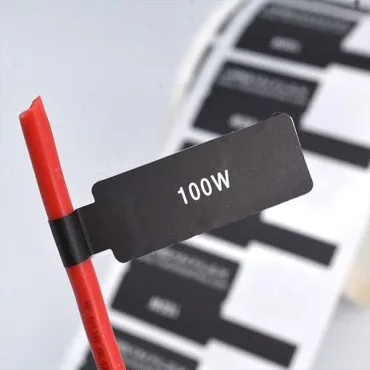
Industrial Cable Wrap Labels by Vizlent. Self-laminating vinyl, UL 94 V-0 rated, oil and solvent resistant, ideal for harness ID in industrial panels.
Key Material Properties for Appliance and Industrial Labels
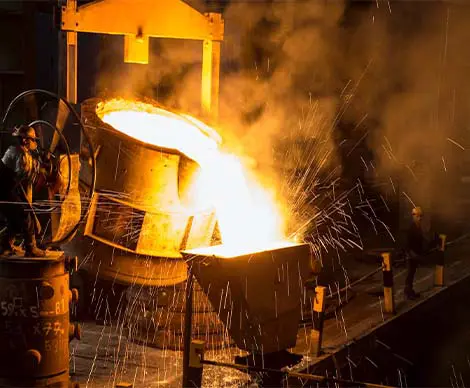
Thermal stability means the label construction—facestock, adhesive, and ink system together—maintains its dimensions, bond strength, and print legibility through the temperature range the equipment generates in normal operation and through the thermal cycling that occurs as equipment starts, runs, and cools. For most consumer appliance applications, a material rated for continuous service at 150°C is an appropriate baseline, covering proximity to heating elements without requiring the higher-cost polyimide constructions needed for true under-hood automotive temperatures.
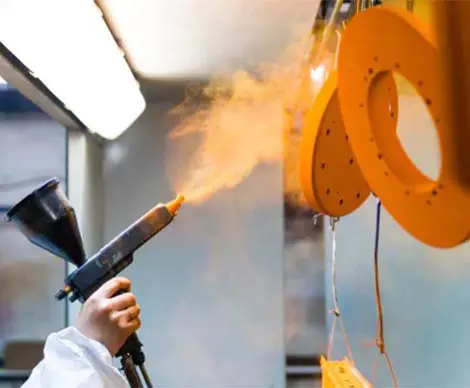
The predominant exterior surface on appliances and industrial equipment is powder-coated or liquid-painted steel or aluminum. Powder coat texture varies considerably by manufacturer—from relatively smooth gloss finishes to heavily textured wrinkle coats—and surface texture directly affects adhesive contact area and initial tack.
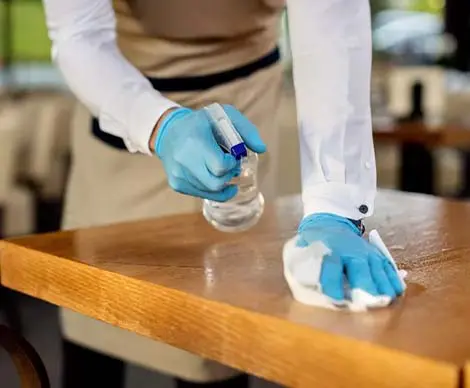
Appliance and industrial labels regularly contact household cleaners (bleach-based, ammonia, citrus degreasers), industrial degreasers, lubricating oils, and disinfectants—particularly in commercial food service equipment and pharmaceutical or medical device manufacturing environments. The relevant failure modes are adhesive swelling leading to edge lifting, ink dissolution or smearing, and facestock surface degradation that impairs legibility.
Control panel overlays and instruction labels on appliances are touched repeatedly—sometimes thousands of times over the life of the product. Rating labels on industrial motors and compressors are read by technicians who may wipe them with gloved hands or cleaning rags. Facestocks with hard-coat topcoats, or thicker polyester films (typically 2 mil or heavier), offer meaningful abrasion resistance compared to thin films or paper.
Industrial equipment installed outdoors or in partially sheltered environments—HVAC units, electrical enclosures, pumping stations, outdoor generators—requires labels that resist UV-driven degradation over years of sun exposure. UV degradation manifests as facestock embrittlement, color shift in both the substrate and printed content, and adhesive failure at label edges where UV penetration is highest. UV-stabilized polyester and UV-resistant BOPP facestocks with UV-hardened topcoats are the standard construction for outdoor industrial labels.
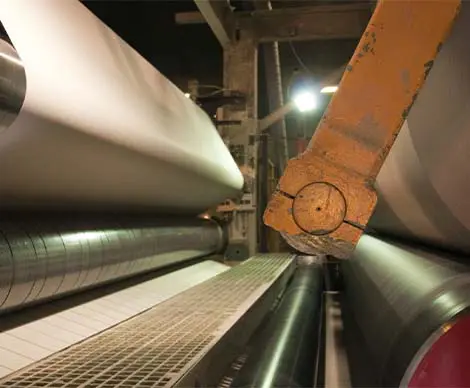
High-volume appliance assembly lines apply labels automatically using label dispensing equipment or robotic applicators. Facestock materials that change dimensions with humidity—particularly paper-based stocks—cause web tension variation, misfeed errors, and placement inaccuracy that disrupt line throughput. Polyester film facestocks offer significantly better dimensional stability than paper or unsupported polypropylene, holding caliper and width within tight tolerances across typical manufacturing plant humidity ranges.
Regulatory and Compliance Considerations
UL 969 (Marking and Labeling Systems): UL 969 establishes the testing protocols and performance requirements for labels used on products that carry a UL listing. If the equipment itself is UL listed, the labels applied to it—particularly safety and rating labels—may be required to be recognized under UL 969 for the specific use environment (indoor, outdoor, wet location, high temperature, etc.).
FTC 16 CFR Part 305 (Energy Labeling Rule): The Federal Trade Commission’s Appliance Labeling Rule mandates EnergyGuide labels on a defined list of residential appliances sold in the United States, specifying label format, content, color, and placement. The rule does not specify material construction in detail, but durability requirements are implicit—labels must remain legible through the product’s retail and service life.
GHS / OSHA HazCom 2012: Equipment that incorporates or is used with hazardous chemicals—industrial machinery with hydraulic systems, cleaning-in-place (CIP) systems, refrigeration equipment with ammonia or HFC refrigerants—requires GHS-compliant hazard communication labels on the relevant reservoirs, access points, or product containers.
NEMA MG 1 (Motors and Generators): The National Electrical Manufacturers Association standard MG 1 includes nameplate marking requirements for electric motors. The nameplate must be of a material and construction that remains legible under the motor’s rated service conditions—temperature, humidity, and exposure class.
How to Select the Right Label Material
Establish the actual operating temperature range at the label location. Do not use the maximum rated temperature of the equipment as a proxy for label temperature; measure or estimate the temperature at the specific surface where the label will be applied.
Identify all chemical exposures and their concentrations. List every cleaning agent, lubricant, fluid, or chemical the label may contact during the product’s service life, including chemicals used in the manufacturing plant during assembly.
Confirm whether a UL 969 recognized construction is required. If the equipment carries a UL listing, determine whether the applicable UL standard for that product type requires labels to be UL 969 recognized.
Match the print method to the durability requirement. Thermal transfer printing with a resin ribbon on polyester is the standard for high-durability variable-data printing in appliance and industrial applications.
Frequently Asked Questions
A matte or gloss white polyester facestock with a high-temperature acrylic adhesive rated for continuous service at 150°C or higher is typically appropriate for this application, as it provides thermal stability, chemical resistance to common cleaning agents, and compatibility with thermal transfer or laser printing. If the label location is closer to the element or experiences short-duration temperatures above 150°C, a polyimide facestock with a silicone adhesive construction should be evaluated.
Whether UL 969 recognition is specifically required depends on the applicable product safety standard for that appliance category and the UL field representative’s interpretation during listing evaluation—not all UL-listed products have an explicit requirement for UL 969 recognized labels, but many do for safety and rating labels. The safest practice is to confirm the requirement directly with the certification body during product listing, because using a non-recognized construction on a product where recognition is required can trigger a finding during a follow-up inspection.
A polyester facestock with a resin-grade thermal transfer ink system and a hard-coat topcoat, paired with a permanent acrylic adhesive, is the standard construction for labels subject to regular IPA or bleach cleaning—though the specific adhesive and topcoat formulations should be validated by wipe testing with the actual cleaning agents at the concentration and frequency used in the field. Paper facestocks and wax or wax-resin inks will degrade rapidly under repeated IPA or bleach exposure and are not appropriate for this application.
A UV-stabilized polyester facestock with a UV-resistant topcoat and a permanent acrylic adhesive can often serve both indoor and outdoor applications adequately, making it a practical common specification when volume justifies eliminating two SKUs. The key is ensuring the outdoor-capable construction meets the indoor requirements as well (which it typically does) and that print content uses UV-stable ribbons or inks, since a UV-stable facestock paired with a UV-sensitive ribbon will still fade outdoors.
A properly specified polyester barcode label with a resin thermal transfer image, applied to a clean, compatible surface, typically remains scannable for five to ten years or more in a standard indoor industrial environment without aggressive chemical exposure—though service life in high-solvent, wash-down, or outdoor environments will be shorter without an overlaminate or additional protective construction. The limiting factor is usually print degradation or adhesive edge failure from chemical or UV attack rather than facestock failure, so the print system selection and surface preparation at application are as important as the facestock specification.

