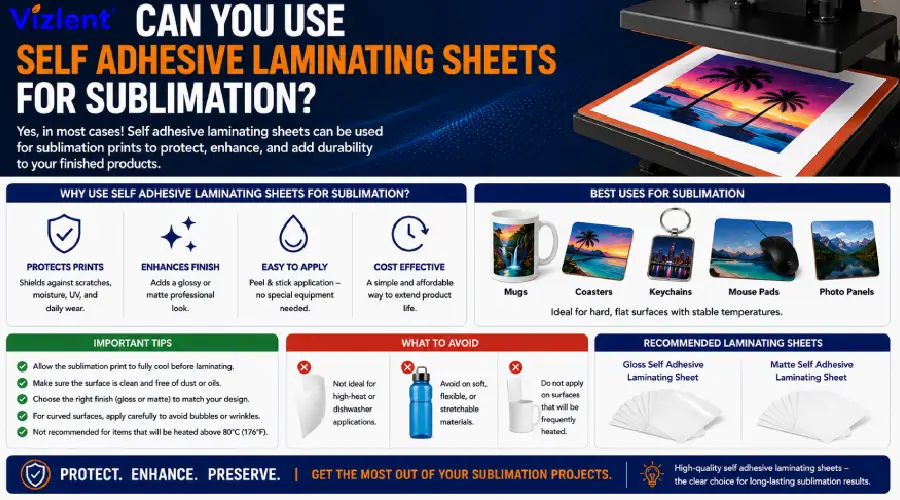
Yes, you can use self adhesive laminating sheets for sublimation, but only when the film is rated for the heat and pressure a heat press applies during transfer. Standard cold lamination film softens, bubbles, or releases its adhesive backing above 200°F, which makes it unsuitable for direct sublimation contact. A construction built for sublimation work uses a heat resistant facestock and an adhesive system engineered to survive 350°F to 400°F press cycles without shrinking or discoloring the print underneath.
This guide breaks down which self adhesive laminating sheets hold up under sublimation heat, which ones are made for stickers or general document protection instead, and how converters and print shops can source the right material for consistent, repeatable results. We cover melting point ranges, application methods, and sourcing questions people search for most, including self-adhesive laminating sheets near me and how to use self-adhesive laminating sheets on blanks, mugs, and hard surfaces.
Ready to test a heat resistant laminating film on your next sublimation run? Request a Free Sample from our factory and confirm compatibility before you commit to a bulk order.
What Are Self Adhesive Laminating Sheets?
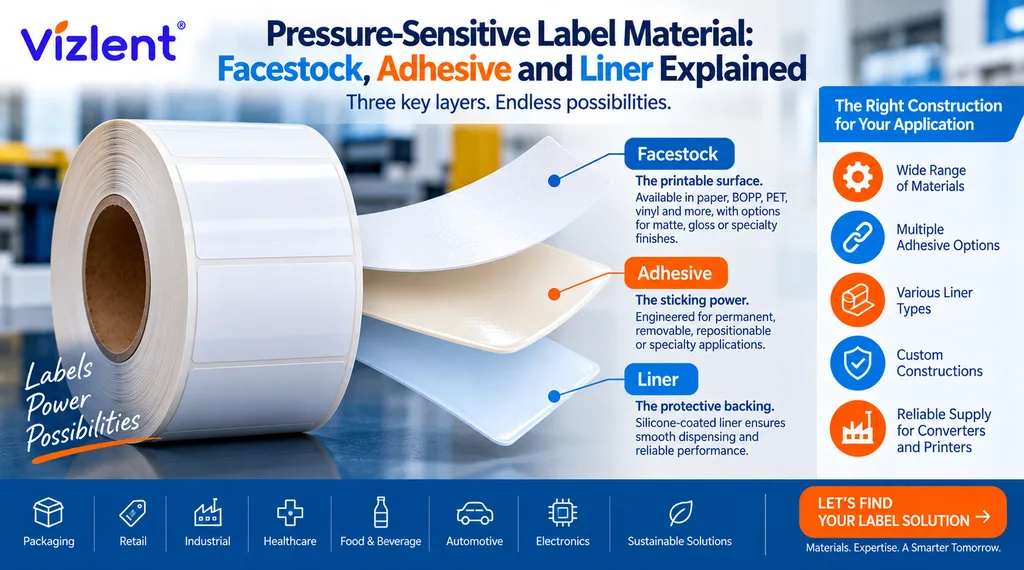
This kind of laminate is a pressure sensitive film with a protective top layer bonded to a release liner, designed to seal, protect, or decorate a printed surface without a laminator machine. They differ from standard laminating pouches, which require heat and a roller system to fuse two layers of film around a printed page. Because the adhesive is already coated on the film, this material bonds on contact once the liner is peeled away.
Manufacturers produce this self adhesive material in several facestocks, including PET, BOPP, and PVC, each suited to different jobs such as stickers, labels, signage, or protective document covers. Some constructions use a permanent acrylic adhesive for long term durability, while others use a removable formula for temporary applications. The right choice depends on the surface, the expected exposure conditions, and the heat, moisture, or handling the finished piece needs to survive.
- PET facestock: High clarity, strong heat tolerance, common in laminating film for sublimation and durable label work
- BOPP facestock: Economical, good for indoor signage and everyday sticker protection
- PVC facestock: Flexible, used for curved surfaces and outdoor applications
How Sublimation Printing Works and Why Lamination Matters
Sublimation printing transfers dye from a special ink directly into a substrate using heat and pressure, converting the ink from a solid to a gas without passing through a liquid stage. A heat press typically runs between 350°F and 400°F for 45 to 60 seconds, forcing the dye to bond permanently with polyester fabric, coated ceramics, or specially treated hard surfaces. Because of this intense thermal cycle, any film placed in contact with the print during transfer must survive the same temperature range without warping.
Lamination enters the picture when a finished sublimated item needs an extra layer of scratch resistance, gloss control, or moisture protection, or when a blank surface needs a receptive coating before dye can bond to it at all. Using laminating sheets for sublimation in the wrong stage of the process, such as applying a low heat film during the actual press cycle, can ruin both the print and the substrate. This is why sourcing self adhesive laminating sheets for sublimation applications from a manufacturer that documents melting point and heat tolerance data matters more than price alone.
Not sure which facestock survives your press temperature? Contact Our Support Team and our engineers will match a laminating film to your exact sublimation workflow.
Can You Use Self Adhesive Laminating Sheets for Sublimation and Heat Press Projects?
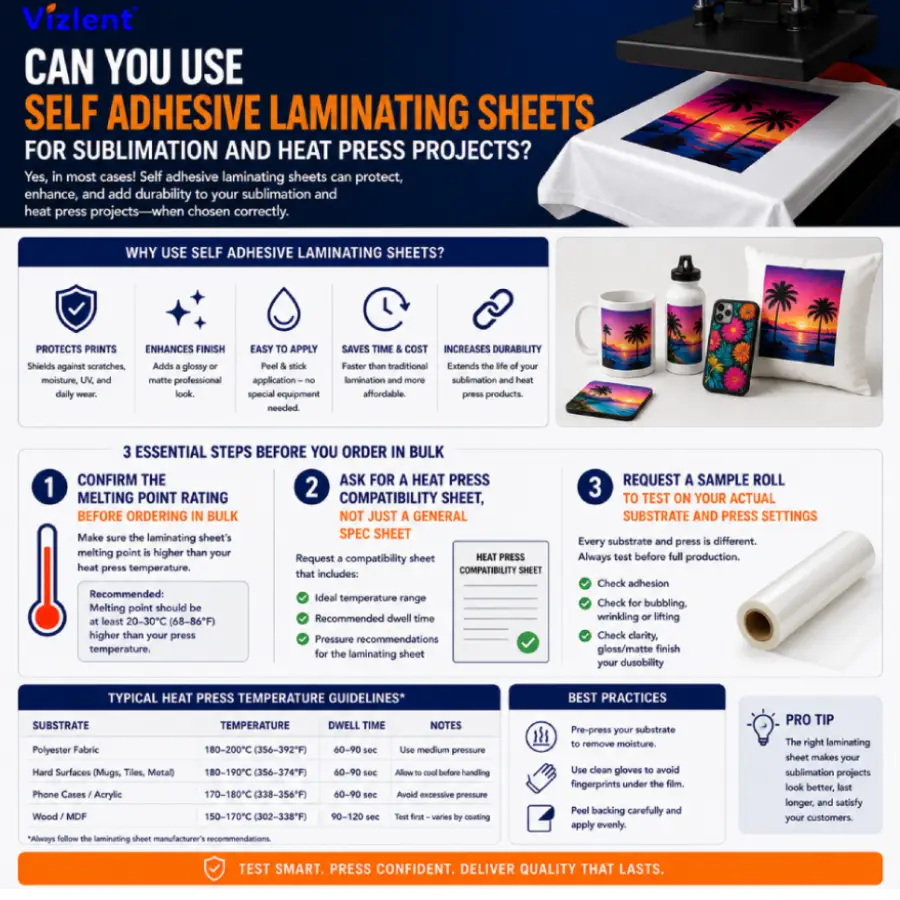
The short answer is yes, provided the film is a heat rated construction and not a standard office or cold lamination product. Self adhesive laminating sheets for sublimation and printing projects need a facestock that tolerates repeated exposure to press temperatures without releasing fumes, shrinking, or leaving adhesive residue on the platen. Films built for this purpose typically list a melting point above 400°F and carry a top coat that resists the moisture generated during the dye transfer process.
Print shops running sublimation and heat press work side by side often keep two separate film types on hand: one heat resistant stock for pressing stages and one standard stock for finishing or protecting the completed piece afterward. Mixing up the two is one of the most common production mistakes we hear about from converters new to sublimation. A supplier who can confirm melting point, adhesive type, and facestock composition in writing removes the guesswork before a production run begins.
- Confirm the melting point rating before ordering in bulk
- Ask for a heat press compatibility sheet, not just a general spec sheet
- Request a sample roll to test on your actual substrate and press settings
Self Adhesive Laminating Sheets for Sublimation Blanks and Common Applications
Sublimation blanks, including tumblers, phone cases, coasters, and hard signage panels, often arrive with a polymer coating that needs a protective film once the design is transferred. A heat rated laminate applied to sublimation blanks adds scratch resistance and a controlled gloss or matte finish without interfering with the printed image underneath. This step happens after the heat press cycle is complete, once the dye has fully bonded to the coating.
Businesses producing custom drinkware, promotional items, or personalized gifts frequently laminate the finished piece to extend its handling life through dishwashing, sun exposure, or daily use. Sublimation business owners rely on this post-press lamination step to reduce returns caused by scratched or faded artwork. Choosing a facestock with strong UV resistance is worth the extra cost for any product that will sit outdoors or see repeated washing.
Building a product line around sublimation blanks? Explore Our Laminating Films and request specs suited to drinkware, signage, or promotional goods.
Melting Point and Heat Resistance: What to Check Before You Laminate
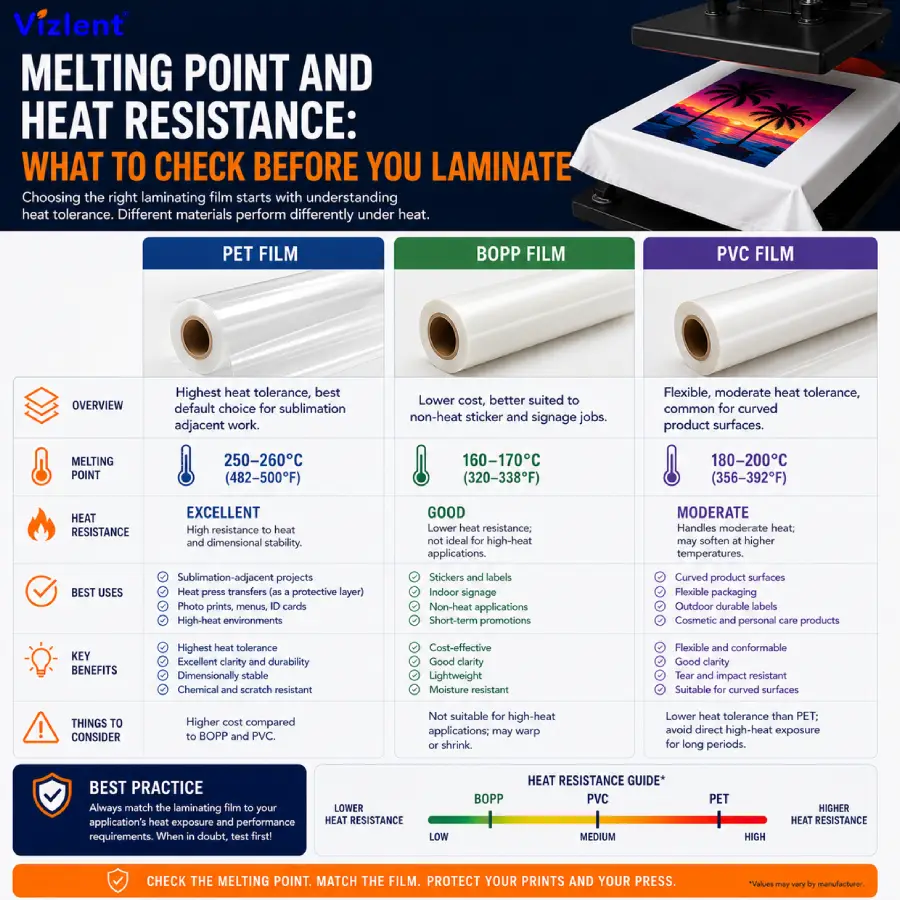
Every facestock and adhesive combination has a melting point ceiling, and self adhesive laminating sheets for sublimation and melting point compatibility should be the first two specs a buyer checks before placing an order. PET films generally hold up best under sublimation heat, often rated to 480°F or higher, while standard BOPP or vinyl films can begin to distort well before a typical press cycle finishes. Adhesive chemistry matters just as much as the facestock, since a low grade acrylic can soften and bleed at temperatures the film itself survives.
Reputable manufacturers test their materials using controlled heat exposure and document the results rather than relying on marketing claims alone. At VIZLENT, every roll of thermal lamination film is lab tested for coat weight, adhesive anchorage, and thermal performance before it leaves our facility in Shenzhen. Buyers evaluating a new supplier should always ask for this kind of documentation, since a missing data sheet is often a sign the product was never tested for the application at all.
- PET film: Highest heat tolerance, best default choice for sublimation adjacent work
- BOPP film: Lower cost, better suited to non-heat sticker and signage jobs
- PVC film: Flexible, moderate heat tolerance, common for curved product surfaces
How to Use Self Adhesive Laminating Sheets the Right Way
Learning how to use self-adhesive laminating sheets correctly starts with surface preparation, since dust, oil, or moisture trapped under the film will show up as bubbles or weak adhesion later. Clean the substrate, let it reach room temperature, and peel the release liner slowly to avoid stretching the film before it makes contact. Apply from one edge and press outward with a squeegee or roller to push air out evenly rather than trapping it in the center.
For curved or textured surfaces, warming the film slightly with a heat gun on a low setting can improve conformability without triggering the same reaction a full heat press cycle would cause. Using laminating sheets for sublimation projects specifically means waiting until the dye has fully cured and cooled before applying any protective layer, since laminating too early can smear uncured ink. Following a consistent application sequence reduces waste and gives converters a repeatable process across every batch.
- Clean and dry the substrate fully before application
- Peel the liner slowly and apply from one edge outward
- Use a squeegee to remove trapped air and prevent bubbling
- Allow sublimated prints to cool completely before laminating
Self Adhesive Laminating Sheets for Stickers vs Sublimation Projects
A sticker laminate prioritizes different properties than films built for sublimation adjacent work, since stickers mostly need scratch resistance, UV stability, and a clean die cut edge rather than extreme heat tolerance. A sticker laminate might use a lower cost cold lamination film with a permanent adhesive, since it never touches a heat press during production. Sublimation focused films, by contrast, are chosen specifically for their ability to withstand press temperatures or protect a dye sublimated surface afterward.
Converters serving both markets often stock separate film families to avoid confusion on the production floor, labeling rolls clearly by intended use and maximum temperature rating. Mixing a sticker grade laminate into a sublimation workflow risks product failure and wasted substrate, especially on higher value blanks like tumblers or phone cases. Working with one manufacturer that produces both sticker and sublimation grade films under the same quality system simplifies sourcing and reduces the chance of a mismatched order.
Laminating Pouches vs Thermal Laminating Sheets for Sublimation
Laminating pouches for sublimation require a separate laminator machine that applies heat and pressure to fuse two layers of film around a printed piece, which differs from the self adhesive format that bonds on contact. Thermal laminating sheets for sublimation, meanwhile, are heat activated films applied with a laminator rather than peeled from a liner, and they are common in high volume print shops running continuous rolls. Both formats can produce a durable finish, but the choice usually comes down to existing equipment and production volume, since some shops still use lamination paper for sublimation on flat document style pieces while most prefer roll or sheet laminate film for sublimation blanks and drinkware.
Smaller studios and businesses without a pouch laminator on hand generally prefer the self adhesive format for its speed and lower equipment cost, since no additional machine is required to finish a piece. Best laminating pouches for sublimation tend to offer a slightly more uniform finish on flat, high volume jobs, while self adhesive rolls give more flexibility for irregular shapes and short production runs. Deciding between the two often comes down to production volume, since a shop producing hundreds of identical pieces has different needs than one running smaller custom batches with varied substrates.
Comparing pouch and self adhesive laminating options for your production line? Send Us Your Specs and our team will recommend the right format for your volume.
Choosing Self Adhesive Laminating Sheets for Sublimation Business Growth
Scaling a sublimation business means moving past single rolls purchased from a craft store and sourcing laminating film in bulk from a manufacturer that can supply consistent quality order after order. Jumbo rolls, custom widths, and documented lab testing become far more important once a shop is producing hundreds or thousands of finished pieces per month. A factory that can confirm melting point, adhesive grade, and facestock composition in writing, such as the specifications on our about us page, protects a growing business from costly production surprises.
Working directly with a manufacturer instead of a reseller also opens the door to custom formulations, such as adjusted adhesive tack for specific substrates or a matte finish tailored to a particular product line. VIZLENT supplies laminating film and thermal lamination film to converters and print shops across more than 50 countries, backed by ISO 9001, FSC, and SGS certification. Businesses at any stage of growth benefit from a supplier relationship built on tested specifications rather than guesswork.
Where to Find Self Adhesive Laminating Sheets Near Me
Searching for self-adhesive laminating sheets near me often turns up local craft or office supply stores, which can work for small personal projects but rarely offer the heat rated films or bulk pricing a growing business needs. Local retailers typically stock general purpose lamination products meant for documents and basic stickers, not materials tested specifically for sublimation heat tolerance. For consistent supply and technical support, sourcing directly from a manufacturer is usually the better long term option.
Factory direct suppliers can provide free samples for testing, detailed specification sheets, and custom roll widths that local stores simply cannot match. Ordering internationally may add lead time, but the tradeoff is access to lab tested materials, OEM formulation options, and pricing that scales with volume. Businesses that outgrow local sourcing usually find the switch to a dedicated label and film manufacturer pays for itself within the first few bulk orders.
- Local stores: Convenient for one-off projects, limited heat rated options
- Factory direct suppliers: Better pricing at volume, documented specs, custom widths
- Sample testing: Always confirm compatibility before switching suppliers
Choose The Right Self-Adhesive Laminating Sheets for Sublimation at Vizlent Label
Choosing the right self adhesive laminating sheets for sublimation work protects both your finished product and your production timeline, and the difference between a heat rated film and a standard one is rarely visible until a batch fails under the press. VIZLENT manufactures laminating films, self adhesive material, and thermal lamination film for converters and print shops across more than 50 countries, with every roll backed by lab tested specifications and ISO 9001, FSC, and SGS certification. Get a Custom Quote or Browse Our Laminating Film Range to find the right material for your next sublimation run.
Frequently Asked Questions
Can you use self adhesive laminating sheets for sublimation?
Yes, this type of laminate can be used for sublimation, but only films rated for heat press temperatures should touch a sublimated print during or immediately after transfer. Standard cold lamination films are not built for this and can shrink, bubble, or release adhesive under heat. Always confirm the melting point and heat tolerance rating before using a film on sublimation blanks.
Can you sublimate on laminate sheets?
You cannot sublimate directly onto most laminate sheets, since the dye needs a polymer coated substrate to bond with rather than a protective film layer. Laminate is generally applied before or after the sublimation transfer, not used as the printing surface itself. Some specialty coated laminates exist for niche applications, but these require confirmation from the manufacturer before use.
How to sublimate with laminate sheets?
Sublimating with laminate sheets typically means laminating a substrate before printing so the coating can receive dye, or applying a protective laminate after the print has fully cooled. The sequence matters, since laminating too early can smear uncured ink and laminating with the wrong film during the heat press can ruin both layers. Always let a sublimated print cool completely before adding any protective film on top.
How to use self-adhesive laminating sheets?
Using self-adhesive laminating sheets correctly starts with a clean, dry, room temperature surface, since trapped dust or moisture causes bubbling. Peel the release liner slowly, apply the film from one edge, and press outward with a squeegee to remove trapped air. Curved surfaces may benefit from gentle warming with a heat gun to improve conformability before application.
What melting point should a sublimation laminate film have?
Melting point varies by facestock, with PET films generally rated the highest at 480°F or above, making them the preferred choice for sublimation adjacent applications. BOPP and standard vinyl films typically have lower heat ceilings and are better suited to sticker or signage work away from a heat press. Always request documented thermal test data from a supplier rather than relying on general marketing claims.
Is a sticker laminate the same as a sublimation laminate?
No, laminate built for stickers is usually optimized for UV resistance and a clean die cut edge rather than extreme heat tolerance. Sublimation focused films are chosen specifically for their ability to withstand heat press temperatures or protect a dye sublimated surface. Using a sticker grade laminate in a sublimation workflow risks bubbling, shrinking, or adhesive failure.
Where can I buy self-adhesive laminating sheets near me for a sublimation business?
Local craft and office supply stores carry general purpose laminating sheets, but these rarely meet the heat tolerance requirements of sublimation work at production volume. A factory direct manufacturer typically offers better pricing, documented specifications, and custom roll widths suited to growing businesses. Requesting a free sample before a bulk order is the safest way to confirm compatibility with a specific press and substrate.
What is the difference between laminating pouches and thermal laminating sheets for sublimation?
Laminating pouches require a separate pouch laminator to fuse two layers of film around a printed piece, while thermal laminating sheets are heat activated rolls fed through a roll laminator. Both differ from the self adhesive format, which bonds on contact without any machine at all. The right choice depends on existing equipment, production volume, and the shape of the pieces being finished.