
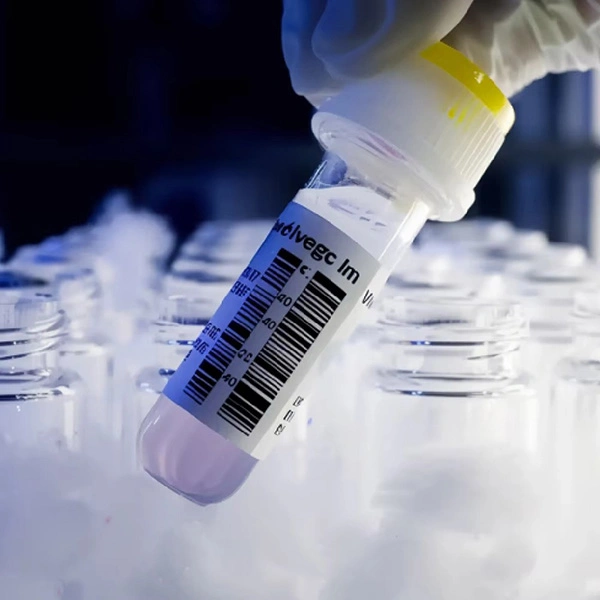
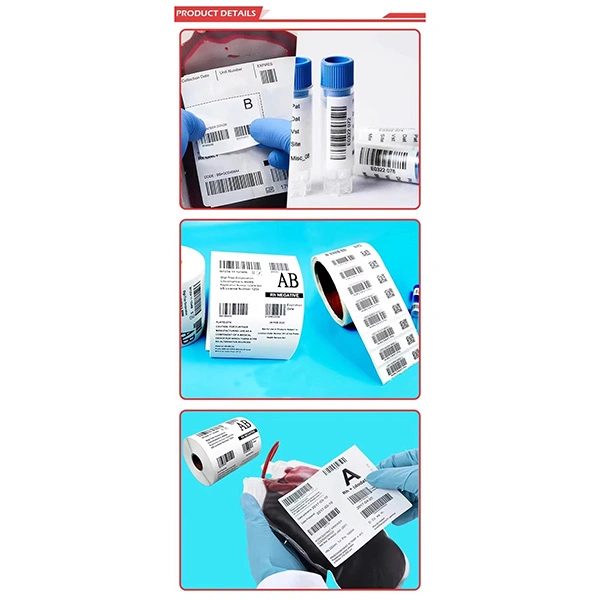
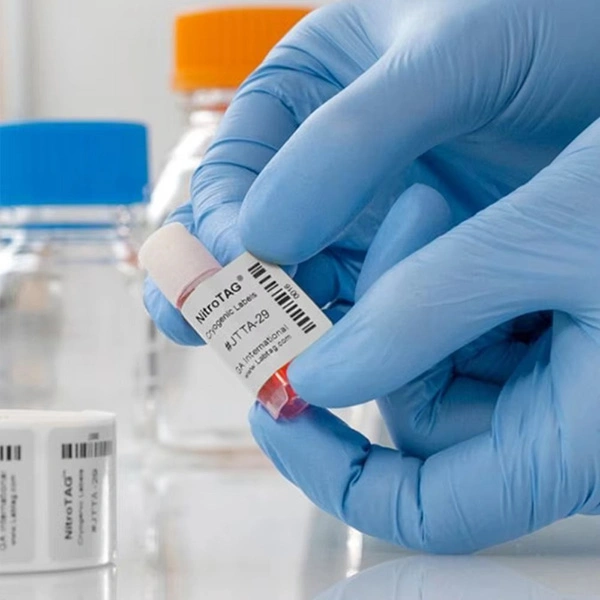
Laboratory Cryogenic Labels
- Rated to -196 °C for liquid nitrogen and vapour-phase cryostorage
- Cryogenic adhesive bonds to polypropylene, glass, and HDPE sample containers
- Frost-resistant polyester face maintains print legibility through condensation and ice
- Dimensionally stable — no shrinkage, cracking, or embrittlement at cryogenic temperatures
- Chemical resistant to DMSO, ethanol, glycerol, and aqueous cryoprotectant solutions
Ultra-Low-Temperature Label Integrity for Laboratory Cryostorage Applications
Laboratory Cryogenic Labels are speciality identification labels designed to maintain full adhesive bond and printed content legibility at temperatures from ambient down to -196 °C — the temperature of liquid nitrogen — encompassing all the storage conditions encountered in biological sample repositories, pharmaceutical development biobanks, and clinical research specimen archives.
The primary engineering challenge in cryogenic labelling is the behaviour of standard pressure-sensitive adhesives at ultra-low temperatures: conventional acrylic adhesives undergo a glass transition at temperatures typically between -20 °C and -40 °C, becoming rigid and losing the viscoelastic properties that provide peel strength and shear resistance.
Below the glass transition temperature, a standard adhesive bond to polypropylene — the predominant cryovial material — will fail under the mechanical stresses of rack extraction and tube handling, causing labels to separate from tube surfaces at the point of retrieval.
VIZLENT engineers Laboratory Cryogenic Labels with a cold-flow-resistant adhesive formulation that maintains adequate viscoelasticity at -196 °C to sustain bond strength on polypropylene and glass substrates throughout the storage period and the mechanical stresses of cryogenic retrieval.
- The polyester face material is chosen for its dimensional stability and resistance to the embrittlement that affects vinyl and paper face materials at ultra-low temperatures.
- Resin thermal-transfer print on polyester face maintains its contrast and adhesion at cryogenic temperatures, ensuring that barcodes and human-readable sample identifiers on Laboratory Cryogenic Labels remain scannable and legible at every point in the sample’s lifecycle, from biobank intake through to thawing and use.
Applications
Biobank and biological sample repository cryogenic sample tube and cryovial identification; pharmaceutical and biopharmaceutical clinical trial biological sample cryostorage; stem cell and cell therapy product cryovial identification and chain-of-custody labelling; academic research institute specimen archiving in liquid nitrogen storage systems; reproductive medicine IVF embryo and gamete cryostorage vial labelling; infectious disease reference laboratory cryogenic sample management.
Specifications
Laboratory Cryogenic Labels should be specified by minimum temperature rating (including whether LN₂ liquid-phase immersion or vapour-phase storage is required), adhesive performance on the specific tube substrate after freeze-thaw cycling, and chemical resistance to the cryoprotectant formulations used in the biobank or sample archive.
| Item | Laboratory Cryogenic Labels |
|---|---|
| Brand | Vizlent |
| Minimum Temperature Rating | -196 °C (LN₂ liquid and vapour phase) |
| Maximum Temperature Rating | +80 °C (standard); +121 °C (autoclave variant) |
| Adhesive Type | Cryogenic-grade cold-flow-resistant acrylic |
| Adhesive Performance | Bond maintained on PP and glass after LN₂ immersion and freeze-thaw cycling |
| Face Material | White polyester (PET) — frost-resistant, non-embrittling at -196 °C |
| Printing Method | Thermal transfer (resin ribbon); direct thermal; laser |
| Barcode Compatibility | Code 128, Data Matrix ECC200, QR Code; readable post-cryo |
| Chemical Resistance | DMSO, ethanol (70%), glycerol, IPA, aqueous cryoprotectant solutions |
| Label Formats Available | Wrap-around tube, cap-top dot, cryobox lid label |
| Freeze-Thaw Cycles | Adhesion and print maintained through repeated freeze-thaw cycles |
| MOQ | 1,000 labels per size and format |
| Sample | Available on request |
| Payment Term | T/T 30% deposit, balance before shipment |
| Production Time | 10–18 working days after artwork approval and deposit |
Performance Standards
Laboratory Cryogenic Labels are relevant to ISBER Best Practices for Repositories (label adhesion and legibility requirements for cryogenic sample identification), ISO 20387 (biobanking — general requirements), and CLSI AUTO12-A (specimen labelling for laboratory automation), which address label durability, barcode scan reliability, and sample traceability at ultra-low storage temperatures used in biological repositories.
Certifications
VIZLENT produces Laboratory Cryogenic Labels under ISO-certified manufacturing processes and validates adhesive and face material performance at cryogenic temperatures down to -196 °C, making these labels suitable for biobank, clinical research, and pharmaceutical cryostorage programmes in the EU, US, and Asia-Pacific laboratory markets.
You May Also Need
-
Laboratory Cryogenic Resistant Labels for 2ml Tubes Sized and calibrated for precise fit on standard 2 ml cryovial tube formats Cryogenic-grade adhesive rated to -196 °C on polypropylene cryovial bodies Wrap-around format engineered to avoid cap junction — prevents bridging and lifting Frost-resistant polyester face — print and barcode legible through condensation Dimensionally stable at […]
-
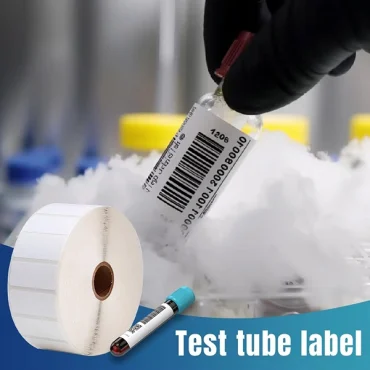
Cryo Laboratory Labels for Liquid Nitrogen Storage Survives direct immersion in liquid nitrogen at -196 °C without bond failure Cryogenic adhesive formulated for polypropylene cryovial bond strength at LN₂ temperature Frost-resistant face — barcodes and text remain scannable through surface ice Available for liquid-phase immersion and vapour-phase LN₂ storage systems Resistant to DMSO, ethanol, and […]
-
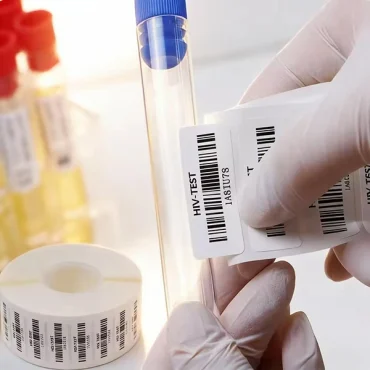
Cryogenic Labels for Laboratory Cold Storage Rated for -80 °C ULT freezer storage and -196 °C liquid nitrogen systems Adhesive maintains bond on polypropylene and glass across full cold storage range Frost-resistant polyester face — print legible through condensation on retrieval Suitable for cryovials, microcentrifuge tubes, blood collection tubes, and cryoboxes Resistant to freeze-thaw cycling […]
-
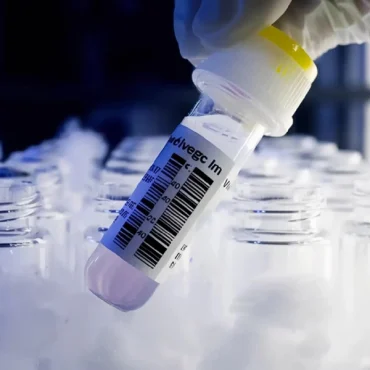
Laboratory Cryogenic Labels Rated to -196 °C for liquid nitrogen and vapour-phase cryostorage Cryogenic adhesive bonds to polypropylene, glass, and HDPE sample containers Frost-resistant polyester face maintains print legibility through condensation and ice Dimensionally stable — no shrinkage, cracking, or embrittlement at cryogenic temperatures Chemical resistant to DMSO, ethanol, glycerol, and aqueous cryoprotectant solutions Send […]
-
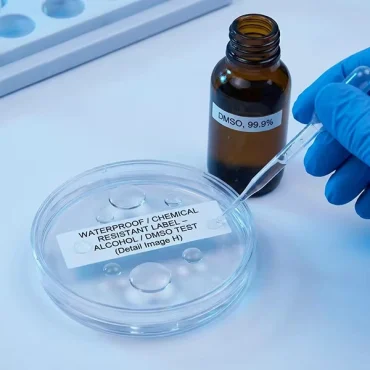
Laboratory Sample Identification Labels Suitable for tubes, microcentrifuge vials, plates, and sample containers Available for ambient, refrigerated, frozen, and cryogenic storage temperatures Chemical-resistant face material withstands ethanol, IPA, DMSO, and common lab reagents Compatible with thermal-transfer, laser, and direct-thermal laboratory printers Supports 1D barcodes, 2D Data Matrix, and QR codes for LIMS integration Send Your […]
-
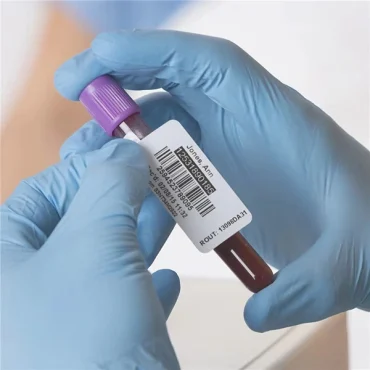
Liquid Nitrogen Label for 2ml Laboratory Tube Rated for continuous immersion in liquid nitrogen at -196 °C Cryogenic acrylic or rubber-based adhesive maintains bond at ultra-low temperatures Sized precisely for standard 2 ml microcentrifuge and cryovial tube formats Frost-resistant face material — print remains legible through ice and condensation Compatible with thermal-transfer, laser, and direct-thermal […]
Frequently Asked Questions
Yes. VIZLENT supplies Laboratory Cryogenic Labels in cap-top dot formats (circular labels for application to the top surface of cryovial caps), side wrap-around labels for the tube body, cryobox lid labels for storage box identification, and combination sets where both a cap-top dot and a side wrap are supplied for the same tube. Cap-top dot labels are particularly valuable in biobank settings where tube racks are viewed from above for visual inspection and cap-top barcode scanning. Custom sizes for non-standard tube cap diameters are available on request.
Yes. VIZLENT’s Laboratory Cryogenic Labels printed with resin thermal-transfer ribbon on polyester face maintain barcode grade and print contrast after extended storage at -80 °C (mechanical freezer) and -196 °C (liquid nitrogen and vapour phase). The resin ribbon print is bonded to the polyester face at a molecular level and does not delaminate or lose contrast at cryogenic temperatures. For automated scanning of tubes immediately upon retrieval from cryostorage — before the tube has warmed to ambient temperature — a CCD or 2D imager scanner with appropriate lighting is recommended, as surface frost may briefly reduce scan efficiency until the tube warms.
The minimum order quantity for Laboratory Cryogenic Labels is 1,000 labels per size and format. Production lead time is 10–18 working days from artwork approval and deposit receipt. VIZLENT actively recommends that biobank and clinical research customers request validation sample labels before placing a production order, allowing laboratory teams to test adhesive performance and barcode readability through their specific freeze-thaw protocol and cryostorage system before committing to volume.
The glass transition temperature (Tg) of a pressure-sensitive adhesive is the temperature at which it transitions from a viscoelastic state (where it provides peel and shear adhesion) to a rigid, glassy state (where it provides little adhesion and may fracture). Standard acrylic adhesives have Tg values between approximately -20 °C and -30 °C — they become rigid and lose effective adhesion well above liquid nitrogen temperature. VIZLENT’s cryogenic adhesive formulation is engineered with a significantly lower Tg, maintaining the viscoelastic properties needed for reliable adhesion on polypropylene at -196 °C. This is the fundamental reason why a specifically formulated cryogenic adhesive is required rather than a standard adhesive for LN₂ storage applications.
Yes. DMSO (dimethyl sulfoxide) is the predominant cryoprotectant in cell and tissue cryopreservation, and incidental contact of the tube exterior with DMSO-containing solutions is a routine occurrence in biobank and cell therapy workflows. VIZLENT’s Laboratory Cryogenic Labels use a polyester face material and cryogenic adhesive that are resistant to DMSO at the concentrations used in biological cryoprotectant formulations (typically 5–10%). Brief surface contact with DMSO does not cause label delamination or print degradation. For applications with prolonged or concentrated DMSO exposure, please consult our technical team for confirmation of the specific construction’s chemical compatibility.

