
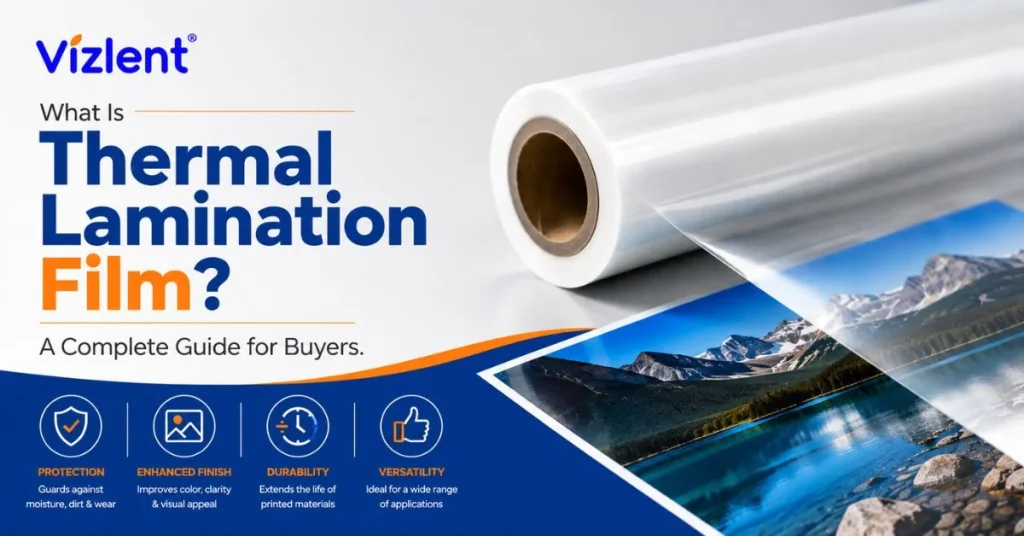
Thermal lamination film is a plastic film coated with a heat-activated adhesive that bonds to paper or board when passed through a heated laminator. The heat melts the adhesive layer, which fuses the film to the printed surface and seals it under a clear, protective coating. This protects printed pieces from moisture, scuffing, and fading while adding stiffness and a glossy or matte finish.
Sourcing lamination film in bulk for a print shop or converting line? Request a factory-direct quote from Vizlent for thermal lamination film matched to your equipment and finish.
Thermal Lamination Film Explained: How It Works
To define what is thermal lamination film clearly, it is a two-layer material made of a base film and a heat-activated adhesive. The base film is usually polyester or polypropylene, and the adhesive coating is an EVA or similar thermoplastic that melts under heat. When the film and a printed sheet pass through a hot roller laminator, the adhesive flows and bonds the two into one sealed piece.
The process is fast, clean, and needs no liquid glue or solvent. A roll laminator feeds the film and the print together, applying heat and pressure to activate the bond in seconds. Once cooled, the laminated sheet is sealed, durable, and ready to trim, which is why this method dominates commercial print finishing.
Two construction styles exist, and the difference affects the finished feel. Single-sided film laminates one face of a sheet, while encapsulation seals both sides with a sealed border around the edge. The film thickness, measured in microns, sets how rigid and protective the result is, with thicker film giving a stiffer, more durable piece.
Thermal Lamination Versus Cold Lamination
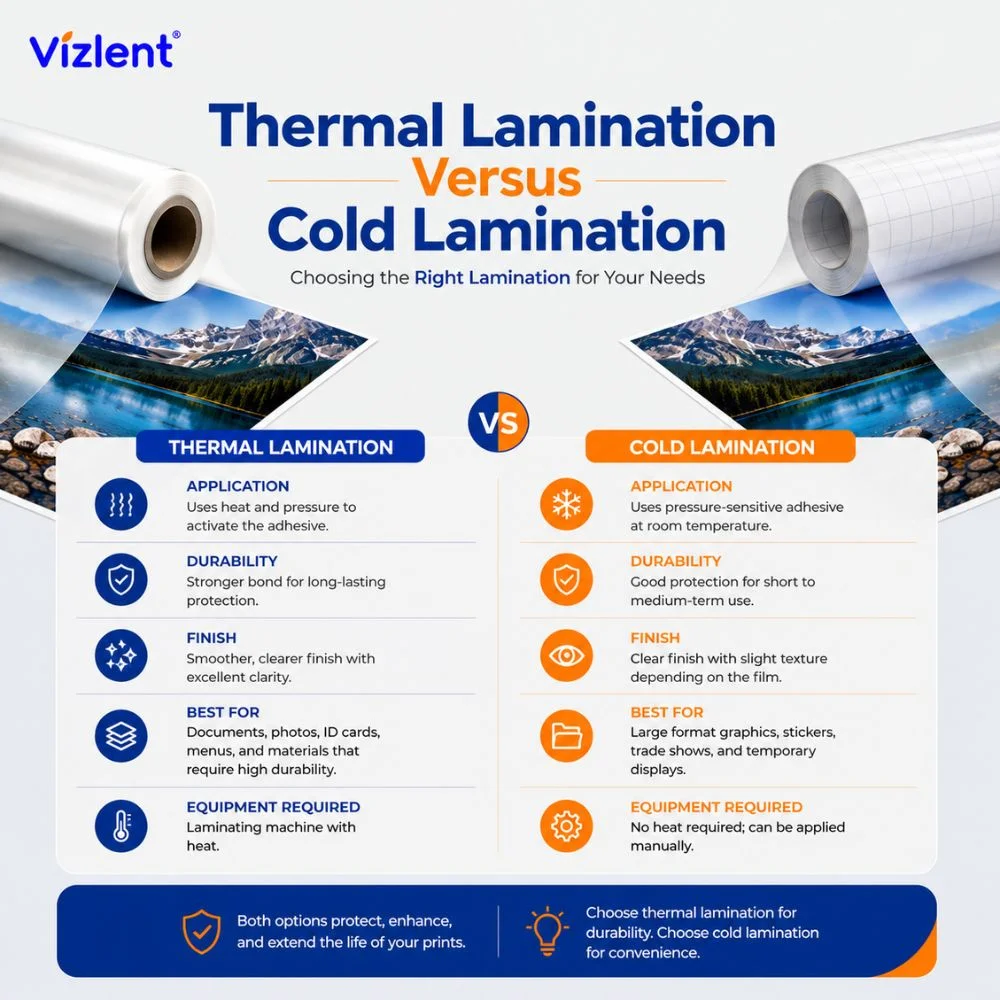
To understand what is thermal lamination as a process, compare it to the cold method. Thermal lamination uses heat to melt an adhesive, while cold lamination uses a pressure-sensitive adhesive that needs no heat at all. Thermal is faster and cheaper for most paper print work, while cold suits heat-sensitive materials like inkjet photos and vinyl.
Each method fits a different shop setup and material mix. Thermal lamination is the standard for books, menus, covers, and packaging printed on toner or offset presses. For projects that cannot take heat, a cold lamination film protects the print without risk of warping or color shift.
Thermal Lamination BOPP Film and Material Types
Most thermal lamination film today uses a biaxially oriented polypropylene (BOPP) base, and the material choice shapes the result. Thermal lamination BOPP film is made from biaxially oriented polypropylene, prized for clarity, strength, and low cost. Polyester (PET) film is the other main option, chosen for higher heat resistance and a more rigid, premium feel.
BOPP film comes in several finishes to match the look a job needs. The most common are gloss and matte, with soft-touch and specialty options for premium packaging. These are the BOPP finishes buyers ask for most:
- BOPP thermal lamination film glossy: high shine that boosts color and contrast
- BOPP thermal lamination film gloss: the same bright finish for covers and retail print
- BOPP thermal lamination film matt: low glare, smooth, premium feel for text-heavy pieces
- Soft-touch and silk: a velvet finish for luxury packaging and business cards
Choosing between BOPP and PET comes down to heat, cost, and feel. BOPP covers most everyday print finishing, while PET earns its higher price where rigidity and heat resistance matter. This comparison sets the two base films side by side:
| Factor | BOPP Film | PET (Polyester) Film |
|---|---|---|
| Cost | Lower, economical | Higher |
| Clarity | Excellent | Excellent, very stable |
| Heat resistance | Good | Higher |
| Rigidity | Flexible | Stiffer, premium feel |
| Best for | Covers, packaging, volume | ID, durable, high-heat use |
Adhesive type is the other half of the BOPP film spec. EVA-based adhesives suit standard print and laminate at lower temperatures, while polyurethane adhesives bond better to heavy ink coverage and digital prints. Matching the adhesive to your press and stock prevents silvering, the hazy look that appears when the bond is incomplete.
Need gloss and matte BOPP rolls from one source? See Vizlent thermal lamination film available in multiple finishes and widths.
Thermal Lamination Film Uses and Applications
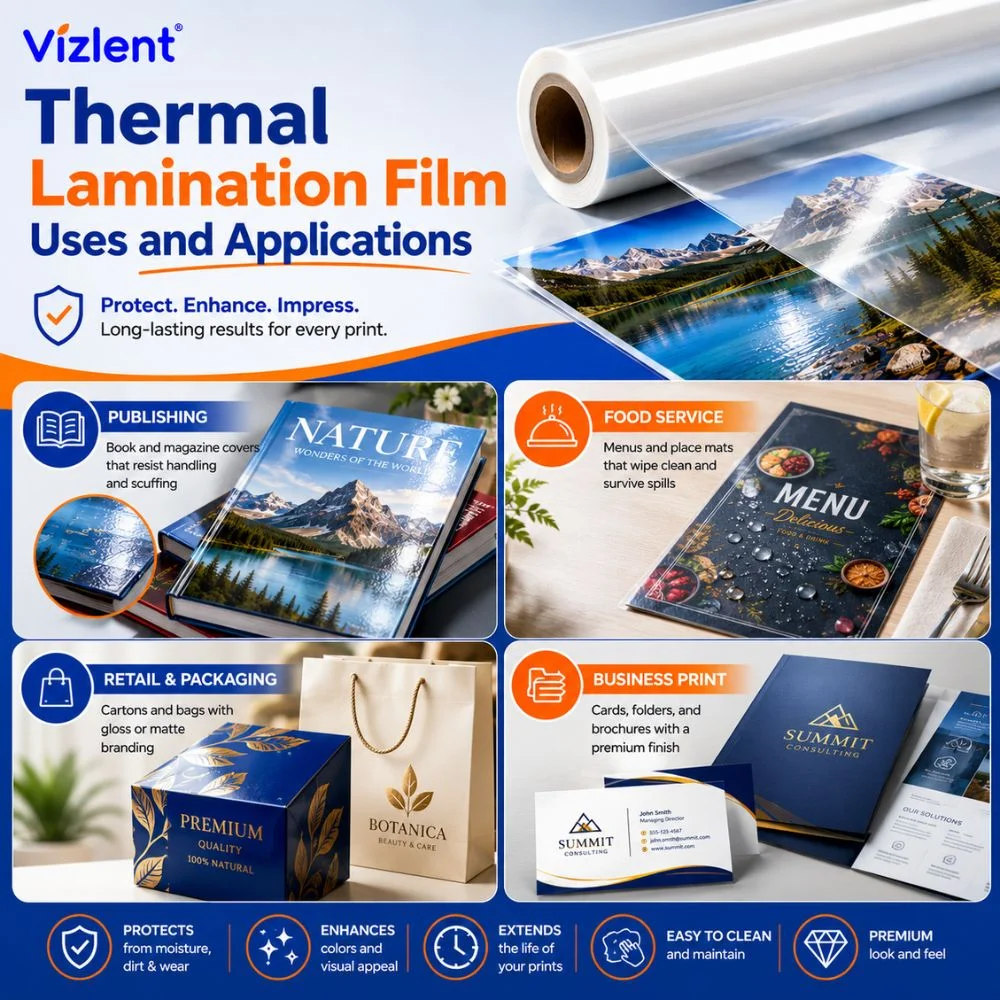
Thermal lamination film uses nearly every printed product that needs protection or a premium look. It seals book covers, restaurant menus, business cards, folders, and product packaging against daily wear. Each thermal lamination film application adds durability, water resistance, and a finish that lifts the printed piece.
The format you choose depends on the equipment and run length. Commercial shops use wide rolls for high volume, while offices and small shops use pouches or sheets. Common applications include the following:
- Publishing: book and magazine covers that resist handling and scuffing
- Food service: menus and place mats that wipe clean and survive spills
- Retail and packaging: cartons and bags with gloss or matte branding
- Business print: cards, folders, and brochures with a premium finish
The film also serves a print-finishing role beyond simple protection. Laminated stock holds up to folding, scoring, and die-cutting in packaging lines without cracking the ink. That makes the film a working layer in carton and box production, not just a surface coating on flat sheets.
Thermal Laminating Film Rolls, A4 Sheets, and Formats
Thermal lamination film comes in rolls, sheets, and pouches to fit different machines. A thermal lamination film roll loads into a roll laminator for high-volume, wide-format finishing. For low-volume work, thermal laminating film A4 sheets and pouches fit desktop pouch laminators and small print runs.
Sizing the format to the job keeps cost and waste low. Thermal laminating film rolls suit production shops, while a thermal lamination sheet A4 size suits offices, schools, and short runs. Brand options exist at the small-format end too, such as Roco thermal laminating film A4 sold for desktop use, alongside manufacturer-direct rolls for scale.
Core size and roll length matter once you move into roll formats. Most commercial rolls ship on a one-inch or three-inch core, and longer rolls mean fewer changeovers during a run. Confirm the core and width against your laminator so the film loads and tracks without manual adjustment.
Choosing a Thermal Lamination Film Supplier
Where you buy shapes both quality and cost over time. A thermal lamination film supplier that resells stock cannot adjust the film or adhesive, while a thermal lamination film manufacturer controls the full build. Buying direct from a manufacturer gives better consistency, custom widths, and pricing at volume.
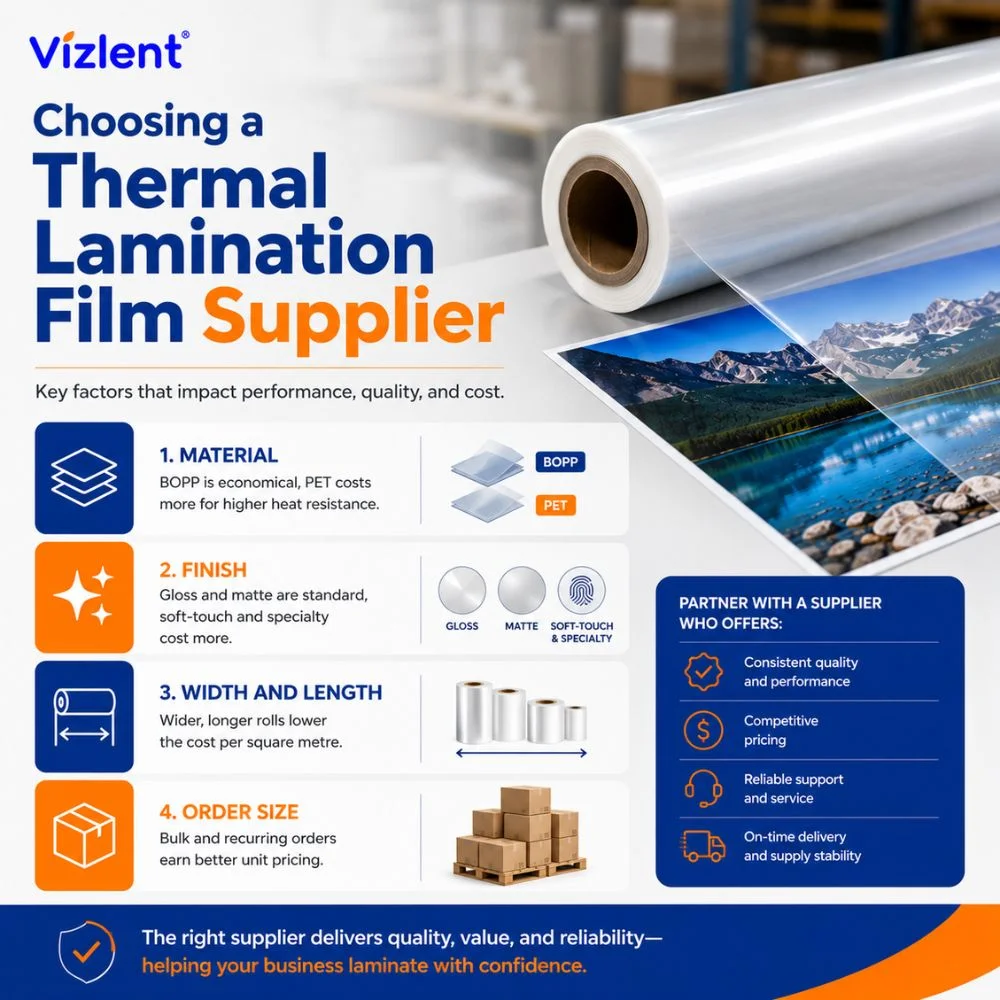
Pricing depends on material, finish, width, and order size. Thermal lamination film price and thermal lamination roll price both move with the BOPP or PET grade, the coating weight, and the roll length, and a BOPP thermal lamination film price will usually sit below an equivalent PET roll. Because the thermal lamination films market shifts with resin costs, request a current quote rather than relying on an old figure:
- Material: BOPP is economical, PET costs more for higher heat resistance
- Finish: gloss and matte are standard, soft-touch and specialty cost more
- Width and length: wider, longer rolls lower the cost per square metre
- Order size: bulk and recurring orders earn better unit pricing
Thermal Lamination Film HS Code and Import Basics
Buyers importing film often need the correct customs classification. The thermal lamination film HS code generally falls under Chapter 39 for plastics, with BOPP thermal lamination film commonly classified under heading 3920 for non-adhesive plates, sheets, and film. The exact bopp thermal lamination film HS code can vary by construction and destination country, so confirm the precise code with your customs broker before shipping.
Getting the classification right prevents delays and incorrect duty charges. Adhesive-coated constructions may classify differently from plain film, which is why the build matters for the code. A manufacturer can provide the technical data and material breakdown your broker needs to assign the right heading.
Key Benefits of Thermal Lamination Film
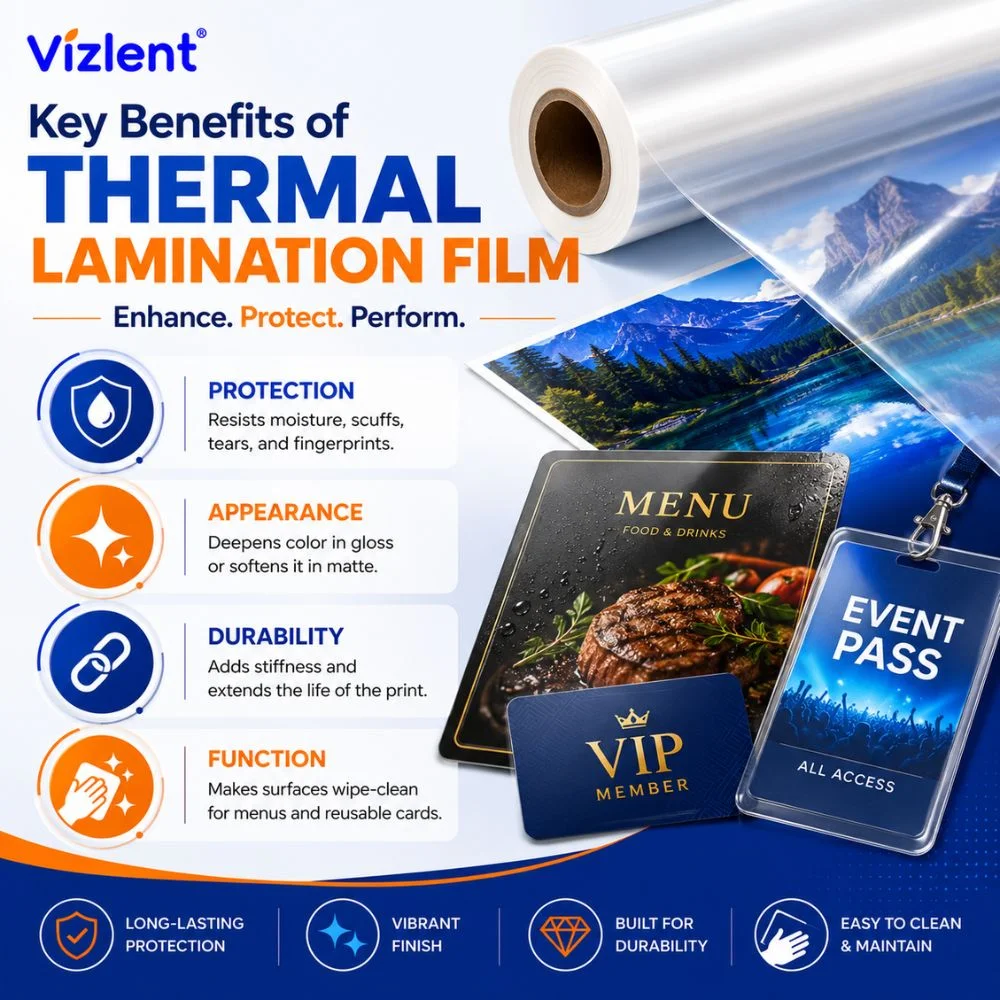
The reason laminated print is everywhere is that the benefits are practical and visible. A thin film turns a fragile printed sheet into a sealed, durable piece that lasts far longer. Those gains show up in both the look and the working life of the product.
The advantages stack across protection, appearance, and function. For most printed products, the small added cost pays back in fewer reprints and a better feel. The main benefits include the following:
- Protection: resists moisture, scuffs, tears, and fingerprints
- Appearance: deepens color in gloss or softens it in matte
- Durability: adds stiffness and extends the life of the print
- Function: makes surfaces wipe-clean for menus and reusable cards
How to Get a Clean Laminate Every Time
Good results depend on settings and material as much as the film itself. Temperature, speed, and ink coverage all affect how well the adhesive bonds to the sheet. A little setup care prevents the most common defects in laminated work.
Watch for the issues that show up when settings drift. Build these checks into your finishing routine before a long run:
- Set the right temperature for the film, since too low causes silvering
- Let heavily inked prints dry fully before laminating to avoid bubbles
- Match laminator speed to the film so the adhesive fully activates
- Pair the film with a compatible self-adhesive material or board stock for the application
- Run a test sheet to confirm finish and bond before the full batch
Gloss Versus Matte: Choosing the Right Finish
Finish is the most visible decision in any lamination job. Gloss film deepens color and adds shine, while matte film cuts glare and resists fingerprints. The right pick depends on the artwork, the lighting, and how the piece will be handled.
This quick comparison helps match the finish to the project. Both finishes use the same thermal process, so the choice is about look and feel. Use the table as a fast reference before ordering:
| Factor | Glossy Film | Matte Film |
|---|---|---|
| Look | Bright, high shine | Soft, low glare |
| Color impact | Boosts color and contrast | Mutes color slightly |
| Fingerprints | More visible | Well hidden |
| Best for | Photos, retail, covers | Text, premium, menus |
Who Uses Thermal Lamination Film and Why Demand Grows
Demand for thermal lamination film tracks the growth of printed packaging and branding. Print shops, packaging converters, publishers, and label makers all rely on it as a finishing layer. As brands invest in premium unboxing and shelf appeal, the pull toward gloss, matte, and soft-touch film keeps rising.
The shift toward water-based and recyclable films is shaping the market too. Buyers increasingly ask for films that support recycling streams without losing clarity or bond strength. A manufacturer investing in newer adhesive chemistry can meet those needs while holding the price and quality buyers expect.
Get Thermal Lamination Film Matched to Your Work
The right film protects every printed piece and lifts its finish. Vizlent manufactures thermal lamination film in BOPP and PET, with gloss, matte, and soft-touch finishes in rolls and sheet sizes for shops and converters. Share your laminator, finish, and volume, and the right film gets matched to the job.
Talk to the Vizlent team about thermal lamination film or browse laminating film options to get started today.
Frequently Asked Questions
What is thermal lamination film made of?
Thermal lamination film is made of a base film, usually BOPP or polyester, coated with a heat-activated adhesive such as EVA. The base film provides clarity and strength, while the adhesive melts under heat to bond the film to paper. Together they form a sealed, protective layer over the print.
What is the difference between thermal and cold lamination?
Thermal lamination uses heat to melt an adhesive and bond the film, while cold lamination uses a pressure-sensitive adhesive that needs no heat. Thermal is faster and cheaper for paper prints, while cold suits heat-sensitive materials like inkjet photos and vinyl. The choice depends on the material and equipment.
What are the main thermal lamination film uses?
Thermal lamination film is used on book covers, menus, business cards, folders, brochures, and product packaging. It adds water resistance, scuff protection, stiffness, and a gloss or matte finish. The film protects the print while improving its appearance and durability.
What is thermal lamination BOPP film?
Thermal lamination BOPP film uses a biaxially oriented polypropylene base coated with heat-activated adhesive. BOPP is valued for its clarity, strength, and low cost, which makes it the most common lamination film. It comes in gloss, matte, and soft-touch finishes.
What sizes does thermal laminating film come in?
Thermal laminating film comes in wide rolls for commercial laminators and A4 sheets or pouches for desktop machines. Rolls suit high-volume production, while A4 sizes suit offices and short runs. Width, length, and core size are matched to your laminator.
How is thermal lamination film priced?
Thermal lamination film price depends on the base material, finish, width, roll length, and order quantity. BOPP costs less than PET, and gloss and matte are more economical than specialty finishes. Because resin costs shift, request a current quote for accurate pricing.
What is the HS code for thermal lamination film?
Thermal lamination film generally classifies under Chapter 39 for plastics, with BOPP film often under heading 3920. The exact code depends on the film construction and the destination country’s tariff schedule. Confirm the precise HS code with your customs broker before importing.
Should I choose a supplier or a manufacturer for thermal lamination film?
A manufacturer controls the film, adhesive, and finish, offering custom widths and better pricing at volume, while a supplier resells fixed stock. Buying direct from a manufacturer improves consistency and flexibility. For bulk or recurring orders, manufacturer-direct sourcing is usually the better value.






