
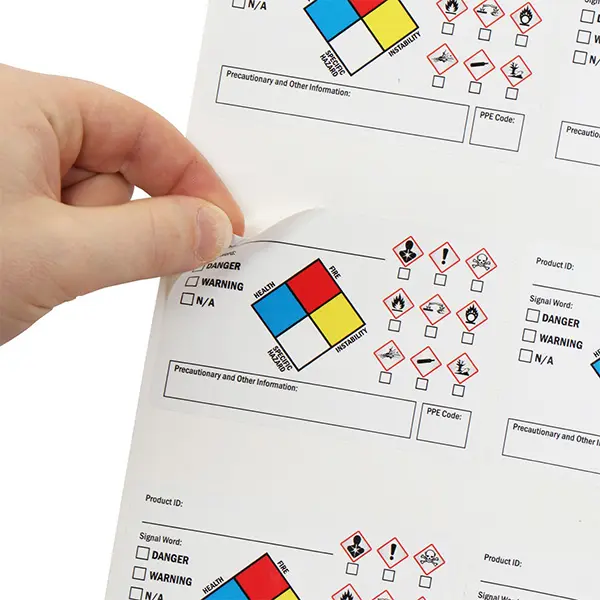
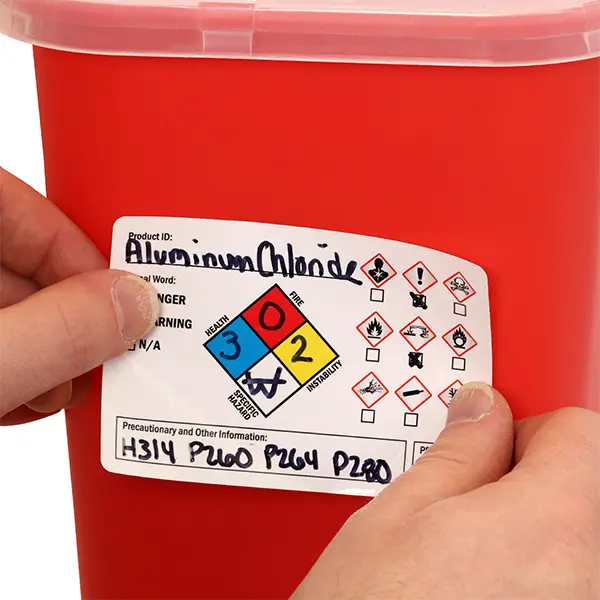
Durable Hazardous Material Identification Labels
- Engineered for long-term readability in harsh industrial environments
- Film face stock resists tearing, moisture, and chemical splash
- High-contrast printing maintains legibility under UV exposure and abrasion
- Compatible with GHS, DOT, IATA, and IMDG hazard classification formats
- Permanent aggressive adhesive for drums, IBCs, tanks, and crates
Durable Hazardous Material Identification Labels Features
Durable Hazardous Material Identification Labels are purpose-built for the demanding identification requirements of facilities that handle flammable liquids, corrosives, toxics, oxidizers, and other regulated dangerous goods.
The construction centers on a high-tenacity film substrate—polyester or biaxially oriented polypropylene—that provides dimensional stability and tear resistance far superior to paper-based hazard labels.
Inks are UV-cured or thermally transferred using resin ribbons, producing a printed image that resists smearing, chemical attack, and prolonged sunlight exposure without fading or running.
These identification labels are designed to remain fully legible and adhesively intact throughout the entire shipping, storage, and handling chain, from the point of filling to final delivery. Vizlent’s durable HAZMAT identification labels can be supplied pre-printed with regulatory pictograms, signal words, and hazard statements, or as blank stock for in-house printing workflows where variable data such as lot numbers or UN numbers must be added at the point of production.
Specifications
| Item | Durable Hazardous Material Identification Labels |
|---|---|
| Brand | Vizlent |
| Face Stock Material | Polyester (PET) film or BOPP film |
| Face Stock Color | White gloss, white matte, silver, or custom color |
| Total Thickness | 100–150 µm (with optional overlaminate) |
| Adhesive Type | Permanent aggressive acrylic PSA |
| Adhesion to Steel | ≥ 14 N/25 mm (90° peel) |
| Chemical Resistance | Splash-resistant to common industrial chemicals, solvents, oils |
| UV Resistance | UV-stable; ≥ 18 months outdoor without significant fading |
| Tear Resistance | High (film substrate; no paper-fiber tearing) |
| Regulatory Formats Supported | GHS/CLP, DOT, IATA, IMDG, UN pictograms |
| Overlaminate Option | Available (gloss or matte polyester, +25–40 µm) |
| Temperature Range | –25 °C to +85 °C |
| MOQ | 500 labels per design |
| Sample | Available upon request |
| Payment Term | T/T, L/C, PayPal |
| Production Time | 7–15 business days after artwork approval |
Applications:
Dangerous goods warehousing and logistics; chemical manufacturing drum and IBC labeling; transportation of flammable, toxic, and corrosive substances; emergency response equipment identification; laboratory chemical storage containers; export packaging for regulated substances.
You May Also Need
-
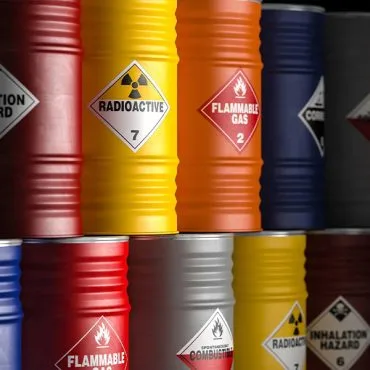
Salt Water Chemical Drum BS5609 Labels by Vizlent survive marine immersion tests, ensuring GHS compliance for chemical drums shipped by sea worldwide.
-
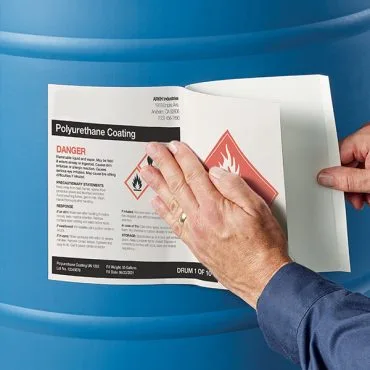
Printed Chemical Drum Labels from Vizlent combine sharp full-color printing with chemical-resistant film for durable, compliant drum identification at scale.
-
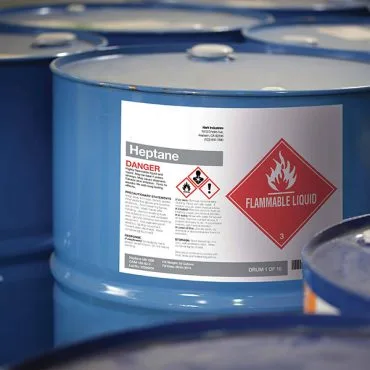
High Durable Chemical And Oil Drum Labels by Vizlent resist oil, solvents, and outdoor exposure—ideal for long-term drum identification in industrial environments.
-
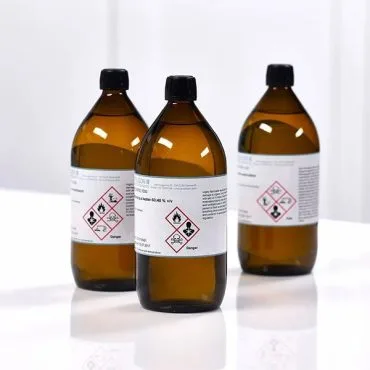
Hazardous Chemical Labels from Vizlent combine regulatory compliance, durable film construction, and aggressive adhesion for safe identification of dangerous goods.
-
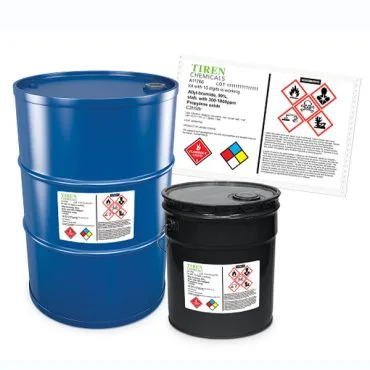
GHS Labels for Chemical Product Packaging by Vizlent deliver compliant hazard communication with durable film stock, vivid pictograms, and chemical resistance.
-
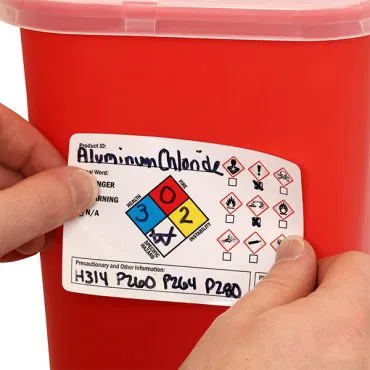
Durable Hazardous Material Identification Labels by Vizlent ensure regulatory compliance with strong adhesion, chemical resistance, and long-term legibility.
-
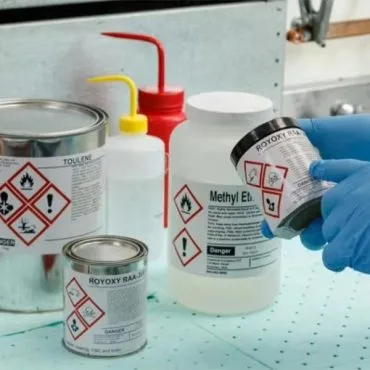
Chemical Label Resistant to Water, Oil, Acid & Alkali by Vizlent offers all-round protection for industrial containers in harsh processing environments.
-
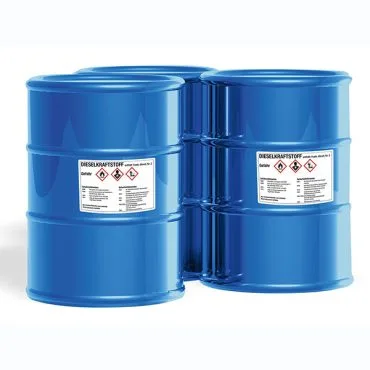
BS 5609 Approved Label Chemical & Oil Resistance by Vizlent meets marine standards for drums—resists oils, solvents, and saltwater exposure reliably.
Frequently Asked Questions
Yes. VIZLENT can design and print labels that incorporate multiple regulatory requirements side by side—for example, GHS hazard pictograms alongside DOT transport placards and IMDG marine labels—on a single label. Our in-house artwork team is experienced in the graphic requirements of each regulatory framework and can produce compliant designs for multi-jurisdiction shipments.
Our durable hazardous material identification labels use UV-stabilized face stocks and UV-cured or resin thermal transfer printing that maintains legibility for a minimum of 18 months of outdoor exposure under typical temperate and tropical conditions. For extreme UV or saltwater coastal environments, we recommend our overlaminated variant, which adds an additional protective film layer to extend service life further.
The MOQ for custom durable HAZMAT identification labels is 500 labels per individual design. For companies requiring multiple label designs across a range of chemical products, we can combine designs into a single production run to reduce unit cost. Blanket orders with staged call-off delivery are also available for customers with ongoing high-volume requirements.
Paper-based labels absorb moisture, swell, and delaminate when exposed to water or oils, and the fibers tear readily under physical handling. Film-based labels from VIZLENT use a solid polymer substrate that has no fiber structure to absorb moisture, giving them dimensional stability and tear resistance that paper cannot match. The polymer surface also accepts chemical-resistant inks and topcoats that are not compatible with paper.
Yes. We supply durable HAZMAT label stock in blank roll format with the regulatory pictograms and static hazard information pre-printed, leaving designated variable data fields blank for in-house thermal transfer overprinting. The face stock is topcoated for compatibility with standard industrial thermal transfer printers using resin-grade ribbons, which produce chemical-resistant variable data printing. We provide print parameter recommendations for common printer models.

