
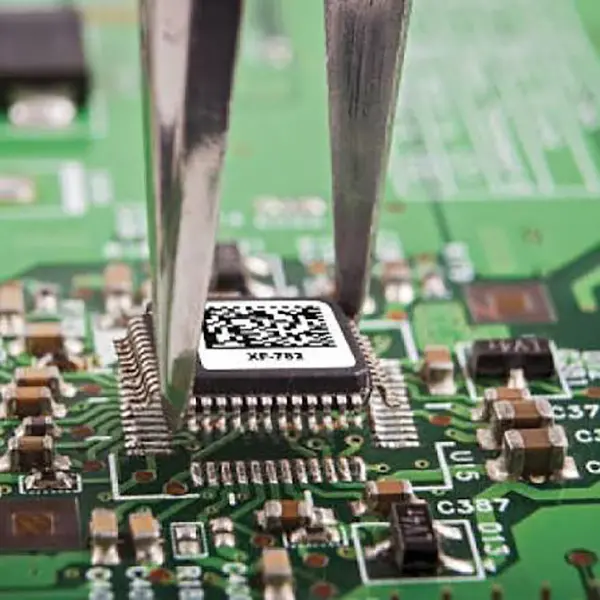
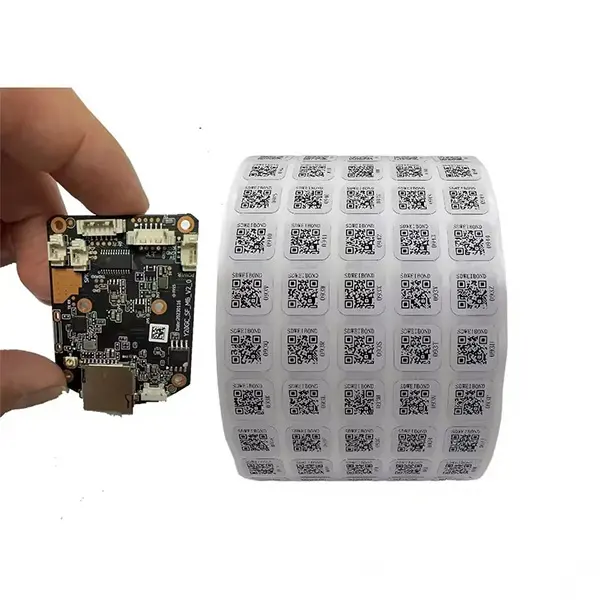
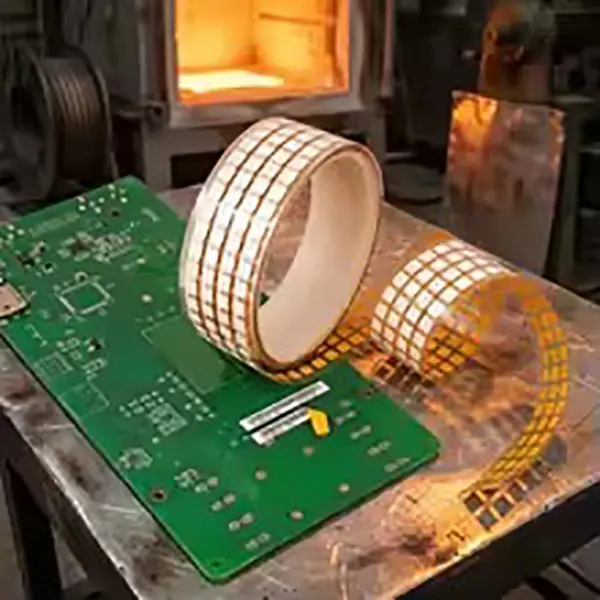
Data Matrix Polyimide Labels for PCB identification
- Data Matrix ECC200 code encodes high data density in a compact square symbol
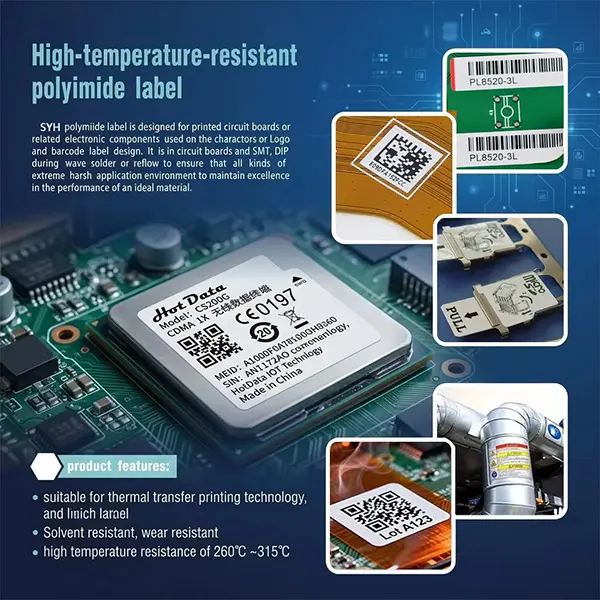
- Polyimide base film rated for continuous and peak service to 260 °C
- Survives lead-free SMT reflow without code degradation or delamination
- White-coated polyimide face provides high print contrast for reliable 2D scan rates
- Supports very small label formats — critical for space-constrained PCBs
Features of Data Matrix Polyimide Labels for PCB identification
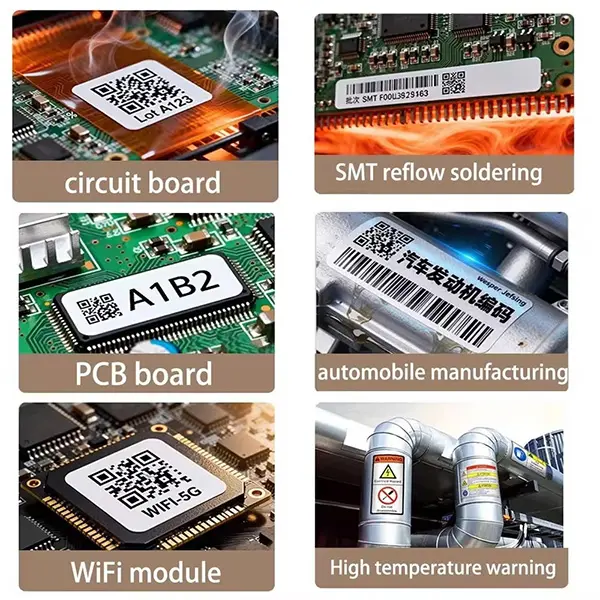
Data Matrix Polyimide Labels for PCB Identification address one of the most demanding intersections of electronics traceability requirements: the need to encode a substantial amount of identification data — serial numbers, lot codes, date codes, and part numbers — into a very small label footprint that can be placed on an increasingly compact PCB, and that will remain scannable after passing through SMT reflow ovens at temperatures up to 260 °C.
Data Matrix ECC200 is the preferred 2D symbology for this application because its square cell structure allows the same data capacity as a Code 128 barcode in approximately one-tenth of the label area, and its built-in Reed-Solomon error correction allows reliable reading even if up to 30% of the code symbol is damaged.
- VIZLENT prints Data Matrix Polyimide Labels for PCB Identification on white-coated polyimide film using resin thermal-transfer ribbon, which provides the combination of thermal stability and print durability required for the complete SMT assembly workflow.
- The white coating on the polyimide face dramatically improves Data Matrix contrast compared to printing directly on amber polyimide, directly improving first-read scan rates in automated assembly and test equipment.
- The silicone adhesive system bonds firmly to FR-4 and related PCB substrates while remaining non-flowing and non-contaminating at peak reflow temperatures, protecting the integrity of adjacent solder joints and optical components.
Application of Polyimide Data Matrix Labels for PCB Identification
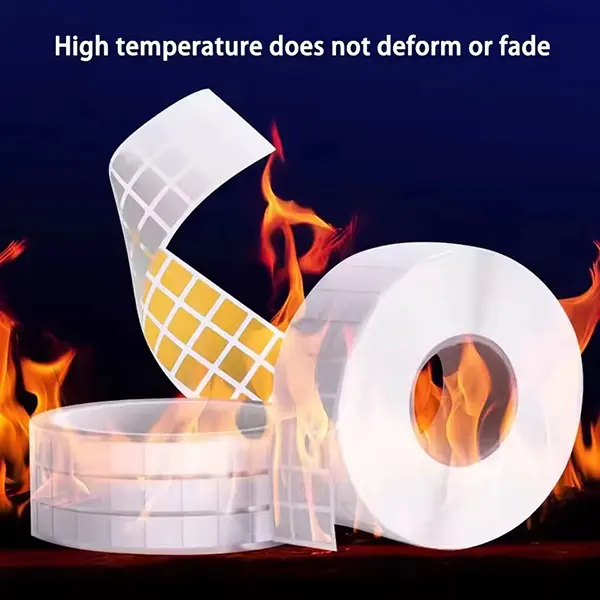
Specifications
| Item | Data Matrix Polyimide Labels for PCB identification |
|---|---|
| Brand | Vizlent |
| Barcode Symbology | Data Matrix ECC200 (ISO/IEC 16022); custom symbologies available |
| Face Material | White-coated polyimide (PI) film — amber PI available for non-contrast-critical use |
| Continuous Temperature Rating | Up to 260 °C |
| Peak Reflow Temperature | Up to 260 °C — lead-free SMT profile compatible |
| Adhesive Type | High-temperature silicone — non-flowing, no outgassing at reflow |
| Minimum Label Size | From approximately 6 × 6 mm (dependent on data content and module size) |
| Print Method | Thermal transfer with resin ribbon (factory pre-printed) |
| Print Contrast (white-coated PI) | High contrast black-on-white for reliable automated 2D scanning |
| Error Correction | Data Matrix ECC200: up to 30% damage correction |
| Chemical Resistance | Flux, IPA, aqueous and semi-aqueous board cleaning agents |
| MOQ | 5,000 labels per data sequence / size |
| Sample | Available on request; process qualification samples dispatched promptly |
| Payment Term | T/T 30% deposit, balance before shipment |
| Production Time | 10–18 working days after data file, artwork approval, and deposit |
You May Also Need
-
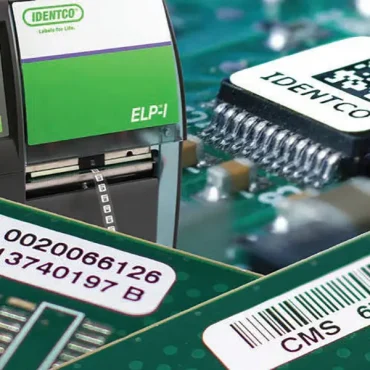
Circuit Board Label & PCB Labels Comprehensive range covering pre-reflow, post-reflow, and standard-service PCB labelling Face material options: polyimide (PI), white-coated PI, high-temp PET, standard PET Adhesive options matched to process temperature: silicone, high-temp acrylic, or standard acrylic Compatible with FR-4, ceramic, aluminium PCB, flex circuit, and component body surfaces Supports thermal-transfer, laser, and pre-printed […]
-
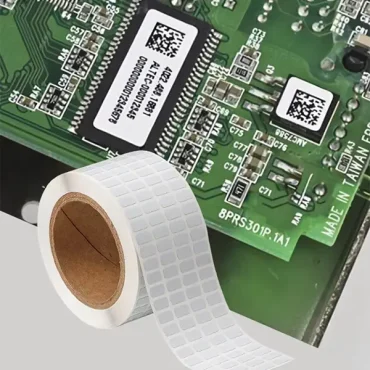
Automatic PCB Labelling Heat Resistant Labels Precision die-cut labels on accurately wound rolls for automated label applicators Consistent label gap and registration enables reliable tamp-blow and wipe-on application Polyimide face rated for lead-free SMT reflow up to 260 °C High-temperature silicone adhesive — stable, non-flowing, no outgassing at reflow White-coated polyimide face option for high-contrast […]
-
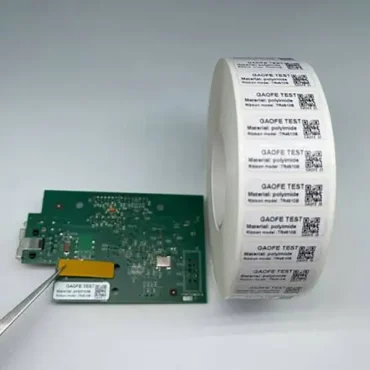
300 Degree Polyimide Labels for Semiconductor and Printed Circuit Board Manufacturing Processes Polyimide film rated for short-duration exposure up to 300 °C Survives semiconductor backend packaging processes and high-temperature cure ovens High-temperature silicone adhesive stable at continuous 260 °C and short-peak 300 °C No thermal decomposition, discolouration, or dimensional change at rated temperatures Send Your […]
-
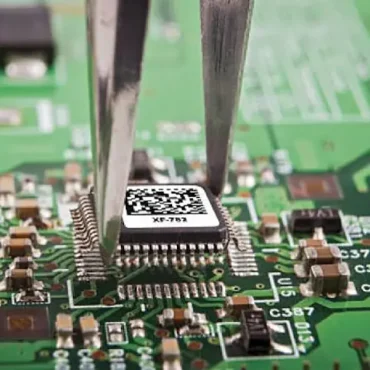
Data Matrix Polyimide Labels for PCB identification Data Matrix ECC200 code encodes high data density in a compact square symbol Polyimide base film rated for continuous and peak service to 260 °C Survives lead-free SMT reflow without code degradation or delamination White-coated polyimide face provides high print contrast for reliable 2D scan rates Supports very […]
-
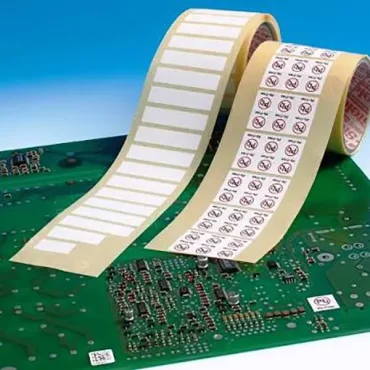
PCB Labels for Printed Circuit Board and Electronics Broad substrate compatibility: FR-4, ceramic, aluminium, and flex PCBs Heat-resistant polyimide or high-temperature polyester face material Stable adhesion through reflow, wave soldering, and cleaning processes Supports thermal-transfer, laser, and pre-printed barcode and QR code formats Available with sequential serial numbers, Data Matrix, Code 128, or QR codes […]
-
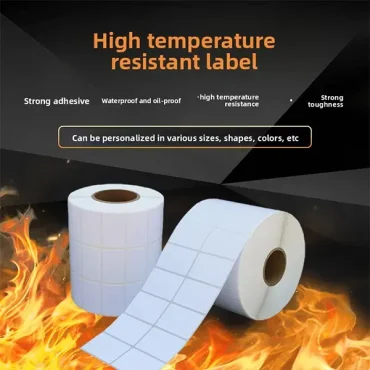
PCBs Labels Heat Resistant Labels Withstands SMT reflow soldering peak temperatures up to 260 °C Polyimide or high-temperature polyester face material options High-temperature silicone or acrylic adhesive — no bleed, no char Dimensionally stable through thermal cycling — no curl or shrinkage Compatible with thermal-transfer (resin ribbon) printing for permanent legends Send Your Inquiry Now […]
Frequently Asked Questions
Data Matrix ECC200 can encode alphanumeric strings, GS1 Application Identifiers (serial numbers, lot numbers, date codes, part numbers), and custom data strings up to several hundred characters depending on the matrix size and module size selected. VIZLENT accepts a customer-supplied data file or numbering scheme and encodes it during factory printing. We can also incorporate human-readable text alongside the Data Matrix symbol so that the label serves both machine-scanning and manual-inspection purposes.
Yes, provided the labels are printed with a resin-type thermal-transfer ribbon on white-coated polyimide film, which is VIZLENT’s standard specification for these labels. Resin ribbon print is thermally stable at reflow temperatures and does not smear, carbon, or lose contrast during the soldering process. Post-reflow, the Data Matrix symbol can be read by standard 2D imagers and DPM readers. We recommend customers verify first-read scan rates on sample labels through their specific reflow profile as part of process qualification before volume production.
The minimum practical label size depends on the data content, the Data Matrix version (matrix size), and the module (cell) size, which must be sufficient for reliable reading by the scanner used in the customer’s process. For a short serial number encoded at a Data Matrix version that produces a small matrix, VIZLENT can produce labels as small as approximately 6 × 6 mm, though we recommend consulting with our technical team and verifying scan reliability with your specific reader before committing to a minimum size. We provide sample labels at candidate sizes for customer evaluation.
Reliable Data Matrix scanning — particularly by fixed-beam automated scanners in SMT and test equipment — depends on sufficient print contrast between the dark cells and the background of the symbol. Standard amber polyimide film has a golden-brown colour that reduces contrast when printed with black thermal-transfer ink, resulting in lower first-read scan rates and higher error rates in automated scanning. White-coated polyimide provides a white background that maximises contrast while retaining the full thermal performance of the polyimide base film, giving the best of both properties for PCB Data Matrix labelling.
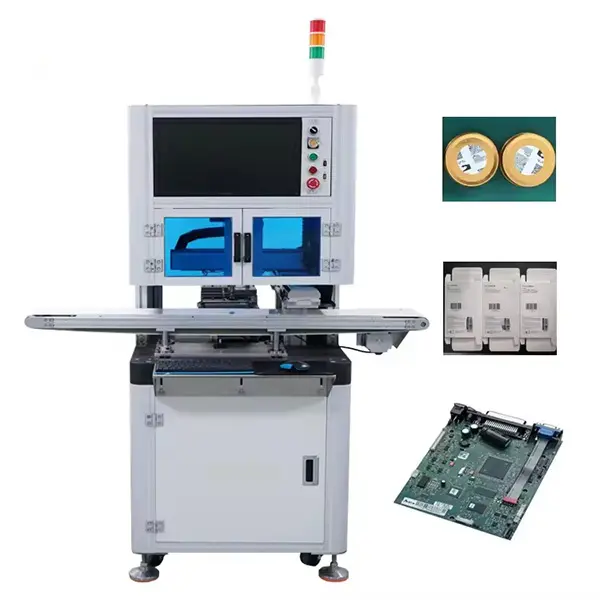
Yes. This is VIZLENT’s standard workflow for Data Matrix Polyimide Labels for PCB Identification. Customers supply a data file in CSV, Excel, or plain-text format containing the exact serial numbers, lot codes, or other variable data to be encoded, along with any fixed content (part number, company name, revision). We generate the Data Matrix symbols from your data, produce a pre-production proof for approval, and ship finished rolls with labels in the correct sequence for direct application to your production line without any in-house printing requirement.

