
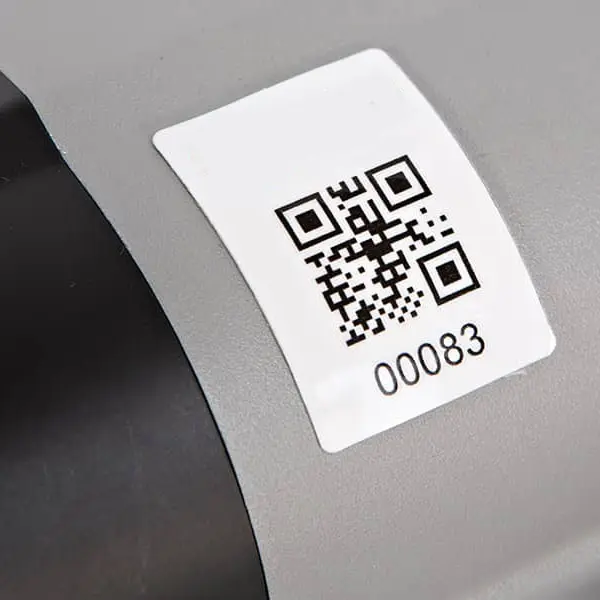
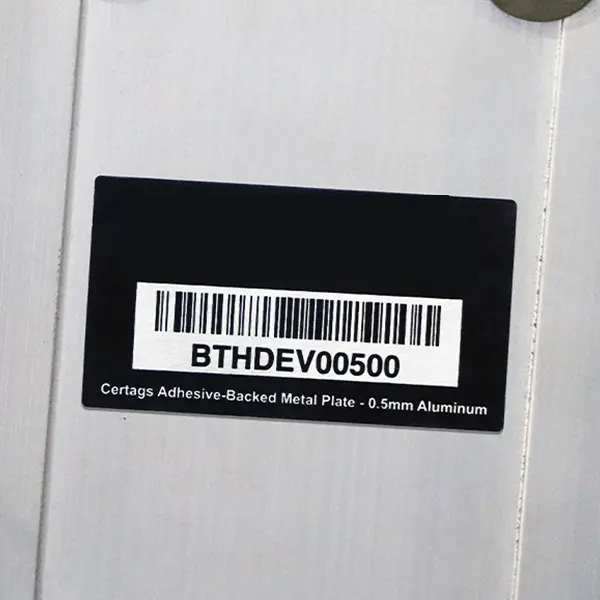
Asset QR Code Labels for Management
- High-density QR Code symbology for maximum data capacity
- Error correction levels up to Level H (30% data restoration)
- Scannable by all modern smartphones and handheld readers
- Durable polyester or polycarbonate substrate construction
- Permanent acrylic adhesive for secure surface bonding
Asset QR Code Labels for Management Features
Asset QR code labels for management are purpose-built to streamline the identification, auditing, and lifecycle tracking of physical assets across an organization. Vizlent manufactures these labels on dimensionally stable polyester or polycarbonate substrates with pressure-sensitive acrylic adhesive, ensuring the QR code module remains flat, undistorted, and scannable throughout years of field use. The facestock draws on the same self-adhesive material platform Vizlent coats and slits in-house.
The QR code is printed at resolutions that maintain the minimum module size for reliable decode, even at the smallest label dimensions required for compact equipment or tools.
QR Code symbology provides substantially greater data capacity than traditional 1D barcodes, encoding asset IDs, URLs, serial numbers, and maintenance records within a compact square footprint.
Vizlent asset QR code labels are produced with error correction Level M or H as standard, meaning partial surface damage or contamination does not prevent successful scanning, reducing asset management errors in real-world environments. For equipment exposed to sun, weather, or outdoor storage, the same construction extends into Vizlent’s outdoor weather resistant label range.
How QR Error Correction Protects Scannability in the Field
QR codes carry built-in Reed-Solomon error correction, which restores data even when part of the symbol is scratched, smudged, or covered. Level M recovers roughly 15 percent of the code, while Level H recovers up to 30 percent, so a partially damaged asset tag still decodes on the first scan.
Choosing the right level is a trade-off: higher correction adds module density, which needs either a larger label or finer print resolution. Vizlent prints to a module size that holds the chosen correction level reliably, then protects it with a scratch-resistant overlaminate from its laminating film range.
Choosing the Right Substrate for Your Asset Environment
Asset tags fail when the substrate is wrong for the surface or environment, not when the QR data is wrong. Polyester suits most indoor IT, lab, and office assets, while polycarbonate adds impact and abrasion resistance for tooling, fixtures, and high-handling equipment.
– Polyester (BOPET): dimensionally stable, chemical-resistant, and ideal for flat metal and plastic equipment surfaces.
– Polycarbonate: higher impact and scratch resistance for industrial tooling and frequently handled assets.
– Electronics and IT: for static-sensitive hardware, pair asset tags with Vizlent’s anti static label construction.
Printing, Variable Data, and CMMS Integration
Every asset tag carries unique data, so variable-data printing is central to the workflow. Vizlent prints sequential or supplied data sets using thermal transfer resin or UV inkjet, both of which produce a hardened, solvent-resistant image that survives years of handling.
For thermal transfer runs, a resin ribbon is recommended because it fuses an abrasion- and chemical-resistant code onto the polyester or polycarbonate face. The encoded strings can match any asset ID format your CMMS or asset management platform expects, so tags integrate without process changes.
Specifications
| Item | Asset QR Code Labels for Management |
|---|---|
| Brand | Vizlent |
| QR Code Symbology | QR Code (ISO/IEC 18004); Data Matrix available on request |
| Error Correction | Level M (15% recovery) standard; Level H (30%) optional |
| Minimum QR Module Size | ≥ 0.25 mm (label-size dependent) |
| Substrate Material | Biaxially oriented polyester (BOPET) or polycarbonate |
| Substrate Thickness | 50–100 µm |
| Adhesive | Permanent pressure-sensitive acrylic |
| Peel Adhesion | ≥ 10 N/25 mm on stainless steel |
| Print Process | Thermal transfer resin ribbon or UV inkjet |
| Surface Finish | Matte or gloss overlaminate (scratch-resistant) |
| Operating Temperature | -30 °C to +130 °C (adhesive dependent) |
| Chemical Resistance | Resistant to isopropyl alcohol, mild detergents, oils |
| Label Sizes | Custom; common range 15 × 15 mm to 100 × 100 mm |
| MOQ | 500 pieces per specification |
| Sample | Functional scan-test samples available upon request |
| Payment Term | T/T, L/C, or as negotiated |
| Production Time | 7–14 business days after data and artwork confirmation |
Applications:
– IT hardware and network equipment management
You May Also Need
-
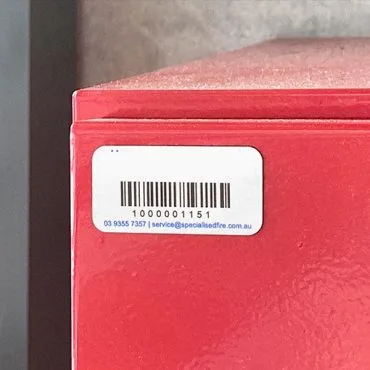
Vizlent durable indoor and outdoor harsh environment labels resist UV, moisture, and chemicals — engineered for industrial asset and equipment marking.
-
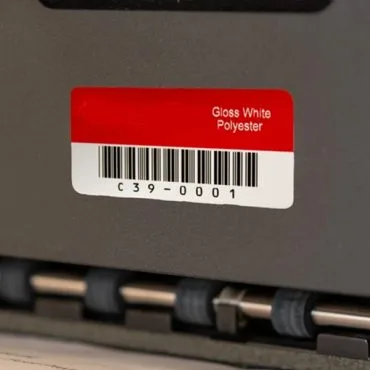
Custom asset tracking barcode tags from Vizlent — precision-printed, durable labels for reliable inventory and equipment management across industries.
-
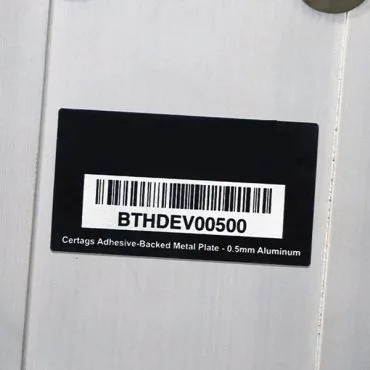
Asset QR code labels from Vizlent enable fast, accurate asset management. Durable, scan-reliable tags for IT, facilities, and industrial tracking.
-
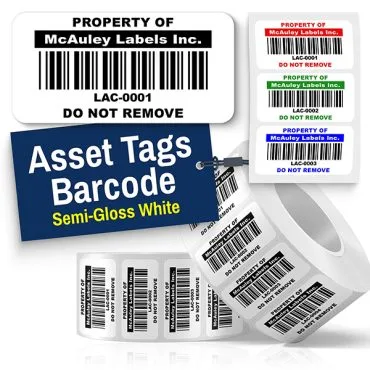
Vizlent adhesive asset labels with custom logo deliver durable asset tracking tags for IT, facilities, and industrial equipment management.
Frequently Asked Questions
Both options are supported. You may supply a complete data file (CSV or Excel) containing the exact encoded strings for each QR code, including asset IDs, URLs, serial numbers, or any alphanumeric data your management system requires. Alternatively, VIZLENT can generate sequential QR code data sets based on a prefix and numbering range you specify. Either way, a digital proof is provided for approval before print production begins.

