
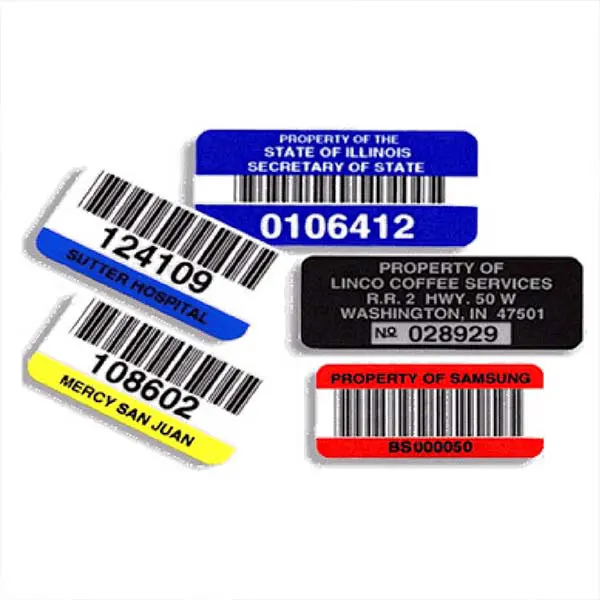
Why Asset Labels Require Specialized Materials
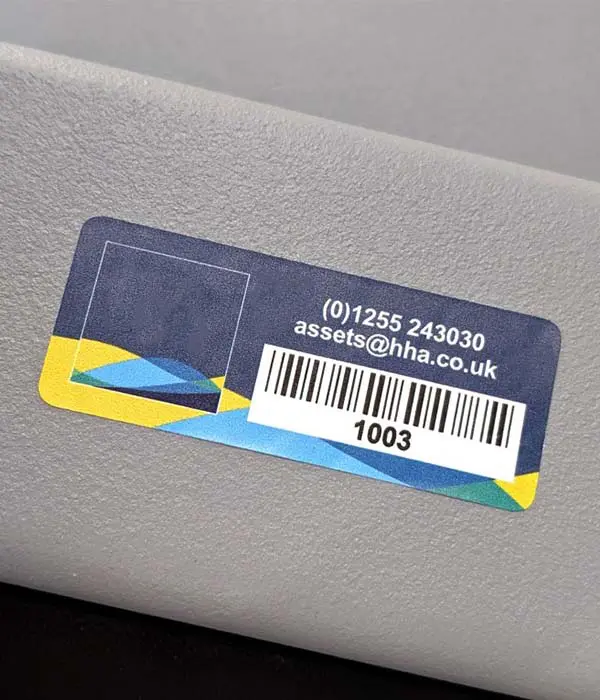
Asset labels are expected to remain legible and securely bonded for years while exposed to operational wear. Unlike temporary shipping or office labels, asset identification labels must survive continuous handling, cleaning cycles, friction, and environmental exposure without losing barcode readability or adhesive integrity.
Many assets use challenging substrates such as powder-coated metal, textured plastics, polyethylene housings, anodized aluminum, stainless steel, painted surfaces, or curved equipment panels. Adhesives must maintain bond strength across these varying surface energies while resisting edge lift and adhesive failure.
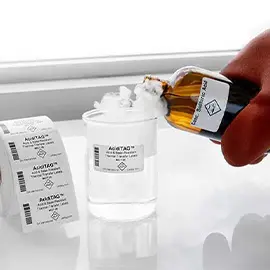
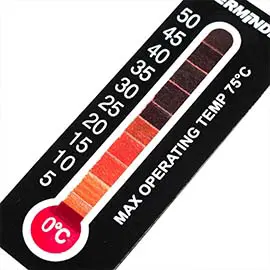
In IT and electronics environments, labels may encounter elevated temperatures from servers, switches, and power supplies. Manufacturing and warehouse settings often expose labels to oils, solvents, moisture, and abrasion from frequent movement or scanning. Healthcare asset labels may require resistance to disinfectants including isopropyl alcohol, bleach solutions, and quaternary ammonium cleaners.
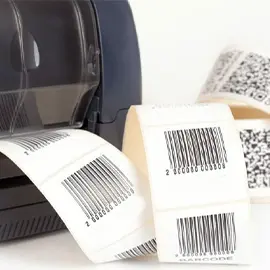
Long-term barcode performance is another critical requirement. Asset tracking systems depend on consistent scan accuracy for Code 128, QR codes, Data Matrix symbols, and serialized identifiers. Poor topcoat durability or incompatible print methods can cause fading, smearing, or abrasion that interrupts inventory management systems.
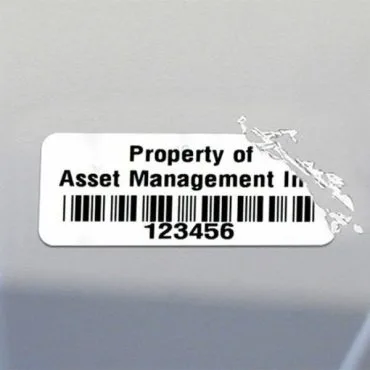
Custom Destructible Asset Labels by Vizlent provide tamper-evident asset identification and equipment tracking solutions.
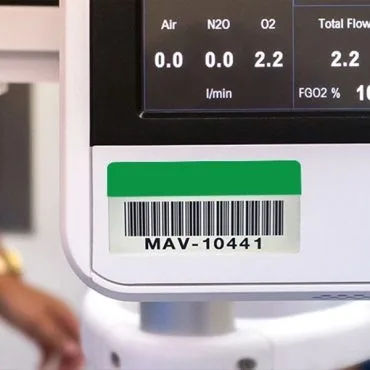
Vizlent Metal Barcode Label Medical Metal Asset Tags offer autoclave resistance, sharp barcode readability, and durable adhesion for hospital equipment tracking.
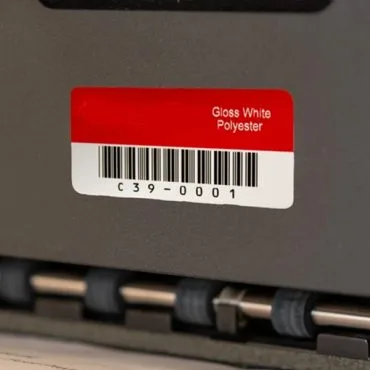
Custom asset tracking barcode tags from Vizlent — precision-printed, durable labels for reliable inventory and equipment management across industries.
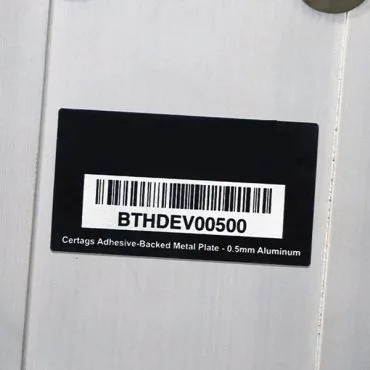
Asset QR code labels from Vizlent enable fast, accurate asset management. Durable, scan-reliable tags for IT, facilities, and industrial tracking.
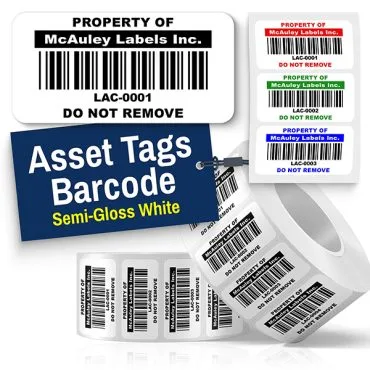
Vizlent adhesive asset labels with custom logo deliver durable asset tracking tags for IT, facilities, and industrial equipment management.
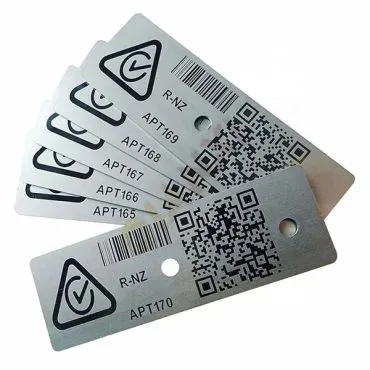
Metal Barcode Label Medical Metal Asset Tags by Vizlent: anodized aluminum or stainless tags with permanent laser barcodes for hospitals, labs and industrial assets.
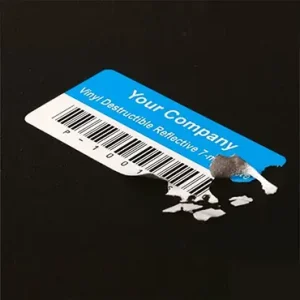
Brittle facestock with voiding adhesive leaves residue or pattern on substrate upon removal attempt. Used for asset protection, license authentication, and tamper-evident sealing in regulated industries.
Key Material Properties for Asset Labels

Common Asset Label Applications

Servers, laptops, routers, switches, monitors, and telecommunications hardware commonly use barcode asset labels for inventory management and lifecycle tracking.
These labels typically require polyester facestocks with permanent acrylic adhesives and thermal transfer printable topcoats. They must withstand heat generated by electronic equipment, regular cleaning, and dense barcode scanning activity.

Hospitals and laboratories apply asset labels to medical carts, infusion pumps, diagnostic instruments, and portable devices.
These labels must tolerate aggressive disinfectant cleaning while maintaining readable identification numbers and barcodes. Chemical-resistant polyester constructions are typically preferred.
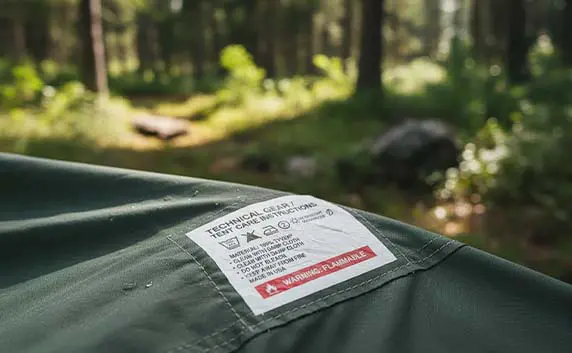
Utility companies and infrastructure operators use asset labels for field equipment, electrical cabinets, telecom enclosures, and outdoor control systems.
These labels must withstand UV exposure, rain, temperature cycling, and extended outdoor service life. UV-stabilized polyester or anodized aluminum materials are commonly used.
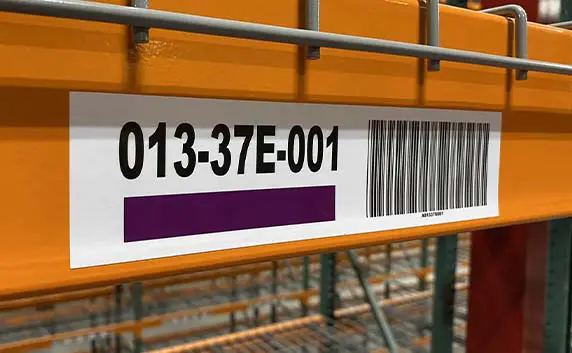
Warehouse operations use labels for reusable containers, mobile equipment, racks, and returnable transport assets.
Frequent handling and scanning require strong adhesive performance and abrasion-resistant print surfaces. Laminated barcode labels are often used where high scan reliability is required.
Regulatory & Compliance Considerations
Asset labels may require compliance with industry-specific durability, safety, or environmental standards depending on the application.
UL 969 — Covers marking and labeling systems for permanence, legibility, and adhesion performance on products and equipment.
RoHS — Restricts hazardous substances in electrical and electronic equipment, affecting material and adhesive selection.
REACH — European chemical regulation that may impact substances used in adhesives, coatings, and facestock materials.
ISO 15415 and ISO 15416 — Define barcode print quality verification standards for two-dimensional and linear barcodes.
ASTM D1000 and related durability tests — Commonly referenced for evaluating adhesion, abrasion resistance, and environmental durability.
UID and MIL-STD requirements — Government and defense asset tracking programs may require permanent machine-readable identification labels.
Compliance requirements vary by industry and region. Material selection should be reviewed against the specific operational and regulatory requirements of the intended application.
Frequently Asked Questions
Polyester is one of the most commonly used materials because it provides good abrasion resistance, thermal stability, and long-term barcode durability.
Paper labels are generally limited to low-wear indoor applications because they are more vulnerable to moisture, abrasion, and chemical exposure than synthetic films.
Thermal transfer printing with resin or wax-resin ribbons is widely used for durable barcode asset labels due to its resistance to smearing and abrasion.
Outdoor durability depends on the material construction and exposure conditions, but UV-stabilized polyester and anodized aluminum labels are commonly specified for multi-year outdoor service.
Tamper-evident labels are commonly used for IT equipment, government assets, calibration systems, and high-value equipment where unauthorized removal or substitution is a concern.

