
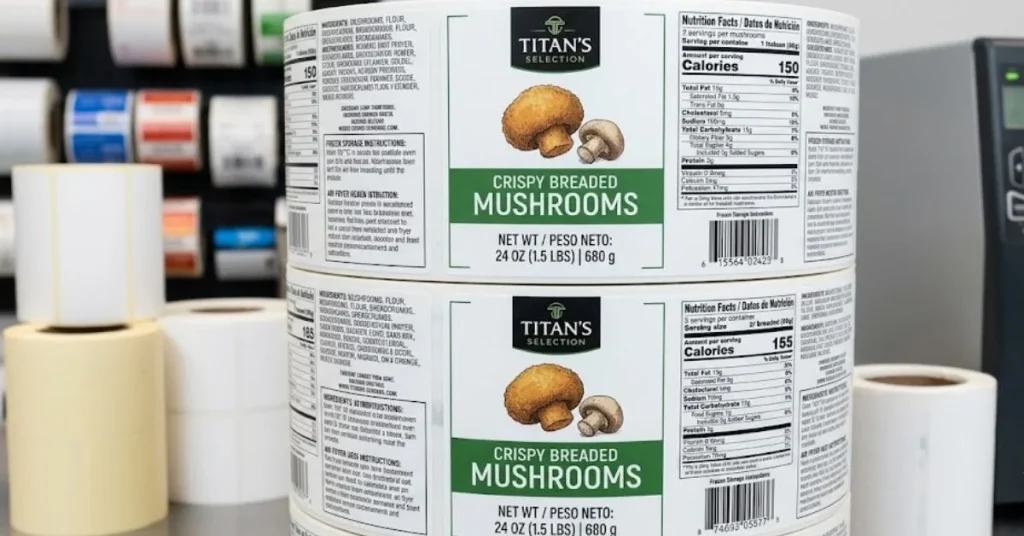
Frozen food labels fail in ways that are easy to miss until it is too late. A label can look perfect on the production line and then curl off a carton three weeks into deep-freeze storage. The cause is almost always a label stock that was never built for the cold.
This guide walks through how to select the best label stock for frozen food packaging. We cover the facestock, the adhesive, the print method, and the surface conditions that decide whether a label survives. By the end, you will know what to specify and what to test before you commit to a production run.
Why Label Stock for Frozen Food Packaging Needs To Be Special
Standard label adhesives are built for room temperature, and most of them crystallize and harden somewhere between 40 and 50 degrees Fahrenheit. Below that point, the bond weakens fast. Apply an ordinary label to a frozen carton and it will lift at the corners within days.
Frozen packaging adds a second problem on top of the cold, which is moisture. Condensation forms on any surface that moves between freezer and warmer air, and that thin film of water is exactly where a weak adhesive loses its grip. A purpose-built freezer label answers both threats at once, pairing a moisture-resistant facestock with an adhesive that stays tacky in sub-zero conditions.
Not sure if your current label stock can handle the freezer? Request a free sample from Vizlent and test it against your own packaging.
Start With the Application Temperature
The single most important number in this decision is the lowest temperature your label will ever face. There is a real difference between refrigerated storage and deep freeze. A refrigerated label rated for 32 to 50 degrees Fahrenheit will not survive a blast freezer, and paying for cryogenic-grade stock on a refrigerated product wastes money.
Equally important is the temperature at which the label gets applied. Applying a label to a carton at room temperature before it goes into the freezer is the easy case, but applying it directly to an already frosted surface is much harder. Map both numbers before you shop, because those two figures narrow your material choices more than anything else.
Talk to a Vizlent engineer about your exact temperature profile before you order.
Choose the Right Facestock Material
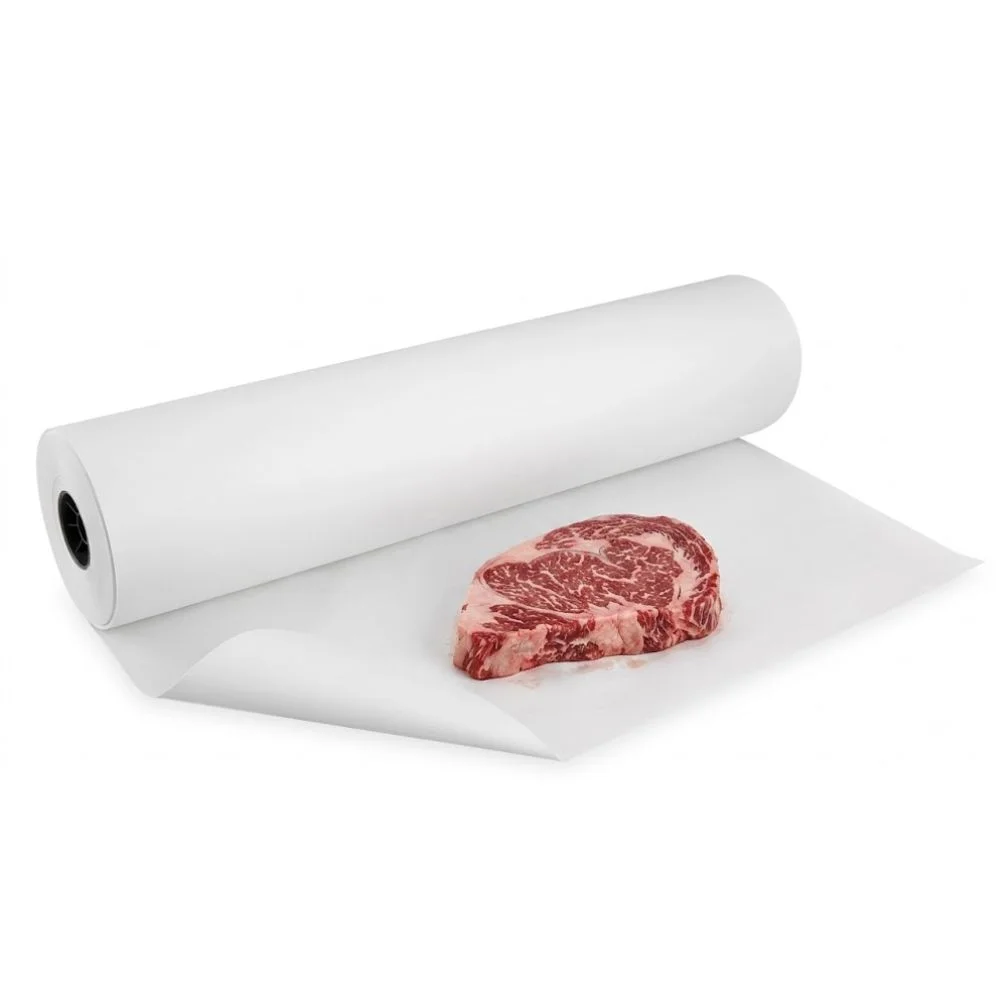
Facestock is the printed surface of the label, and for frozen food, the choice usually comes down to coated paper or synthetic film. Coated freezer paper works well for many deep-freeze applications when it is paired with the right adhesive and a protective laminate. It prints cleanly and costs less, which matters at high volume.
Synthetic films change the equation when conditions get harsh. White polypropylene is a common freezer-grade choice because it shrugs off moisture and stays intact where paper would wrinkle or tear, while polyester goes further still in ultra-low temperatures and resists processing chemicals. For a dry frozen pizza box, laminated paper may be plenty, but ice cream tubs and damp shrink-wrapped meat call for film.
| Facestock | Typical Temperature Range | Best For | Key Strength |
| Coated freezer paper | Down to -20°F | Dry frozen cartons, dated goods | Low cost, clean print |
| White polypropylene (PP) | Down to -65°F | Ice cream, frozen meat, wet packaging | Moisture and tear resistance |
| Polyester (PET) | Down to -112°F | Ultra-low freezers, processing plants | Chemical and extreme cold resistance |
Match the Adhesive to the Cold
The adhesive is where most frozen food labels live or die. A freezer-grade or all-temperature adhesive is formulated to stay pliable and tacky in conditions that turn ordinary glue brittle. Many of these adhesives can be applied as low as -15 degrees Fahrenheit and then hold their bond across a range from roughly -65 to 120 degrees Fahrenheit.
There are two broad families to know. Acrylic-based cold adhesives suit all-temperature use and bond well to many surfaces over a long service life, while rubber-based hot-melt adhesives deliver the aggressive initial tack that blast freezers demand. You also choose between permanent and removable, and most frozen food packaging uses a permanent freezer adhesive, so the label stays put for the product’s life.
Get matched to the correct freezer adhesive grade for your surface and storage temperature.
Account for the Packaging Surface
Adhesion is not just about the glue. It is about how the glue meets the surface, and frozen food packaging presents some of the trickiest surfaces in labeling. Waxed cartons, shrink-wrapped pallets, low-energy polyolefin films, and damp plastic all resist bonding in different ways.
Surface energy is the technical issue underneath this. Materials like untreated polypropylene and polyethylene have low surface energy, which means standard adhesives struggle to wet out and grip them, so a specialized, aggressive adhesive becomes necessary. Shape matters too, because a label wrapping a curved tub or flexible pouch needs a conformable facestock that bends without lifting.
Select a Print Method That Survives the Freezer
Print durability is the step buyers most often overlook, and it ruins otherwise sound labels. A label can stay perfectly attached while its printed text smudges, fades, or scratches into illegibility. In a freezer, condensation and handling attack the print just as hard as the cold attacks the adhesive.
Thermal transfer printing is the reliable workhorse for frozen food labels. The method matches the ribbon to the facestock: a premium wax ribbon suits paper stock, while synthetic films need a wax-resin or full resin ribbon to resist smudging and moisture. Whatever method you choose, verify the barcode survives freeze-thaw cycles and condensation, because a code that will not scan at the point of sale creates a real operational headache.
Request a tested freezer label sample and check the print and barcode on your own scanner.
Verify Food Safety and Compliance
Labels near food carry obligations beyond performance. For frozen food packaging, the material should be suitable for indirect food contact, which means the facestock and adhesive will not migrate harmful substances into the product. FDA compliance for indirect food contact is the baseline many buyers require, and a credible supplier will document it.
Compliance extends to the materials themselves. Reputable freezer label stock is often manufactured to meet RoHS and REACH requirements, confirming it is free of restricted heavy metals and hazardous chemicals. Always ask for the documentation rather than a verbal assurance, since a supplier operating under an ISO 9001 quality system can hand you the relevant papers on request.
Test Before You Commit to Production
No specification is final until it survives a real test. The smartest buyers validate label stock on their actual packaging, at their actual temperatures, before ordering in volume. A free sample run costs almost nothing compared to a failed production batch sitting in a distribution freezer.
Build your test around the conditions the label will face. Apply samples at your real application temperature, store them through several freeze-thaw cycles, and then check both adhesion and print legibility, paying close attention to the edges where flagging shows up first. This is also where a direct manufacturer earns its keep, because a factory with its own coating lines can adjust the formula when a batch behaves unexpectedly.
Order free frozen food label samples from Vizlent and run them through your own freeze-thaw test today.
Why Source Frozen Food Label Stock From Vizlent
Selecting the best label stock for frozen food packaging comes down to matching four things to your conditions: the facestock, the adhesive, the print method, and the surface. Get those right and your labels stay attached and legible from the plant to the freezer aisle. Get them wrong and you pay for it in reprints, recalls, and damaged brand trust.
Vizlent manufactures cold-temperature and freezer-grade label stock from a 20,000 sqm facility in Shenzhen, with adhesives formulated for adhesion down to -40 degrees Celsius and substrates validated through peel-strength and freeze-thaw testing. As a direct manufacturer since 2011, we customize facestock, adhesive, and format to your application, ship jumbo rolls, slit rolls, and die-cut sheets, and provide free samples so you can test before scaling. Reach out today to discuss your specifications and get frozen food label stock engineered to last.
Contact Vizlent for a quote and free samples, and put a freezer-tested label stock on your next production run.
Frequently Asked Questions
What is the best label stock for frozen food packaging?
The label stock for frozen food packaging pairs a moisture-resistant facestock with a freezer-grade adhesive rated below your lowest storage temperature. White polypropylene with a permanent all-temperature acrylic adhesive covers most frozen food applications, while coated freezer paper works for dry cartons and polyester handles ultra-low freezers down to -112 degrees Fahrenheit.
Why do labels for frozen food packaging fall off?
Label stock for frozen food packaging falls off because standard adhesives crystallize and harden between 40 and 50 degrees Fahrenheit, which breaks the bond. Condensation makes it worse by putting a thin film of water between the adhesive and the surface. A freezer-grade adhesive stays pliable and tacky in sub-zero conditions and bonds through light moisture.
Can you apply a label to an already frozen product?
Yes, but it requires an adhesive formulated for cold application. Freezer-grade adhesives can be applied at surface temperatures as low as -15 degrees Fahrenheit and then hold from roughly -65 to 120 degrees Fahrenheit. Rubber-based hot-melt adhesives deliver the aggressive initial tack that frosted or blast-frozen surfaces demand.
What adhesive is best for label stock for frozen food packaging?
A permanent freezer-grade adhesive is best for most frozen food labels. Acrylic-based cold adhesives suit all-temperature use and bond to a wide range of surfaces over a long service life, while rubber-based hot-melts grip faster on frosted and waxed surfaces. Match the adhesive to both your application temperature and your packaging material.
Does label stock for frozen food packaging need to be FDA-compliant?
Labels on frozen food packaging should be suitable for indirect food contact, meaning the facestock and adhesive will not migrate harmful substances into the product. FDA compliance for indirect food contact is the baseline most buyers require, alongside RoHS and REACH documentation. Ask the supplier for the papers rather than a verbal assurance.
How do you test label stock for frozen food packaging before a production run?
Apply samples to your actual packaging at your real application temperature, run them through several freeze-thaw cycles, then inspect adhesion, print legibility, and barcode scannability. Watch the label edges closely, since flagging and corner lift appear there first. A free sample test costs almost nothing compared to a failed batch in distribution.






