
Adhesive label paper for inkjet printing comes in several options. The right material depends on the format you feed your printer, the finish, the facestock, transparency and durability. Choosing well means you get to match the stock to both the printer and the end use.
Here, you’ll get to view the different types of adhesive label paper for inkjet printing. This includes glossy and matte paper, clear film and waterproof vinyl. You will also get to see how each type performs, which coating and adhesive options matter, and how full sheet, A4, and roll formats fit production needs.
How Adhesive Label Paper for Inkjet Printing Works

The label paper for inkjet printing works in pressure-sensitive adhesive material made from three layers: a well-coated facestock, a strong adhesive system, and a smooth release liner. The facestock has an inkjet-receptive coating that locks ink on contact. This produces saturated color and sharp text. Without the coating, the ink feathers and spreads across the surface.
The coating is the piece that separates true inkjet stock from plain paper with glue on the back. An absorptive coating usually applied at 8 to 15 g/m² dry weight, manages how ink absorbs and dries. This control stops the lateral spread that blurs fine type and barcodes, which is why a label stock made for inkjet outperforms generic paper on every print run.
Browse inkjet printing labels to see the best options.
The Role of the Inkjet Coating
The inkjet coatings come in two broad families: swellable and micro-porous. The swellable coatings are chemically binding dye molecules within a polymer layer that swells when it touches ink. They take longer to dry but protect the colorant from light and air, providing better fade resistance.
On the other hand, the micro-porous coatings absorb the ink through physical capillary action. This is why the print feels dry almost right away and it also resists smearing. This makes them the best match for high-speed printing and pigment inks where fast drying reprint waste.
Dye Ink Versus Pigment Ink
The ink in your printer changes based on the label paper you buy. For instance, dye-based inks dissolve fully in their liquid carrier and produce a wide, striking color. However, they are more prone to water damage and fading. They are best paired naturally with swellable coatings that lock the dye within a protective layer.
Pigment inks use bigger colorant particles that rest on or near the surface, providing stronger UV and water resistance. Those particles are too big for swellable coatings to absorb, so the liquid inks require a micro-porous facestock. Confirming your ink type before choosing the label paper helps you avoid the most common cause of poor print quality.
Types of Adhesive Label Paper for Inkjet Printing
The kinds of adhesive label paper for inkjet printing are categorized into clear groups based on facetstock material, finish, durability and transparency. Below is the comparison of the main inkjet label paper types, what they look like and where each works best. You can use this to shortlist a material, then confirm the exact specification based on your printer, ink and the surface type the label will stick to.
| Label Paper Type | Finish | Best For | Key Strength |
| Glossy paper | High shine | Product labels, photos | Vivid color, sharp detail |
| Matte paper | Flat, no glare | Planner, address, minimalist labels | Easy to write on, no reflection |
| Semi-gloss paper | Light sheen | General retail, barcode labels | Balanced cost and quality |
| Clear film | Transparent gloss | No-label look, glass jars | Invisible transparent finish |
| White vinyl | Gloss or matte | Outdoor, bottles, durable use | Waterproof, tear-resistant |
| Waterproof coated | Gloss or matte | Kitchen, cosmetics, cold-chain | Moisture and oil resistance |
Glossy Adhesive Label Paper
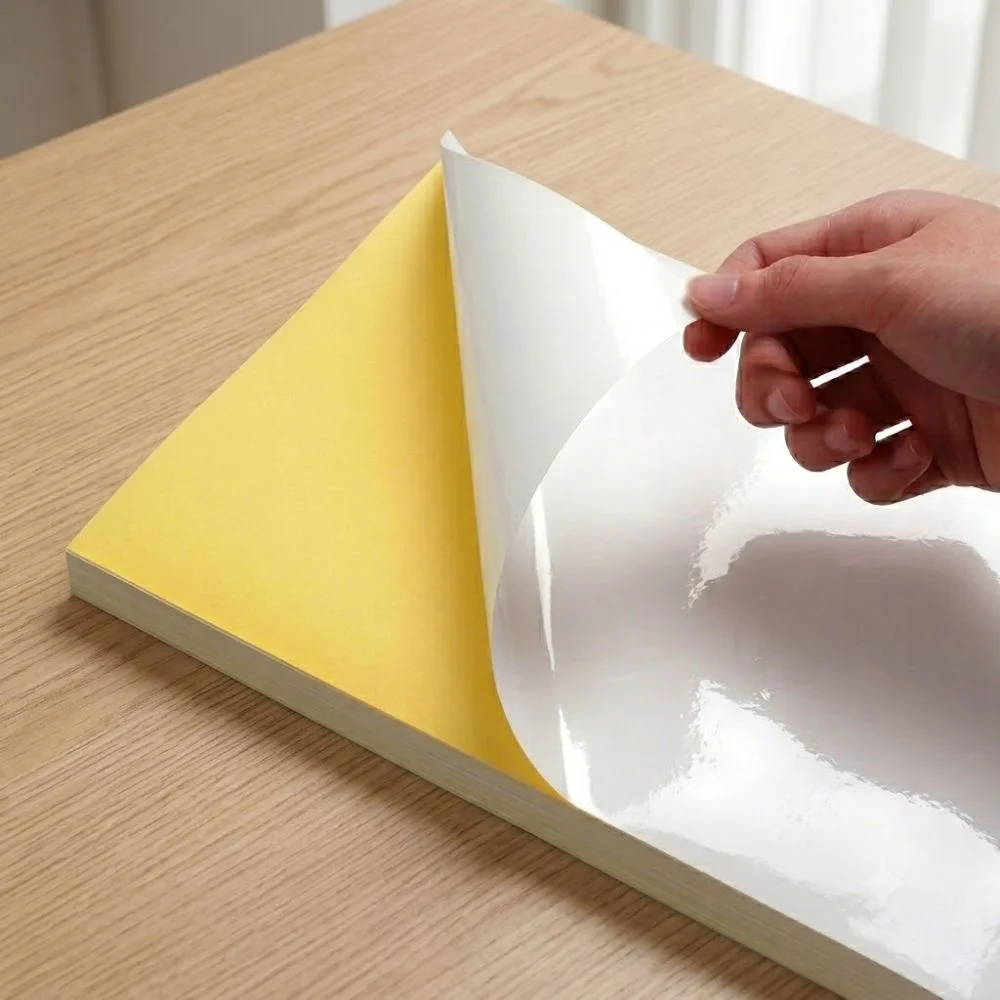
The glossy label paper has a high-shine coating that gives off a striking color and sharp detail. This is why it dominates the product labels, packaging and photographic stickers. The reflective surface intensifies the contrast and makes the spot colors and gradients pop. For brands that want shelf appeal, the glossy adhesive label paper is a great starting point.
Glossy stock can hold fine details well. This produces serif typography and gradient backgrounds at the resolution that premium retail and cosmetic buyers expect. This works with both liquid and dye inks when paired with the right coating. The primary trade-off is the glare under direct light, which can make packed text harder to read at certain angles.
Matte Adhesive Label Paper

This label type uses a flat, non-reflective coating, which absorbs the ink for even, rich color without glare. This is the go-to for address labels, minimalist designs, and planner stickers where readability matters more over shine. You are also able to write on matte stock with a marker or pen, which gloss resists.
Matte paper trades a little when it comes to color vibrancy for a clean, professional look that reads well in any light. This suits indoor labels, brands, and organized systems that require an understated aesthetic. For variable-data printing and text-heavy labels, matte often outperforms gloss since the lack of reflection reserves barcodes and small type legible.
Clear and Transparent Film Labels
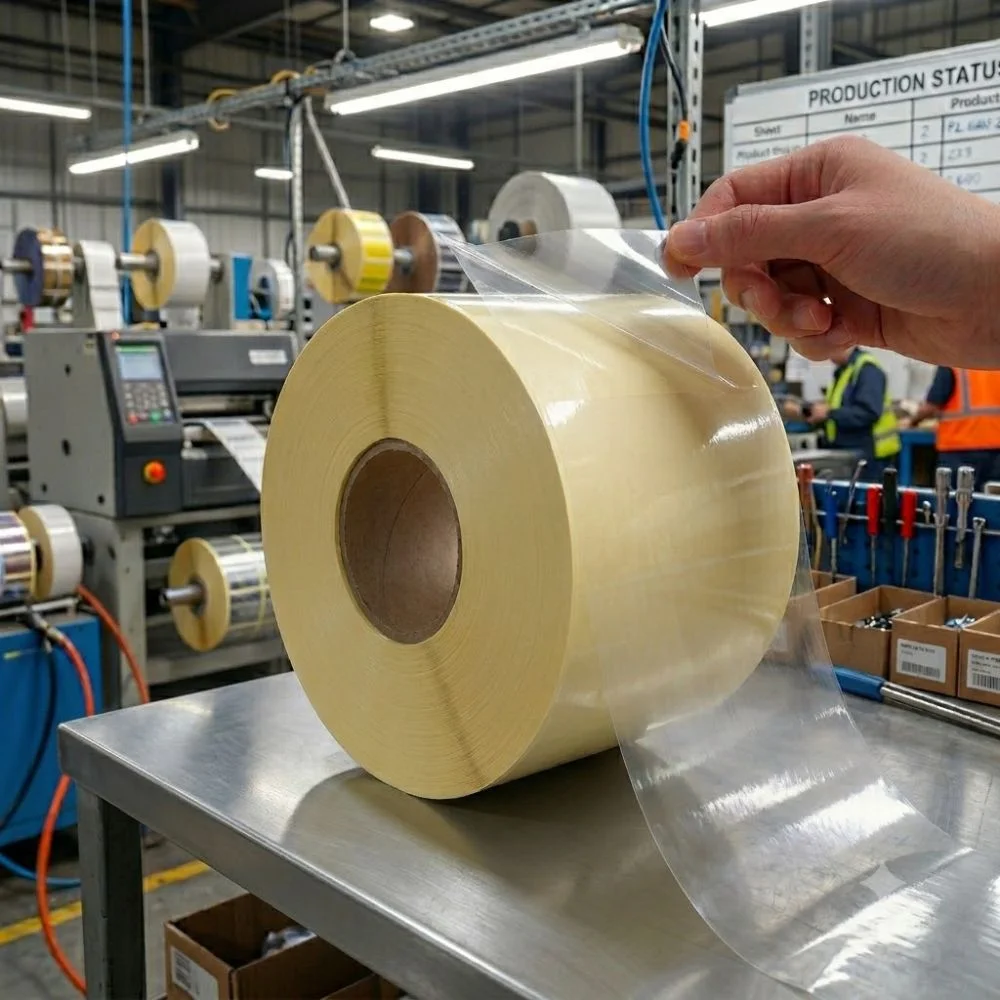
This type of stock provides you with the no-label look that lets the container or product show through. The clear and transparent film labels are ideal for cosmetics, glass jars, and premium beverages. It fades against the surface, so you will only see the printed design that floats on the package. In addition, it delivers a high-end finish that paper cannot match.
Since this is a film, it can resist moisture and handle better than coated paper. Printing on a clear stock typically calls for a micro-porous coating and pigment ink to maintain the transparent surface from smearing. For brands desiring a clean, modern shelf look, clear film is the strongest pick.
Waterproof and Vinyl Label Paper
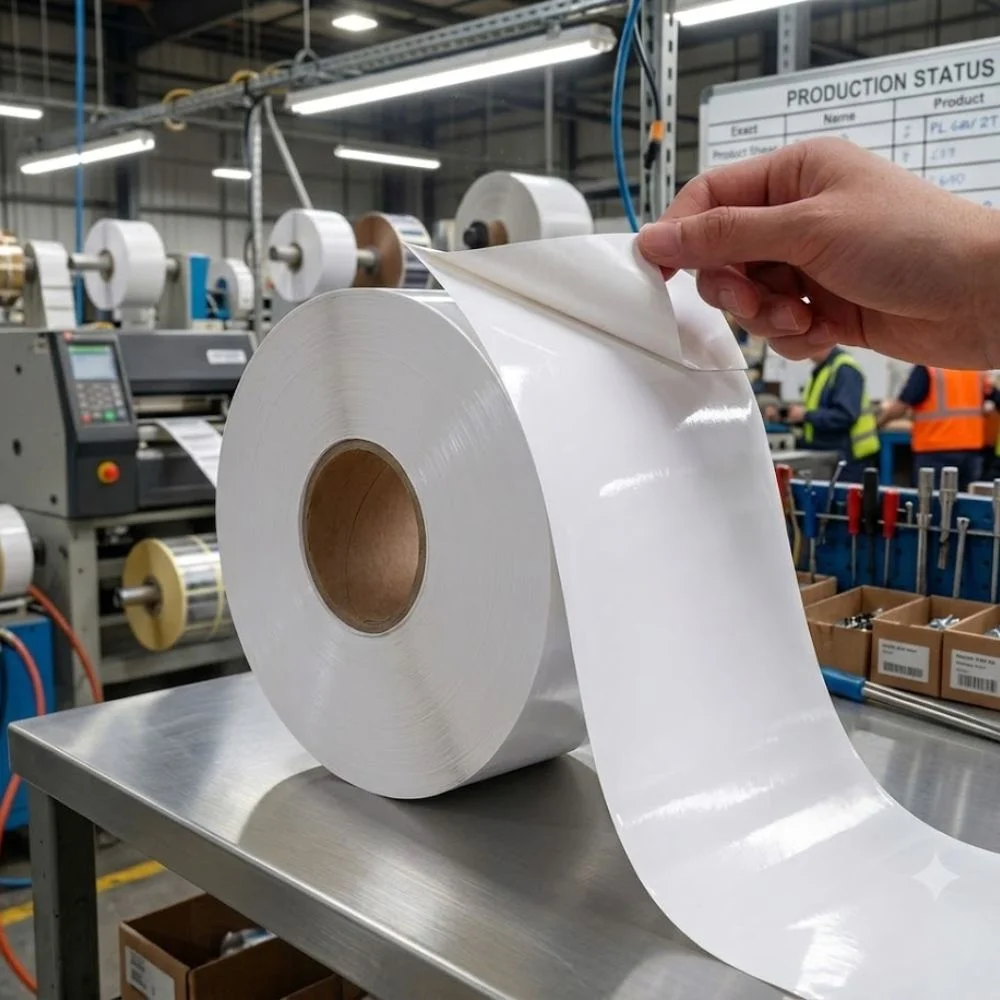
The waterproof and vinyl label paper, be it the vinyl film or coated paper, is made to resist oil, water, and tearing. This is commonly used for body and bath products, food containers, outdoor items, and other items exposed to moisture. Vinyl labels are especially durable and can stand frequent handling and outdoor conditions.
The materials use protective coatings that help keep printed colors sharp and readable, even when exposed to condensation or splashes. For extra durability, a clear or laminate overcoat can provide an added layer of protection. While vinyl and waterproof labels cost more than standard paper labels, they help maintain a professional appearance and prevent damage throughout the lifespan of the product.
Adhesive Types Behind Inkjet Label Paper
The label adhesive matters as much as the facestock since it decides whether the label peels off or stays put. Most inkjet labels use a pressure-sensitive adhesive that bonds with applied pressure alone, no water or heat needed. The two primary categories are removable and permanent, each suited to different jobs.
Picking the right adhesive comes down to how long the labels need to stay and the surface they will stick to. A permanent acrylic adhesive bonds cleanly to PET (Polyethylene Terephthalate), HDPE (High-Density Polyethylene) and glass without oozing at the edge, which is a quality signal on premium products. (High-Density Polyethylene). Vizlent’s inkjet printing label stock uses a permanent acrylic adhesive that keeps pee adhesion across −10°C to 80°C, making it ideal for both ambient and cold-chain applications.
Adhesive Label Roll and Roll Formats
The adhesive label rolls are made for dedicated label printers and automated labeling systems, making them perfect for high-volume production. Compared to sheet labels, rolls improve efficiency by minimizing waste, reducing handling, and eliminating frequent printer reloads. For businesses that print hundreds or thousands of labels, the roll formats offer a more cost-effective and streamlined solution. Vizlent offers jumbo rolls, custom-slit rolls and die-cut sheets to support a wide range of printing requirements.
How to Choose the Right Inkjet Label Paper
Picking the right adhesive label paper relies on your ink and printer, the surface it will stick to, and the temperature. For instance, a glossy dye-ink label is not right for a frozen product, just as removable adhesive is wrong for a permanent item label. The best material is the one that fits the full set of real-world conditions, not just the design.
Key Selection Factors
You can use the factors below to narrow your options before requesting samples:
- Printer and ink type: Match dye inks to swellable coatings and micro-porous coatings to pigment inks.
- Facestock and finish: Pick the gloss for color, clear film for the no-label look, matte for readability, and vinyl for durability.
- Surface: Specify the adhesive HDPE, PET, or low-energy polypropylene.
- Environment: Make sure to account for refrigeration, moisture, oils, and UV exposure with coated or waterproof stock.
- Format: Choose full sheet or A4 for desktop printers, rolls for high-volume label printers.
Sourcing Inkjet Adhesive Label Paper From a Direct Manufacturer
When you buy bulk inkjet adhesive label paper from a direct manufacturer rather than a trading company, you gain control over specification and single-point accountability for quality. With a direct manufacturer on your side, you can ensure they run their own coating, sitting lines, which allows you to request tuning the inkjet coating, adhesive, and liner to match your converting process and ink set. Vizlent has been producing inkjet sticker paper since 2011 at its 20,000 sqm Shenzhen facility. We also have factories in Guangdong, Ganzhou, Jiangxi, and Hong Kong.
Get the Right Inkjet Label Stock From Vizlent Today
The type of adhesive label paper you pick for inkjet printing decides whether your labels fail or look professional in the tray. Matching the coating to your ink, facestock to your durability needs, the adhesive to your surface, and the format to your printer. This separates a clean print that runs from wasted material.
Vizlent manufactures inkjet adhesive label paper made for sharp, fade-resistant output. This is available in matte, gloss, and semi-gloss clear and white constructions, with jumbo rolls, die-cutting rolls, and sheet formats. Contact us today to discuss your specifications, request a free sample and to get the right inkjet label stock today!
Frequently Asked Questions
What is the best adhesive label paper for inkjet printing?
The best option relies on your ink, printer, and end use. Glossy paper is ideal for striking product labels, matte for readable address and planner labels, clear film for a no-label look, and waterproof or vinyl stock for outdoor use. But before anything else, make sure to match your coating to your ink type first.
What is the difference between glossy and matte inkjet label paper?
The difference is the vividness of color and details. The glossy label paper has that high-shine coating that makes vivid color and sharp detail, which are ideal for photos and product labels. Matte label paper, on the other hand, has that flat, non-reflective finish that absorbs ink for even color without the glare.
Can I use any inkjet printer with adhesive label paper?
Most desktop and office inkjet printers handle full sheet and A4 self-adhesive label paper, while rolls require a dedicated label printer. The key is matching the coating to your ink: pigment inks need a micro-porous coating, dye inks suit swellable coatings. Check your printer’s substrate specification.
What is the difference between full sheet and A4 label paper?
Adhesive label paper full sheet is one undivided sheet you print edge to edge and cut yourself, giving design freedom for custom shapes. Adhesive label paper A4 is sized for standard printers and feeds reliably for everyday labels. Both suit desktop inkjet printing; the full sheet adds shape flexibility.
Is waterproof inkjet label paper truly waterproof?
Waterproof inkjet label paper resists water, oil, and tearing far better than standard paper, with a coating that encapsulates the ink. For light to moderate exposure, it performs well, but heavy or prolonged exposure benefits from a clear laminate or overcoat. Pigment inks improve water and UV resistance.
Which adhesive should I choose for inkjet labels on glass or plastic?
A permanent acrylic adhesive bonds cleanly to glass, HDPE, and PET without edge ooze, making it the standard for product labels. For low-energy polypropylene, specify a low-surface-energy grade. For cold or wet storage, ask for a cold-temperature tack formulation. Match the label adhesive to the surface.
Does inkjet label paper come in roll format for high-volume printing?
Yes. An adhesive label roll feeds dedicated label printers and automatic labeling equipment for high-volume runs, reducing handling and waste. Converters also buy jumbo rolls and slit them in-house to custom widths. Roll formats are the efficient choice for any operation printing in volume.






