
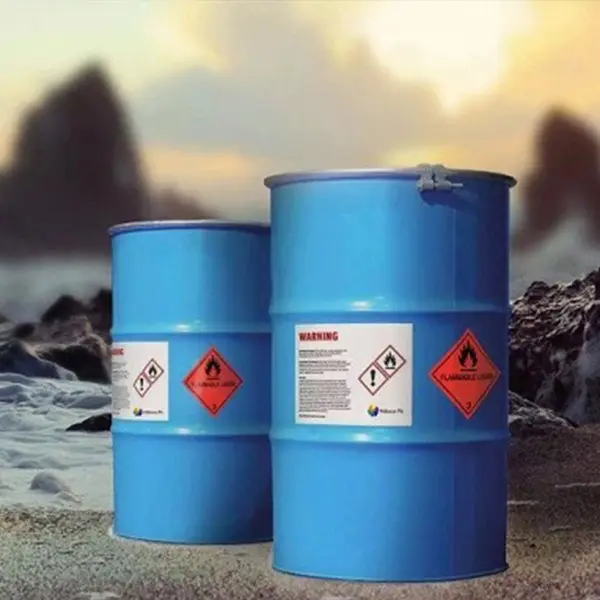
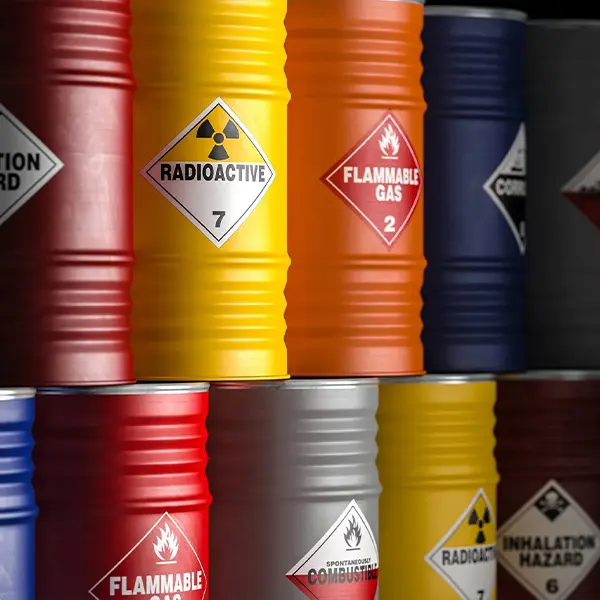
Salt Water Chemical Drum BS5609 Labels
- BS5609 Labels by Vizlent Passes BS 5609 Section 3 saltwater immersion test (28 days)
- Specifically qualified for chemical drum labeling in marine shipping contexts
- Film substrate resists swelling, delamination, and adhesive failure in seawater
- Printed GHS hazard information retained after immersion per BS 5609 protocol
- Adhesive maintains drum bond throughout full sea voyage conditions
- UV-stable construction withstands deck storage and tropical sun exposure
BS5609 Labels for Salt Water Chemical Drum Features
Salt Water Chemical Drum BS5609 Labels are specifically engineered and tested to meet the requirements of BS 5609 Section 3, the international benchmark standard for label materials used on chemical drums shipped by sea. These labels belong to Vizlent’s petrochemical and drum labeling solutions, built for containers that face the harshest transport conditions.
The standard requires that labels survive 28 days of continuous seawater immersion followed by UV exposure, with the label remaining bonded to the substrate and all printed GHS hazard information remaining clearly legible throughout.
This test protocol simulates the worst-case scenario of a drum falling overboard during maritime transport, a scenario that is specifically addressed by the IMDG Code, which mandates that hazard labels on sea-shipped chemical containers must be capable of surviving this condition.
Vizlent’s BS5609 saltwater label construction achieves this performance through the combination of a dimensionally stable polymer film face stock, a moisture-impermeable chemical barrier topcoat, UV-stable resin thermal transfer or UV-cured inks, and a marine-grade pressure-sensitive adhesive formulated to resist the plasticizing and debonding effect of prolonged saltwater exposure. The face stock draws on the same self-adhesive material platform Vizlent coats and slits in-house.
Unlike standard waterproof labels that may resist brief rain exposure but fail under extended marine immersion, these labels are qualified through the full BS 5609 test protocol to provide documented, certifiable compliance for chemical exporters.
How Seawater Resistant Construction Protects Hazard Information
Seawater resistant labels rely on a layered build where each component defends a specific failure point under prolonged marine exposure. The polymer film face stock holds its dimensions, the barrier topcoat blocks moisture migration, and the marine-grade adhesive resists the plasticizing effect that loosens ordinary stock from a steel drum., built for containers that face the harshest transport conditions.
This combination keeps printed GHS pictograms and hazard text legible through the full BS 5609 test cycle, so the warning that protects handlers stays visible after immersion and sun exposure. The same UV durability carries over to Vizlent’s outdoor weather resistant labels, which are engineered for prolonged sun and deck storage.
Specifications
| Item | Printed Chemical Drum Labels |
|---|---|
| Brand | Vizlent |
| Face Stock Material | BOPP or PET film (white gloss / white matte) |
| Face Stock Thickness | 38–80 µm |
| Printing Technology | UV flexographic (long run); UV digital inkjet (short run) |
| Color Printing | Up to 8 colors + varnish / overlaminate |
| Print Resolution | Up to 1,200 dpi (digital); 150 lpi (flexographic) |
| Adhesive Type | Permanent high-tack acrylic PSA |
| Adhesion to Steel | ≥ 12 N/25 mm (90° peel) |
| Chemical Resistance | UV-cured ink film; resistant to oil, solvent splash, and moisture |
| UV Resistance | UV-stable inks; ≥ 18 months outdoor service life |
| Label Format | Die-cut roll, full wrap-around, panel label; custom die available |
| Variable Data Compatibility | Thermal transfer overprint (TTO) zone available on semi-blank format |
| MOQ | 500 labels (digital); 3,000 labels (flexographic) |
| Sample | Press proof or digital proof available |
| Payment Term | T/T, L/C, PayPal |
| Production Time | 7–18 business days depending on print process and quantity |
Applications:
Export of dangerous goods by sea under IMDG Code regulations; chemical drum labeling for ocean freight shipments; international chemical distribution via container shipping; port chemical logistics and freight forwarding; offshore platform chemical supply drums; chemical waste export requiring IMDG compliance documentation. For regulated GHS labeling beyond drums, see Vizlent’s pharmaceutical and healthcare labeling.
You May Also Need
-
Salt Water Chemical Drum BS5609 Labels by Vizlent survive marine immersion tests, ensuring GHS compliance for chemical drums shipped by sea worldwide.
-
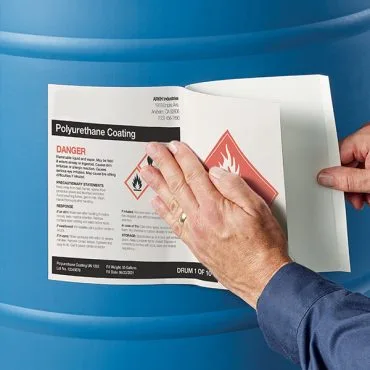
Printed Chemical Drum Labels from Vizlent combine sharp full-color printing with chemical-resistant film for durable, compliant drum identification at scale.
-
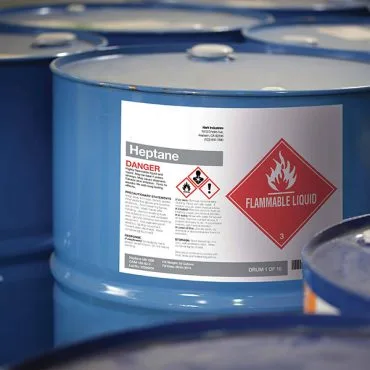
High Durable Chemical And Oil Drum Labels by Vizlent resist oil, solvents, and outdoor exposure—ideal for long-term drum identification in industrial environments.
-
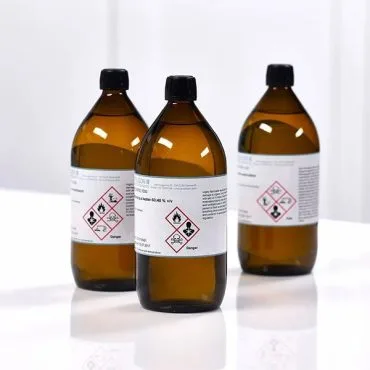
Hazardous Chemical Labels from Vizlent combine regulatory compliance, durable film construction, and aggressive adhesion for safe identification of dangerous goods.
-
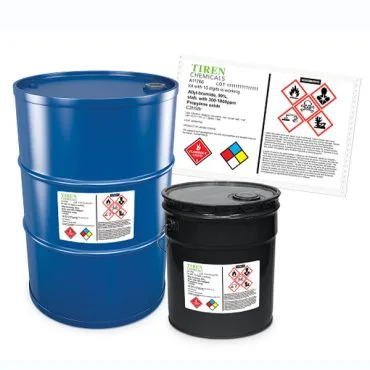
GHS Labels for Chemical Product Packaging by Vizlent deliver compliant hazard communication with durable film stock, vivid pictograms, and chemical resistance.
-
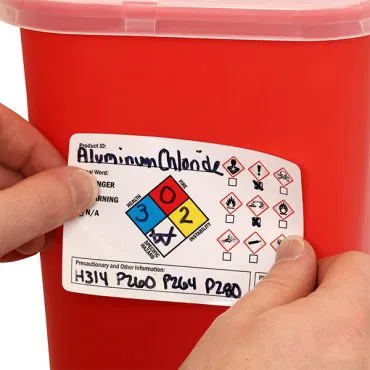
Durable Hazardous Material Identification Labels by Vizlent ensure regulatory compliance with strong adhesion, chemical resistance, and long-term legibility.
-
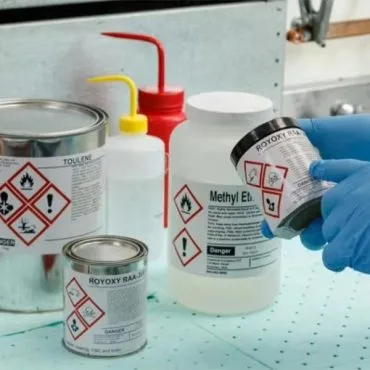
Chemical Label Resistant to Water, Oil, Acid & Alkali by Vizlent offers all-round protection for industrial containers in harsh processing environments.
-
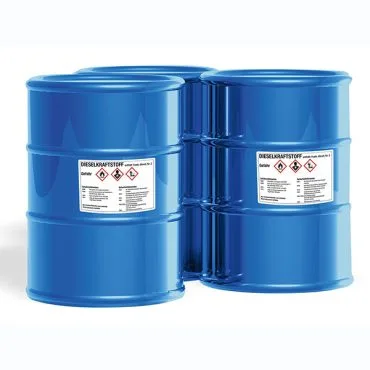
BS 5609 Approved Label Chemical & Oil Resistance by Vizlent meets marine standards for drums—resists oils, solvents, and saltwater exposure reliably.
Frequently Asked Questions
Vizlent accepts print-ready vector files in PDF, AI, or EPS format with all fonts outlined and images embedded at 300 dpi or higher. Color should be specified in CMYK for process work, with Pantone spot references provided for any brand-critical or GHS hazard-pictogram colors. A 3 mm bleed and clearly marked die line help ensure accurate registration during production. Submitting correctly built artwork shortens proof cycles and protects the legibility that BS 5609 compliance depends on.
UV inkjet and UV flexographic printing both produce durable BS5609 compliant labels, but each suits a different volume profile. UV digital inkjet has no plate cost and handles short runs, variable artwork, and fast turnarounds efficiently, making it ideal below a few thousand units. UV flexographic printing carries plate setup but delivers a lower per-unit cost and tighter color consistency across long production runs. Both processes cure ink into a robust film that survives the BS 5609 saltwater immersion and UV exposure sequence.
The minimum order quantity is 500 labels for UV digital inkjet and 3,000 labels for UV flexographic printing. The lower digital threshold supports prototyping, small export batches, and SKU variations without plate investment. Flexographic runs become more economical at higher volumes where per-unit cost matters most. Sample proofs are available before any full production run so artwork and BS 5609 conformance can be verified.
Yes, the UV-cured ink film and barrier topcoat resist incidental contact with oils, solvent splash, and the contents typically shipped in chemical drums. The construction is built to withstand handling exposure rather than continuous submersion in concentrated chemicals, which is consistent with real-world drum labeling conditions. For aggressive or unusual chemistries, Vizlent can recommend a tailored topcoat or overlaminate. This chemical resistance works alongside the saltwater and UV performance that defines these BS 5609-certified labels.
Yes, Vizlent offers a semi-blank format that pre-prints fixed elements such as GHS pictograms, branding, and static text while reserving a thermal transfer overprint zone for variable data. Shippers can add batch numbers, UN identifiers, and date codes on demand using a thermal transfer printer with a compatible resin ribbon. The reserved zone is treated to accept TTO ink while maintaining the same saltwater and UV durability as the printed area. This format keeps BS5609 labels for chemical drums fully compliant after on-site overprinting.

