
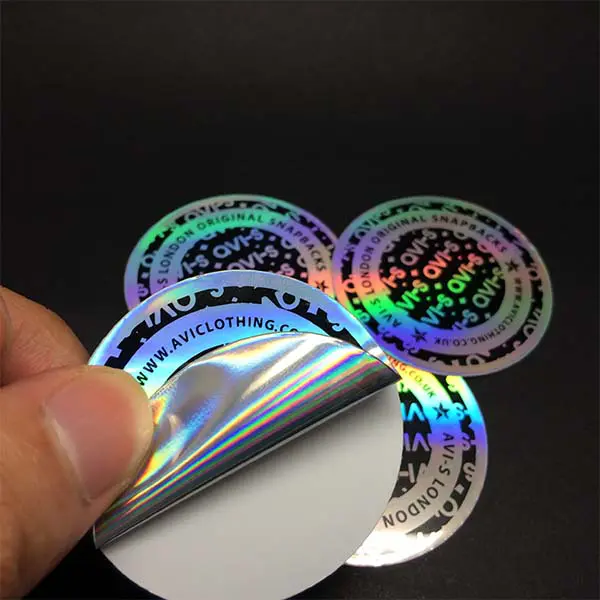
Why Holographic Labels Require Specialized Materials
Holographic labels are designed to provide both visual authentication and physical security functions. Unlike conventional decorative labels, these constructions must maintain optical integrity while resisting tampering, abrasion, moisture, chemicals, UV exposure, and unauthorized replication.
Many holographic labels use metallized polyester films with embossed diffraction patterns that create dynamic visual effects. These optical structures can degrade if exposed to excessive heat, aggressive solvents, poor lamination practices, or incompatible printing processes. Adhesive selection is equally important because many applications involve low-surface-energy plastics, textured cartons, curved containers, coated metals, or temperature-sensitive packaging.
Security applications also introduce additional converting requirements. Tamper-evident holographic labels may include destructible films, void-release adhesives, frangible facestocks, serialized variable data, microtext, QR codes, or covert authentication layers. In regulated industries, labels may additionally require traceability, barcode durability, or compatibility with automated inspection systems.
Environmental exposure varies significantly by industry. Pharmaceutical cartons may face refrigerated storage and frequent handling, while automotive component labels may encounter oils, heat cycling, and abrasion. Electronics labels often require dimensional stability and residue-free performance during manufacturing or warranty verification.
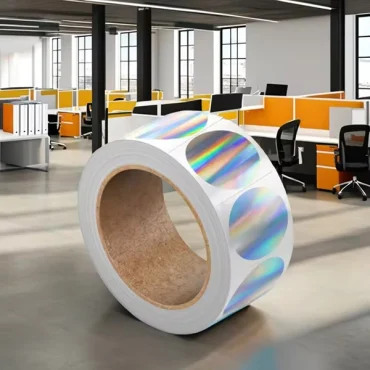
Plain Hologram Eggshell Stickers Ultra-frangible eggshell film construction Breaks into small fragments when peeled Bright holographic optical pattern Permanent high-tack adhesive Cannot be removed intact Send Your Inquiry Now Shatter-On-Removal Tamper Evidence Plain Hologram Eggshell Stickers are manufactured from a specially formulated brittle film that fractures into many small pieces the moment removal is attempted. […]
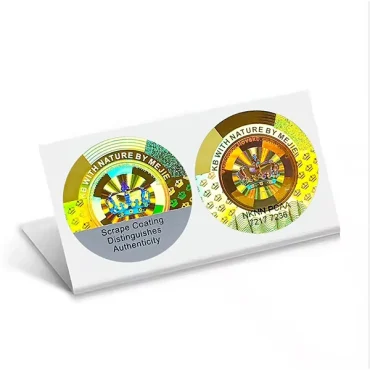
Custom Hot Stamping Foil Holographic Stickers Hot-stamped holographic foil transfer Bright metallic color-shift effects Custom logo and pattern capability High visual impact for premium packs Available in multiple foil colors Send Your Inquiry Now Premium Metallic Finish with Optical Security Custom Hot Stamping Foil Holographic Stickers are produced by transferring a thin holographic metallized layer […]
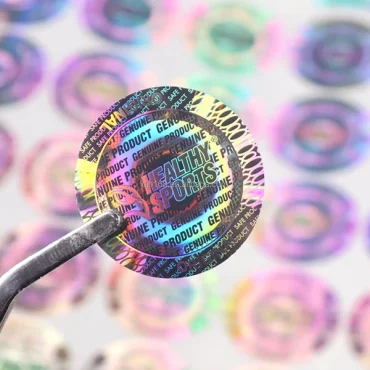
Anti-Counterfeit Hologram Stickers Custom or standard holographic patterns Bright color-shift optical effects Optional void or destructible film High adhesion on most packaging Resistant to photocopy and scanning Send Your Inquiry Now Visual Authentication That Stops Simple Fakes Anti-Counterfeit Hologram Stickers use laser-recorded optical patterns that produce rainbow color shifts and depth effects when viewed from […]
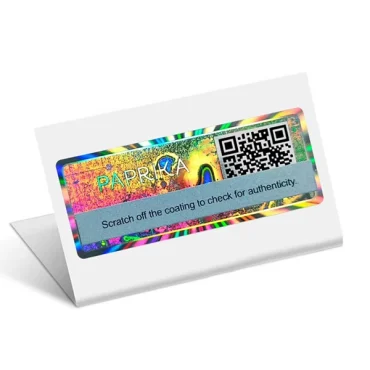
Anti Fake QR Code Hologram Stickers Integrated high-resolution QR code Bright multi-color holographic layer Unique or sequential code capability Tamper-evident film options Smartphone-scannable under normal light Send Your Inquiry Now Optical Plus Digital Dual Authentication Anti Fake QR Code Hologram Stickers merge a conventional two-dimensional barcode with an optically variable holographic overlay. The QR code […]
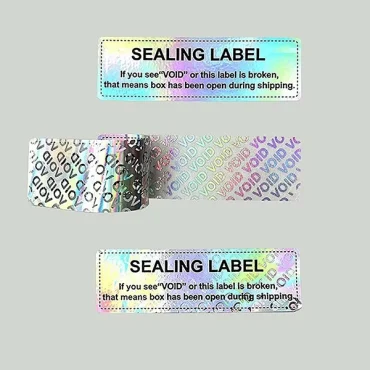
Anti Counterfeit Label Disposable Hologram Sticker Destructible film or void residue Bright holographic optical pattern Permanent aggressive adhesive Leaves clear “VOID” or custom message Cannot be reapplied intact Send Your Inquiry Now One-Time Security Seals with Clear Tamper Proof Anti Counterfeit Label Disposable Hologram Stickers are engineered for single-use authentication. The construction uses a specially […]
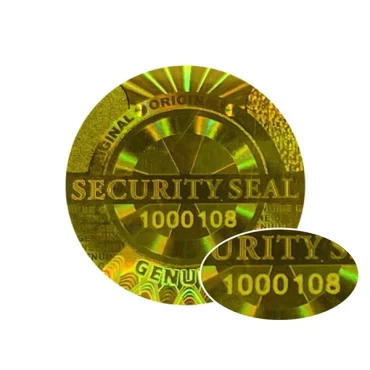
3D Original Hologram Labels With Serial Numbers True 3D multi-layer holographic image Unique sequential serial numbering Tamper-evident void pattern option High-resolution laser-recorded optics Custom logo and artwork embedding Send Your Inquiry Now Secure Traceability with Dynamic 3D Imagery 3D Original Hologram Labels With Serial Numbers combine optically variable three-dimensional imagery with unique sequential codes to […]
Key Material Properties for Holographic Labels
Common Holographic Label Applications
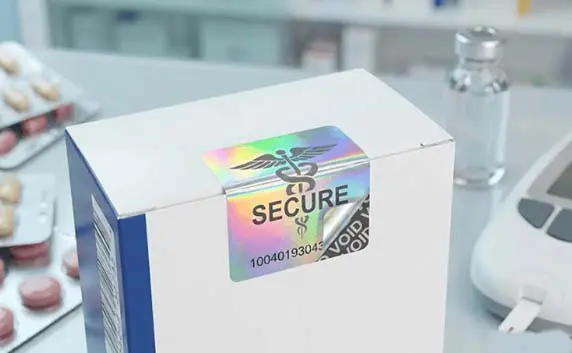
Pharmaceutical manufacturers use holographic labels on folding cartons, bottles, and secondary packaging to deter counterfeiting and support product verification. These labels often combine holographic imagery, serialization, tamper evidence, and barcode printing.
Typical constructions include holographic polyester facestocks with permanent acrylic adhesive and protective overlamination designed for refrigerated storage and distribution environments.
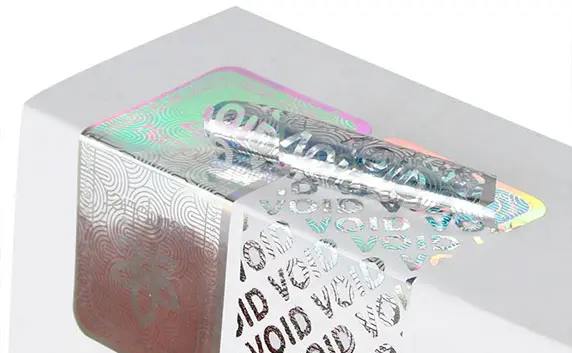
Electronics manufacturers commonly apply holographic void labels across enclosure seams, access panels, or serial number plates. The label must leave visible evidence if removed while remaining legible throughout the warranty period.
Void-release polyester films and destructible vinyl materials are frequently used because they provide clear tamper indication and strong adhesion to metal or plastic housings.
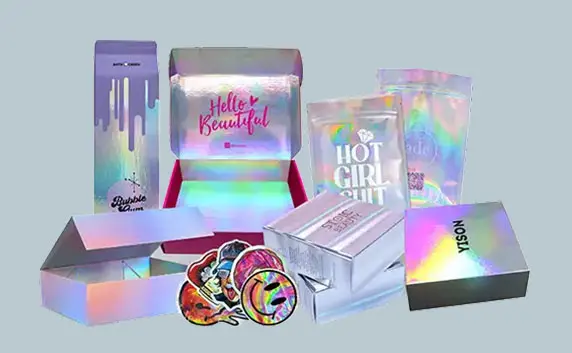
Cosmetics and skincare brands use holographic labels to combine brand authentication with shelf differentiation. Labels may be exposed to oils, moisture, handling abrasion, and curved container surfaces.
Flexible holographic films with moisture-resistant adhesives are commonly selected for tubes, jars, cartons, and glass containers.

Automotive suppliers use holographic labels to authenticate replacement components and reduce gray-market distribution. Labels may encounter oils, elevated temperatures, vibration, and warehouse handling.
Durable polyester constructions with aggressive permanent adhesives are typically used for long-term adhesion and resistance to industrial environments.
Frequently Asked Questions
They can serve both purposes, but security holographic labels are specifically engineered with authentication and tamper-evident features that are difficult to duplicate using standard printing methods.
Permanent acrylic adhesives are commonly used because they provide strong long-term adhesion and support void-release or destructible security constructions on many packaging surfaces.
Yes. Many holographic films include printable topcoats designed for thermal transfer, digital, or UV printing of serialized authentication and traceability information.
Flexible holographic film constructions can conform to moderate curves, but adhesive selection and facestock thickness should be matched to the container geometry and application method.
Service life depends on the material construction and exposure conditions, but polyester-based holographic labels are commonly designed for multi-year indoor durability under normal handling conditions.

