
Why Brand Protection and Security Labels Require Specialized Materials
Standard pressure-sensitive labels are designed to adhere reliably and display graphics accurately. Security labels must do both of those things while simultaneously defeating a range of adversarial actions that a standard label was never designed to resist: peeling and reapplication to a different product, scanning and reprinting on a commercial inkjet or laser printer, chemical solvent transfer to lift a label without visible damage, and wholesale duplication of the label design using commercially available printing technology.
The first and most fundamental inadequacy of standard label materials in security applications is their transferability. A high-quality permanent acrylic adhesive on a polyester facestock will bond tenaciously to a glass bottle or metal closure—but a skilled counterfeiter with the right solvent and patience can often transfer that label intact to a counterfeit product.
Finally, security labels often operate under significant field conditions—they are applied to pharmaceutical bottles that pass through distribution and pharmacy environments, to luxury goods that travel intercontinental supply chains, to electronics that are handled repeatedly in retail. The security features must survive these conditions without false-positive failure that triggers unnecessary investigation of legitimate product.
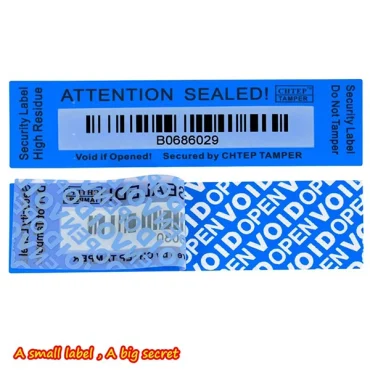
Warranty Custom Security Tamper Proof Labels for Mobile Camera Purpose-designed for mobile device camera module and lens assembly sealing Ultra-thin construction — minimal height addition over camera module housing VOID tamper evidence activates on any disassembly or housing removal attempt Non-residue adhesive protects camera lens optical surfaces from contamination Custom die-cut to match smartphone or […]
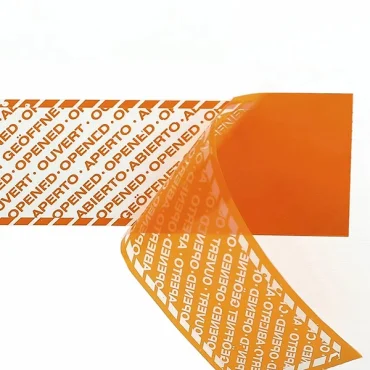
Tamper Proof Safety Labels Combines tamper evidence with safety warning text in a single label construction VOID pattern activates on any removal attempt — irreversible evidence Durable face material resists abrasion, chemicals, and UV in industrial environments Custom safety icons, warning symbols, and regulatory text incorporated into design Aggressive permanent adhesive for bonding to industrial […]
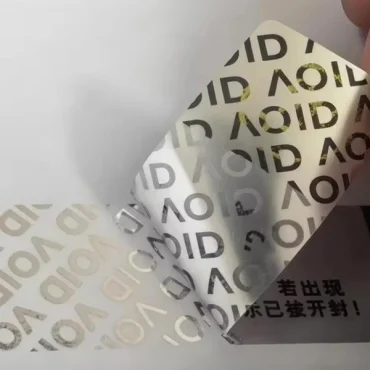
Tamper Proof Label Custom Void Security Stickers Custom VOID pattern, text, and design built to customer specification Multiple tamper evidence mechanisms: VOID transfer, ultra-destructible face, holographic Factory-printed variable data: serial numbers, barcodes, QR codes, date codes Adhesive tailored to substrate — plastic, metal, glass, paper, or painted surfaces Nrnare ut voCustom die-cut shapes including circles, […]
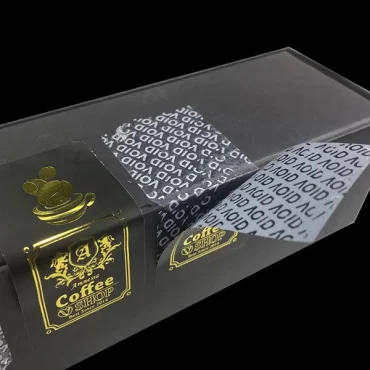
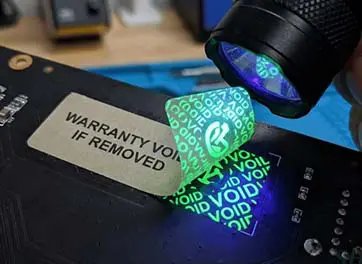
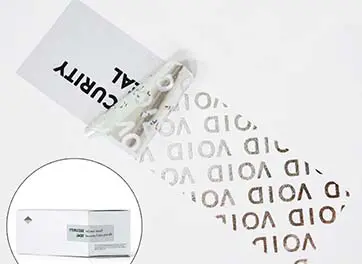
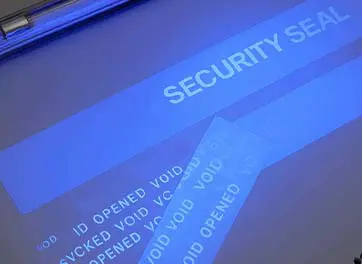
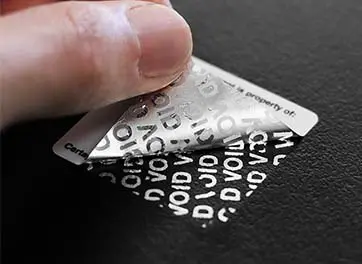
Tamper Evident Seal Labels VOID Tamper Proof Labels Dual VOID evidence: message transferred to substrate and retained on label face Permanent evidence of tamper — VOID mark on substrate cannot be erased or hidden Available in silver, white, and transparent PET face material Strong permanent adhesive bonds to a wide range of product and packaging […]
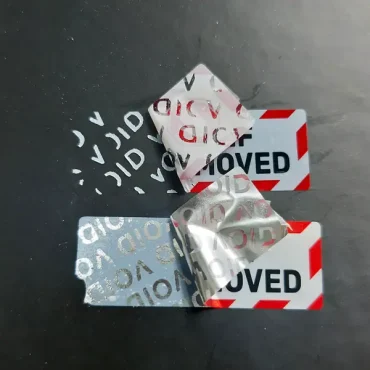
Custom Sticker Security Tamper Seal Labels Fully customisable: size, shape, colour, VOID message, and print content VOID pattern revealed on label and substrate surface upon any removal attempt Multiple face material options: PET film, ultra-destructible vinyl, holographic PET Adhesive options matched to substrate: paper/cardboard, plastic, glass, metal Factory printing: logos, text, sequential numbers, barcodes, QR […]
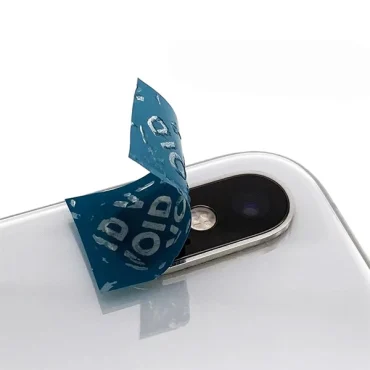
Camera Tamper Proof Labels Non-residue Security Stickers Reveals tampering immediately upon any removal attempt Non-residue adhesive leaves no sticky deposit on camera lens glass or housing plastics Ultra-destructible or VOID-pattern face material prevents reapplication after removal Printed with “VOID” or custom security pattern revealed on both label and substrate Compatible with camera body plastics, glass, […]
Adhesive Water Sensitive Indicator Labels by Vizlent provide visible moisture exposure detection for products and packaging.
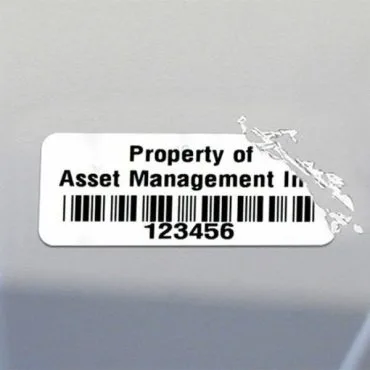
Custom Destructible Asset Labels by Vizlent provide tamper-evident asset identification and equipment tracking solutions.
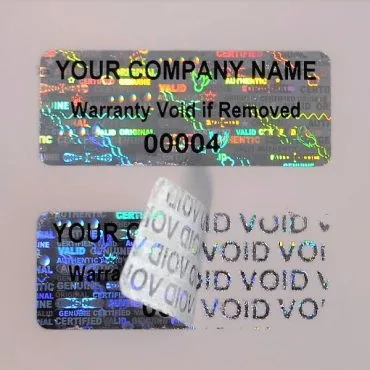
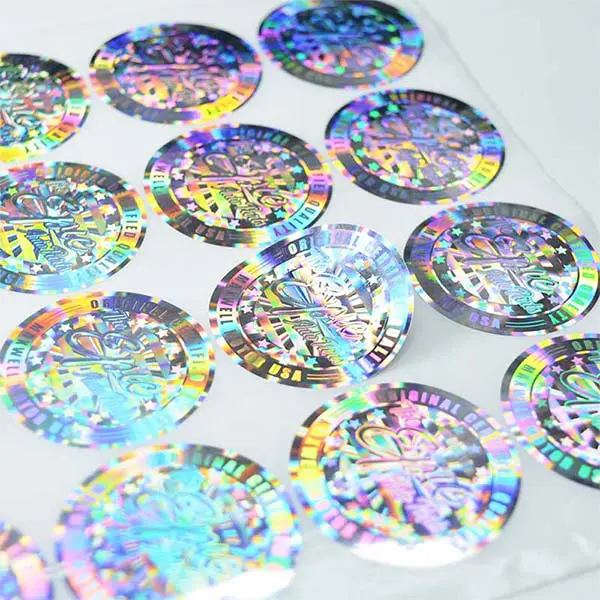
Custom Design Security Hologram Labels & Stickers from Vizlent offer tailored authentication and anti-counterfeit protection.
Key Material Properties for Brand Protection and Security Labels
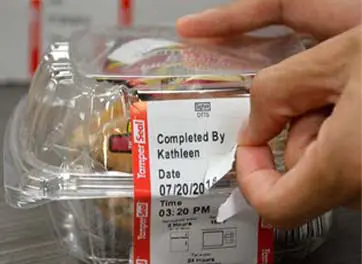
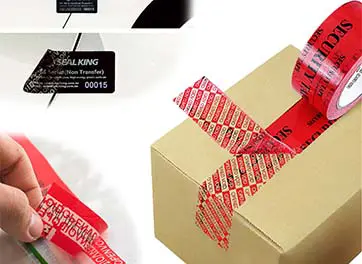
Common Brand Protection and Security Label Applications
-
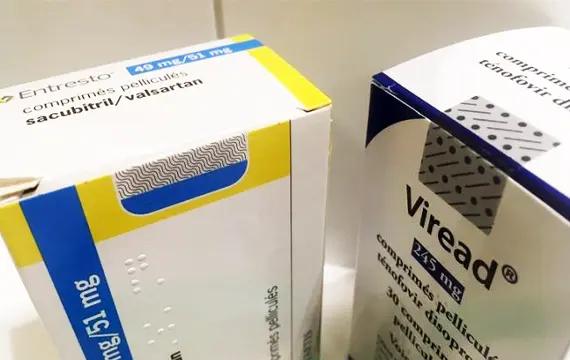 Pharmaceutical Tamper-Evident and Serialization Labels
Pharmaceutical tamper-evident labels serve dual functions: they provide visual evidence of container integrity for consumers, and they carry the serialized 2D barcode required by the Drug Supply Chain Security Act (DSCSA) in the United States and the Falsified Medicines Directive (FMD) in the EU for unit-level traceability.
-
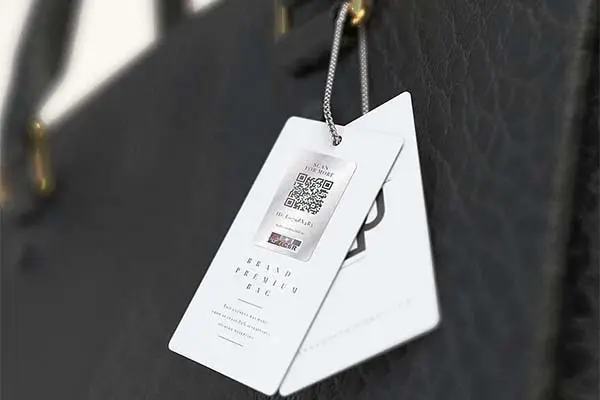 Luxury Goods and Premium Brand Authentication Labels
Authentication labels on luxury goods—handbags, watches, spirits, cosmetics, and apparel—must authenticate the product while contributing to rather than detracting from the premium brand presentation.
-
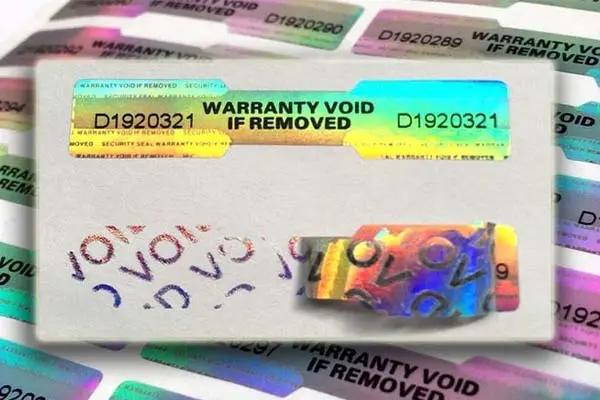
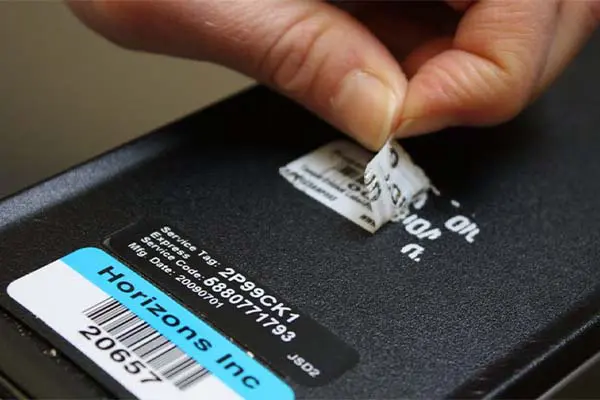 Electronics and Software Tamper-Evident Seals
Warranty void labels on consumer and commercial electronics serve as tamper seals that indicate whether a device has been opened—relevant for warranty management, counterfeit detection, and in some cases safety compliance.
-
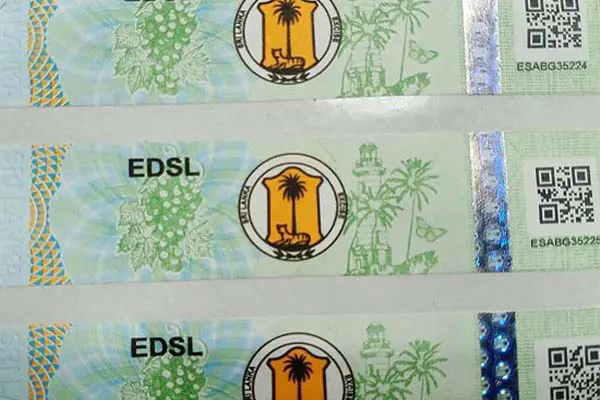 Tax Stamps and Excise Label Constructions
Government-issued or government-specified tax stamps on tobacco, alcohol, and in some jurisdictions cannabis products are among the highest-security label applications, combining regulatory compliance, revenue protection, and anti-counterfeiting functions in a single label.
-
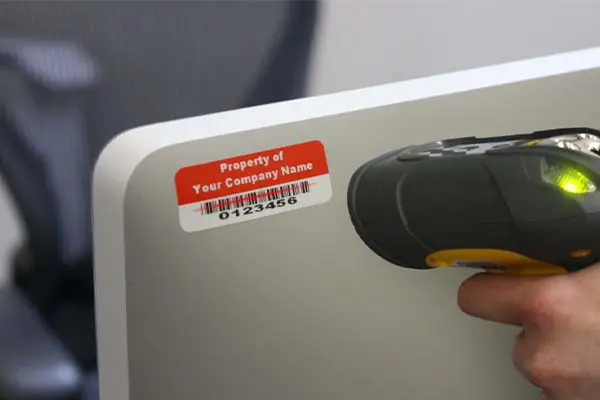 Asset and Document Security Labels
Security labels for IT asset management, classified document control, and sensitive equipment identification must prevent label transfer between assets—defeating the attack where a legitimate asset tag is moved from a retired or decommissioned item to an unauthorized one—while remaining scannable for inventory management throughout their service life.
-
 Supply Chain Anti-Diversion and Gray Market Controls
Diversion—the sale of products intended for one market or channel into an unauthorized market—is a significant revenue and brand integrity problem for pharmaceutical, technology, and consumer goods companies. Anti-diversion labels use market-specific or channel-specific overt and covert coding to allow brand owners and investigators to identify the source of diverted product and document the chain of custody.
How to Select the Right Security Label Material
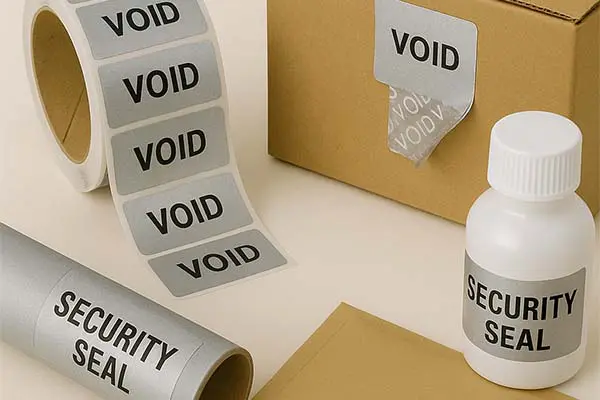
Define the threat model explicitly before evaluating materials. Who is the attacker, what resources do they have, and what is the value of a successful attack? A craft beer brand protecting against label swapping at retail needs a different construction than a pharmaceutical company defending against organized counterfeiting in a high-risk market.
Design a layered security architecture rather than specifying a single feature. No single security feature is effective against all attack vectors indefinitely. A hologram that is difficult to replicate today may become easier as technology advances; a covert UV feature provides no protection if the detection reader is not deployed in the field.
Validate tamper-evidence performance on the actual application substrate at actual field conditions. Destructive facestocks and VOID adhesives perform differently across substrates, temperatures, and humidity levels.
Align serialization data architecture with the verification infrastructure that will actually be deployed. A serialized barcode or NFC tag is only a security feature if there is a deployed system to verify it—a database with the legitimate serial number population, readers or apps in the hands of supply chain inspectors or consumers, and a process for flagging and investigating suspect scan events.
Frequently Asked Questions
A tamper-evident label is engineered to show visible evidence that a specific item has been opened or the label has been removed—it addresses physical access integrity but does not prevent the label itself from being duplicated and applied to counterfeit product. An anti-counterfeit label incorporates authentication features (holograms, covert inks, serialization) that allow verification of the label’s own authenticity, independent of whether tampering has occurred. Most serious brand protection programs require both functions, either in a single integrated construction or as complementary label elements, because defeating only one attack vector leaves the other unaddressed.
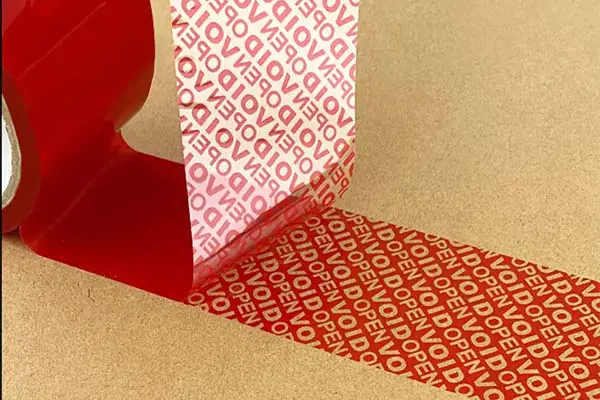
VOID adhesive constructions deposit a printed message pattern in the adhesive layer on the substrate when the label is removed, which leaves visible residue that cannot be fully cleaned without visible evidence of attempted cleaning on most substrates. For premium surfaces where adhesive residue is unacceptable on the primary container, security is typically delivered through the facestock construction (holographic elements, destructive film) rather than through VOID adhesive transfer, or through a format where the label seals a secondary closure element rather than bonding directly to the primary decorative surface.
The critical distinction is whether the hologram uses a custom origination—a diffractive optical element (DOE) master created specifically for that brand, held in a secured facility, and not licensed or sourced to any other customer—or a stock hologram pattern available from catalog to any buyer. Stock holographic foils and overlaminates provide a visual impression of security but can be sourced by counterfeiters as easily as by brand owners; only custom-origination holograms with controlled master custody provide a meaningful reproduction barrier. When evaluating holographic security label suppliers, ask specifically about origination ownership, master custody procedures, and whether the same or similar optical design is used for any other customer.
The FDA’s DSCSA guidance does not prescribe a specific numeric ISO/IEC grade, but FDA has referenced ISO/IEC 15415 in guidance documents and industry practice has converged on a minimum of grade 2.0 (grade B) for the 2D DataMatrix code at the specified X-dimension as the baseline for reliable verification throughout the supply chain. In practice, label materials and print processes should be validated to consistently achieve grade B or better across full production runs on production equipment—not just on test samples—since scan failures at the point of dispensing can trigger compliance events under DSCSA’s verification requirements.
Yes, though the construction approach differs from rigid container applications: brittle destructive facestocks that fragment on removal from glass or metal will often not perform adequately on flexible substrates because the substrate itself flexes and deforms, potentially initiating premature facestock fracture or preventing the clean adhesive wetting needed for consistent tamper evidence. Conformable destructive constructions using semi-brittle films formulated to balance flexibility with destructive failure, and VOID adhesive systems validated specifically on the flexible substrate material, are the standard approaches for pouches, foil laminates, and soft packaging. Testing on the actual flexible substrate under the expected use conditions—including flexing and handling representative of distribution—is essential because performance on flexible substrates is significantly harder to predict from rigid-substrate test data.

