BOPP label material—short for biaxially oriented polypropylene—is one of the most widely used film substrates in pressure-sensitive labeling. BOPP label material is valued for its durability, moisture resistance, and cost-efficiency across industries such as food packaging, chemicals, and logistics. Understanding what BOPP label material is, how it behaves under stress, and when it outperforms alternatives like vinyl is essential for engineers, converters, and procurement teams.
bopp label material
Definition of BOPP Label Material
BOPP (biaxially oriented polypropylene) is a thermoplastic polymer film that has been stretched in both the machine direction (MD) and transverse direction (TD). This biaxial orientation improves tensile strength, clarity, barrier properties, and dimensional stability. In label construction, BOPP is typically combined with a pressure-sensitive adhesive (PSA) and a release liner, forming a multilayer laminate used in high-speed labeling processes.
Etymology and Material Classification
The term “biaxially oriented” refers to a controlled stretching process that aligns polymer chains along two axes, increasing crystallinity and improving mechanical performance. BOPP belongs to the polyolefin family, alongside polyethylene (PE), and is categorized under ISO 1043-1 as PP. Compared to non-oriented polypropylene (CPP), BOPP exhibits significantly higher stiffness and optical clarity.
What Material Is a BOPP Label Made Of?
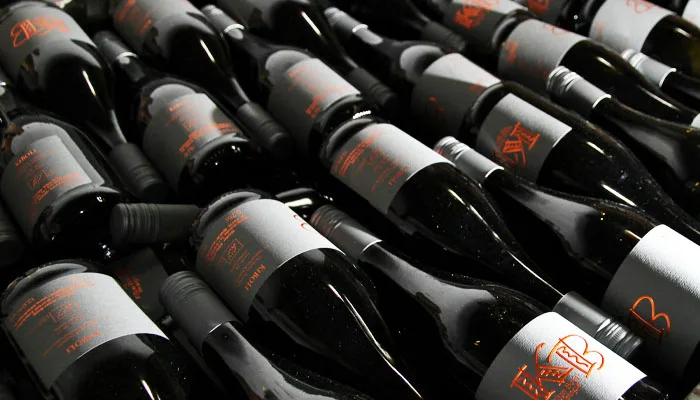
bopp bottle label
A BOPP label is not a single material but a composite structure. Each layer contributes specific functional properties such as adhesion, printability, and durability.
Typical Label Construction Layers
Facestock: BOPP film (typically 1.2–2.0 mil thickness)
Adhesive: Acrylic, rubber-based, or hot melt PSA
Release Liner: Silicone-coated paper or PET liner
Adhesive Compatibility Considerations
The surface energy of BOPP (~29–31 dynes/cm) is relatively low, requiring corona or plasma treatment to improve ink and adhesive bonding. Acrylic adhesives are commonly used due to their UV resistance and compliance with FDA 21 CFR 175.105 for indirect food contact.
Types of BOPP Label Films
White BOPP
White BOPP contains cavitated or filled structures that scatter light, producing opacity. It is widely used in food and beverage labeling where high contrast is required.
Clear BOPP
Clear BOPP offers high transparency and is used for “no-label look” applications. It requires precise adhesive matching to avoid visible edges.
Metalized BOPP
Metalized BOPP includes a vacuum-deposited aluminum layer, enhancing barrier properties and aesthetic appeal for premium packaging.
Matte BOPP
Matte finishes reduce glare and improve scannability for barcodes, aligning with ANSI/ISO 15416 verification standards.
Manufacturing Process and Orientation Technology
BOPP film is produced through a sequential stretching process using tenter frames. The polypropylene melt is extruded into a sheet, cooled, and stretched first in the machine direction and then in the transverse direction.
Orientation Ratios
Typical stretch ratios range from 4:1 to 6:1 in each direction. This alignment enhances tensile strength up to 150 MPa and reduces elongation at break.
Flame treatment (used for high-speed converting lines)
Plasma treatment (more uniform but higher cost)
Performance Characteristics and Limitations
Key Advantages
Waterproof and oil-resistant
Good chemical resistance (except strong oxidizers)
Temperature resistance: -20°C to 80°C (short-term up to 120°C)
High printability with UV flexo and digital inks
Limitations
Lower temperature resistance compared to polyester (PET)
Limited conformability on curved or flexible surfaces
Potential for shrinkage under high heat exposure
BOPP vs Vinyl: Material Comparison
Property
BOPP
Vinyl (PVC)
Flexibility
Moderate
High
Temperature Resistance
Up to 80°C
Up to 120°C
Chemical Resistance
Good
Excellent
Cost
Lower
Higher
Environmental Impact
Recyclable (PP stream)
Contains chlorine
While BOPP offers cost-efficiency and moisture resistance, vinyl is preferred for extreme durability and outdoor exposure. Selection depends on application conditions and compliance requirements.
Is BOPP Plastic Safe?
Food Safety Compliance
BOPP is considered safe for indirect food contact when paired with compliant adhesives. It meets FDA 21 CFR standards and EU Regulation No 10/2011 for food packaging materials.
Recyclability and Environmental Considerations
BOPP is recyclable under resin code #5 (polypropylene). However, label recycling depends on adhesive compatibility with PET bottle streams, as defined by the Association of Plastic Recyclers (APR) guidelines.
Industrial Applications and Use Cases
Food and Beverage Packaging
Used for bottled water, sauces, and refrigerated products due to moisture resistance and clarity.
Chemical Labeling
Suitable for mild chemical exposure environments. For aggressive solvents, polyester or vinyl may be required per OSHA GHS labeling standards.
Logistics and Warehousing
Thermal transfer printable BOPP labels are used for barcode tracking, complying with GS1 standards.
Common Failure Modes and Troubleshooting
Adhesion Failure
Often caused by low surface energy substrates or contamination. Solution: use higher tack adhesive or surface treatment.
Ink Smudging
Occurs when ink system is incompatible with treated surface. Verify ink adhesion using ASTM D3359 cross-hatch test.
Edge Lifting
Common in curved surfaces due to film stiffness. Consider switching to PE or vinyl.
FAQ
Is BOPP better than vinyl?
BOPP is more cost-effective and recyclable, while vinyl offers better flexibility and durability in harsh environments.
What material is a BOPP label made of?
BOPP labels consist of a polypropylene film facestock, adhesive layer, and release liner.
Is BOPP plastic safe?
Yes, it is safe for indirect food contact when compliant adhesives are used.
Can BOPP labels be used outdoors?
They can withstand short-term outdoor exposure but are not ideal for long-term UV conditions.
What printing methods work on BOPP?
Flexographic, digital inkjet, and thermal transfer printing are commonly used.
Hi, I'm Andy Qiu,General Manager at VIZLENT. With over 15 years of experience in specialty label materials, I've worked with engineers and buyers across automotive, electrical, agriculture, medical, and chemical industries to solve real-world labeling challenges — from high-temperature and chemical-resistant constructions to UV-durable and compliance-driven solutions. If you have questions about material selection or product specifications, feel free to reach out — we're happy to support your next project with a technical consultation or sample request. Let's connect!