
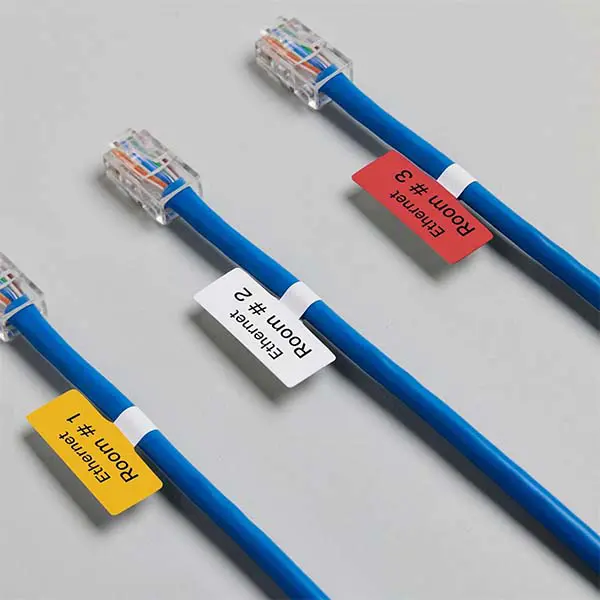
Why Wrap Around Cable Labels Require Specialized Materials
Unlike flat product labels, wrap around cable labels must remain legible while conforming to curved and flexible cable surfaces. During installation and service, cables are frequently bent, bundled, pulled through conduits, or exposed to vibration. These conditions place continuous stress on both the facestock and adhesive layer.
Many cable installations also operate in environments with elevated temperatures, moisture exposure, oils, hydraulic fluids, UV radiation, or aggressive cleaning chemicals. In industrial automation cabinets, telecommunications racks, transportation systems, and control panels, labels must maintain adhesion and readability for years without edge lifting or flagging.
Cable jacket materials further complicate label selection. PVC, TPE, silicone, polyethylene, fluoropolymer, and rubber cable jackets all present different surface energies and plasticizer migration behaviors. Adhesives that perform well on one cable type may fail prematurely on another.
Wrap around cable labels also commonly require thermal transfer printing compatibility because installers frequently print variable information such as serial numbers, circuit IDs, barcodes, QR codes, or asset tracking data on demand. Smearing, ribbon mismatch, or poor ink anchorage can compromise long-term readability.
Key Material Properties for Wrap Around Cable Labels
Regulatory & Compliance Considerations
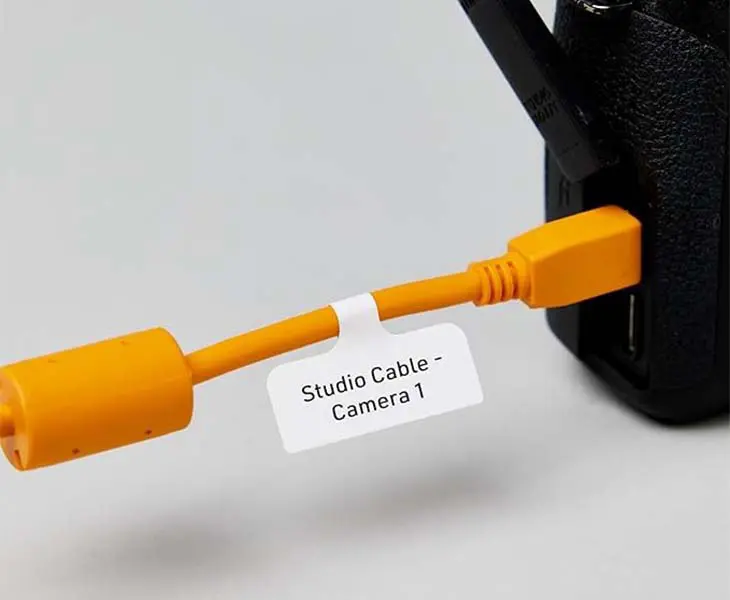
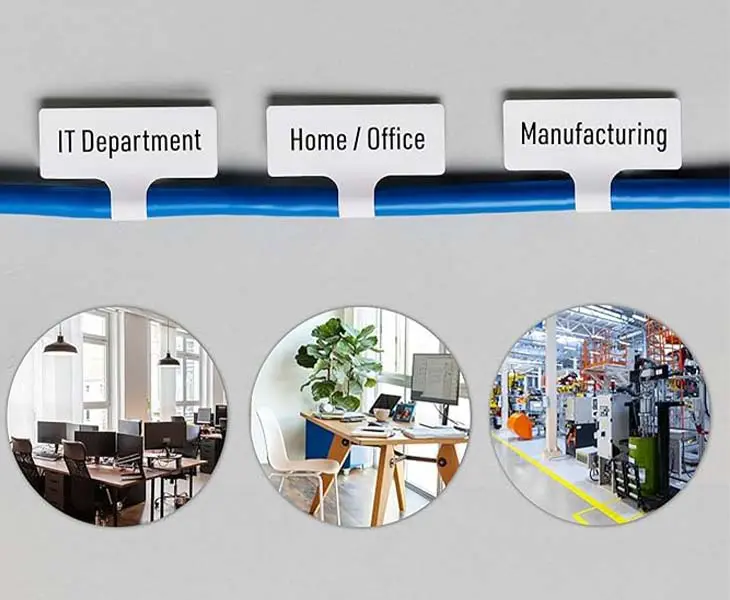
Wrap around cable labels may need to comply with industry-specific regulatory or performance standards depending on the installation environment and end-use market.
UL 969 — Commonly referenced for marking and labeling systems. Evaluates adhesion, legibility, and durability under environmental exposure conditions.
RoHS — Restricts hazardous substances such as lead, cadmium, and certain flame retardants in electrical and electronic products.
REACH — Addresses chemical substance safety and reporting requirements within European supply chains.
CSA Certification — May apply to labeling systems used in electrical equipment for Canadian markets.
MIL-STD and SAE Specifications — Frequently relevant in aerospace, defense, and transportation wire identification applications.
ASTM Testing Standards — Often used to evaluate abrasion resistance, environmental durability, adhesion performance, and print permanence.
ISO 9001 Manufacturing Controls — Frequently requested to support traceability and quality consistency in industrial supply chains.
Compliance requirements vary by application, geography, and industry. Material selection should be validated against actual end-use requirements and applicable customer specifications.
Common Wrap Around Cable Label Applications
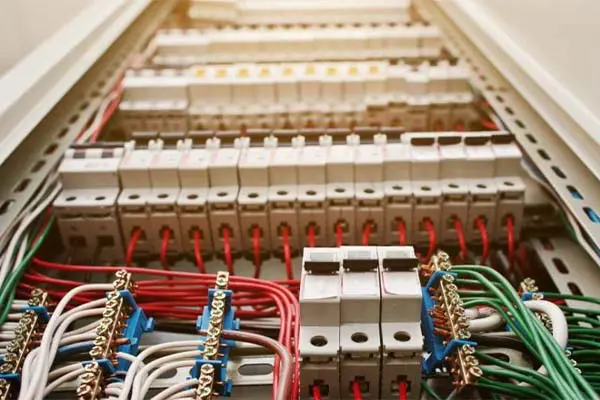
Thermal transfer printable vinyl or polyester materials with permanent acrylic adhesives are commonly used in these environments.

Materials are typically selected for flexibility, print clarity, and resistance to abrasion from cable bundling and routing activities.
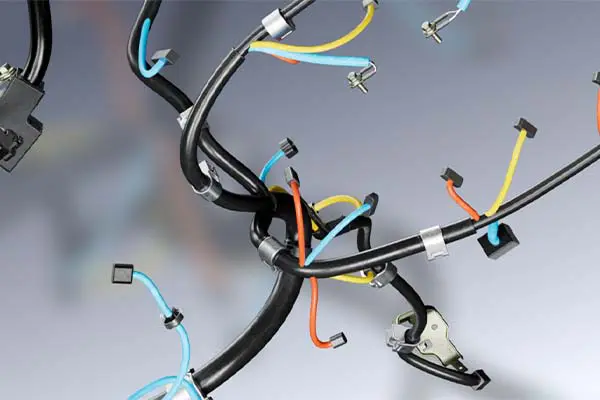
Flexible films with aggressive adhesives and durable thermal transfer print surfaces are commonly specified for wire harness identification.

Materials are typically selected based on durability, chemical resistance, and compatibility with automated thermal transfer printing systems.
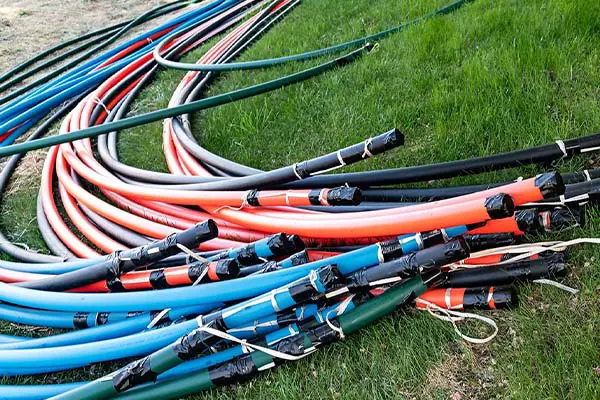
UV-stabilized vinyl and polyester label constructions are commonly used for these applications.

Materials are typically selected based on durability, chemical resistance, and compatibility with automated thermal transfer printing systems.
Frequently Asked Questions
Self-laminating labels protect printed information with a clear overlaminate layer, improving resistance to abrasion, moisture, and chemical exposure in cable management applications.
Yes, outdoor-rated polyester and vinyl constructions with UV-resistant properties are commonly used for telecommunications, utility, and infrastructure cable identification.
Permanent acrylic adhesives are widely used because they typically provide good long-term adhesion and resistance to plasticizer migration on flexible cable materials.
When paired with compatible resin ribbons and durable topcoated materials, thermal transfer printed labels can provide strong resistance to smearing, abrasion, and chemical exposure.
Many industrial polyester cable labels are designed for approximately -40°C to 125°C service conditions, although exact ratings depend on the specific material construction.

