
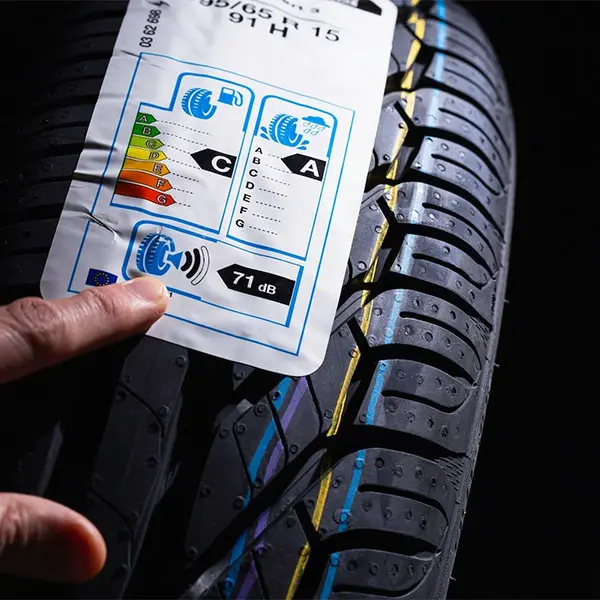
Why Tire Labels Require Specialized Materials
Standard paper labels and general-purpose adhesives often fail on tire surfaces because tires contain low-surface-energy rubber compounds, plasticizers, carbon black, mold release agents, and antiozonants that interfere with adhesion. Tire sidewalls are also flexible and textured, making it difficult for rigid label constructions to maintain full surface contact.
During tire production, labels may be exposed to elevated temperatures, humidity, dust, curing environments, and repeated handling. In distribution environments, labels frequently encounter abrasion from stacking, vibration during transportation, and outdoor storage conditions.
Many tire labels must also support barcode scanning, variable data printing, RFID integration, or compliance information for automotive traceability systems. As a result, tire label materials are typically engineered with aggressive rubber-based or specially formulated acrylic adhesives combined with durable film facestocks that resist edge lifting and adhesive failure.
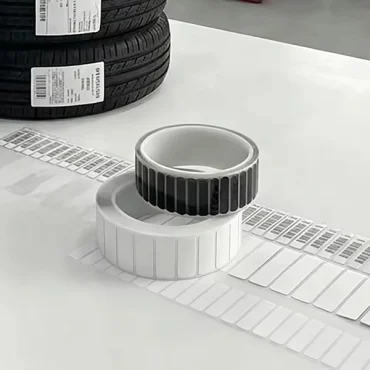
Tire Curing Labels for Tire Identification and Traceability Survives full vulcanization cycle Permanent bond to green and cured rubber Barcode and data remain readable post-cure Thermal-transfer printable for unique IDs Supports complete manufacturing traceability Send Your Inquiry Now End-to-End Tracking from Green Tire to Finished Tire Curing Labels for Tire Identification and Traceability are applied […]
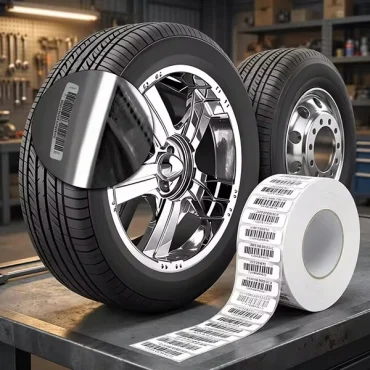
Strong Adhesive Car Tyre Vulcanization Barcode Label Extra-strong adhesive for reliable rubber bond Survives passenger-tire vulcanization cycles Barcode remains readable after curing Thermal-transfer printable surface Designed for car and light-truck tires Send Your Inquiry Now High-Bond Identification for Passenger Tire Lines Strong Adhesive Car Tyre Vulcanization Barcode Label is formulated with an enhanced adhesive system […]

Tire Bead Barcode Labels Optimized for tire bead placement Withstands vulcanization heat and pressure Permanent bond to green rubber at the bead Barcode remains scannable after cure Thermal-transfer printable surface Send Your Inquiry Now Bead-Mounted Identification That Survives Curing Tire Bead Barcode Labels are sized and formulated for application in the bead region of the […]

BC Labels for Green Tire Curing/Vulcanization Applied to green tires before curing Forms permanent bond during vulcanization Survives typical curing temperatures Barcode or alphanumeric identification Thermal-transfer printable Send Your Inquiry Now Identification That Travels from Green to Finished BC Labels for Green Tire Curing/Vulcanization are specifically intended for application on uncured (green) tires so that […]
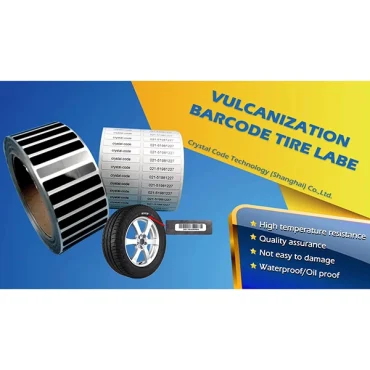
Barcode Vulcanization Label for Tires Manufacturing High-temperature survival during vulcanization Permanent bond to green tire rubber Barcode remains readable after curing Thermal-transfer printable surface Resists curing pressure and heat Send Your Inquiry Now Scannable Identification Through the Curing Cycle Barcode Vulcanization Label for Tires Manufacturing is applied to the green tire prior to curing so […]
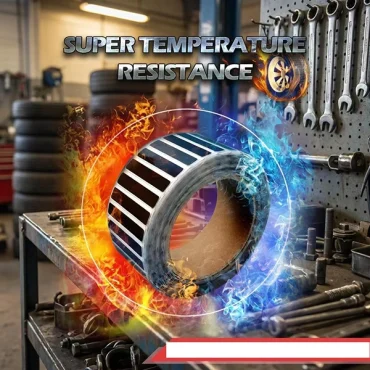
Adhesive Tire Labels High Temperature Vulcanization Type Label Withstands vulcanization temperatures Strong bond to green (uncured) rubber Remains adhered after curing cycle Barcode stays scannable post-process Specialized high-temperature adhesive Send Your Inquiry Now Heat-Resistant Bonding Through Tire Curing Adhesive Tire Labels High Temperature Vulcanization Type Label are engineered to be applied to green tires before […]
Key Material Properties for Tire Labels
For tire applications, buyers typically look for high-initial-tack rubber-based adhesives or specialty acrylic systems designed for low-surface-energy materials. Adhesion performance is commonly evaluated using peel adhesion and tack testing under ASTM methods.
Film facestocks such as polypropylene or polyethylene are commonly selected because they provide better resistance to oil absorption compared to uncoated paper materials.
Flexible film materials with thinner calipers are typically preferred for sidewall applications because they conform more effectively to curved surfaces and embossed rubber textures.
Protective laminates, thermal transfer printable films, and scratch-resistant topcoats are commonly used where labels must remain readable throughout distribution cycles.
Manufacturers typically evaluate minimum application temperature, service temperature range, and adhesive shear performance when selecting tire labeling materials.
Topcoated film facestocks are commonly selected to improve ribbon anchorage, smudge resistance, and barcode scanning reliability.
Common Tire Label Applications
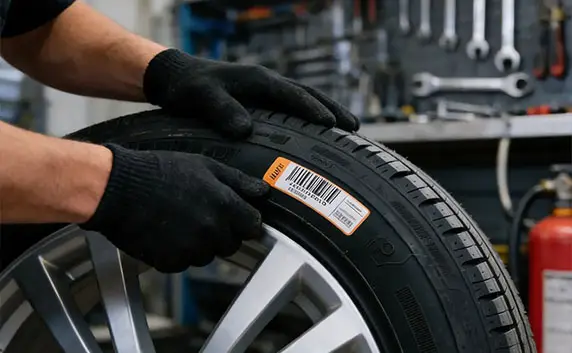
These labels are commonly applied to finished passenger, commercial, or off-road tires for branding, sizing, and inventory tracking. They must adhere securely to curved rubber sidewalls while resisting lifting caused by mold release agents and rubber oils.
Typical constructions include white polypropylene film combined with aggressive rubber-based adhesives and thermal transfer printable topcoats.
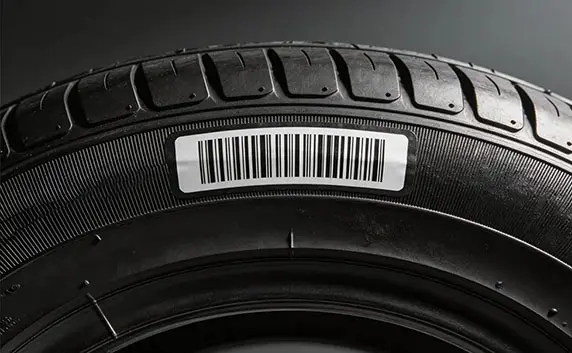
Barcode labels are often placed directly on tread surfaces during manufacturing and logistics operations. These labels must maintain scan readability despite rough textures, dust exposure, and repeated warehouse handling.
Durable film facestocks with high-tack adhesives and abrasion-resistant coatings are commonly used for this application.
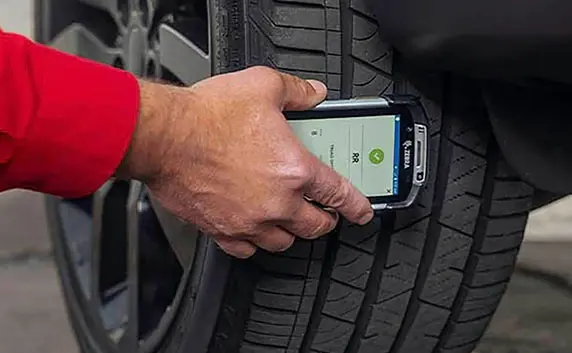
Some tire manufacturers incorporate RFID-enabled labels to support automated inventory management and supply chain traceability. These labels must maintain reliable adhesion while protecting embedded RFID inlays from mechanical stress.
Flexible synthetic constructions are typically selected to accommodate tire curvature and movement during transport.
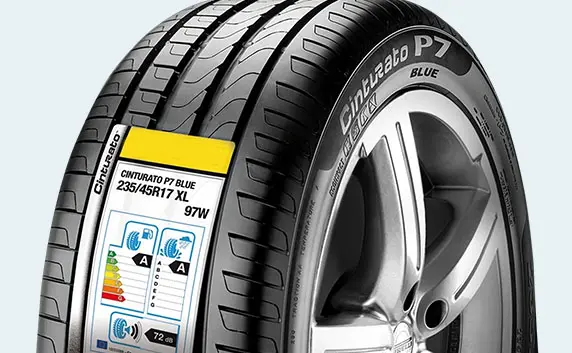
Retread operations use labels to identify casing history, inspection status, and retread cycle information. These labels may encounter dust, heat, and repeated handling in industrial environments.
Durable thermal transfer printable films with removable or permanent high-tack adhesives are commonly used depending on process requirements.
Regulatory & Compliance Considerations
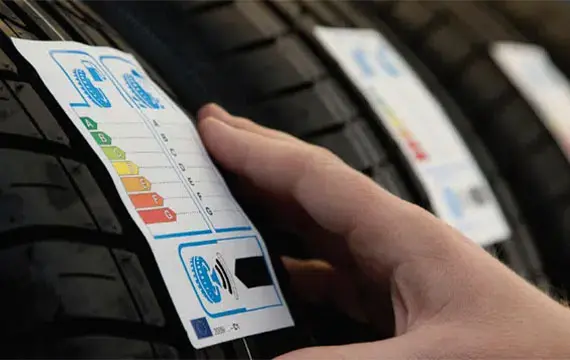
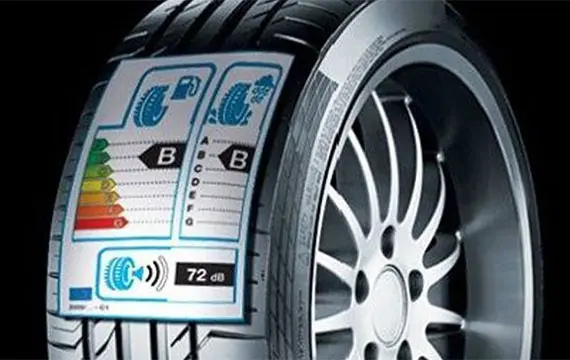
Tire labeling requirements vary by region, application, and product category. Material selection should consider both automotive industry expectations and labeling durability requirements.
DOT Tire Identification Number (TIN): Tire manufacturers supplying products in the United States must comply with Department of Transportation traceability requirements for tire identification and manufacturing records.
FMVSS Standards: Federal Motor Vehicle Safety Standards may influence labeling requirements related to tire classification, load ratings, and safety information.
ASTM Test Methods: Adhesion, abrasion resistance, and environmental durability are commonly evaluated using ASTM testing procedures relevant to pressure-sensitive materials.
RoHS and REACH: Automotive supply chains may require restricted substance compliance for label materials, inks, and adhesives used in tire production environments.
ISO 9001 and IATF 16949: Automotive manufacturers often require traceability and quality management controls that affect label consistency, barcode readability, and production documentation.
UL Recognition: Some industrial or specialty tire-related components may require UL-recognized labeling systems where long-term durability and material compatibility are critical.
Compliance requirements vary by application and geography, so material qualification should be validated against specific customer and regulatory specifications.
Frequently Asked Questions
High-tack rubber-based adhesives are commonly used because they bond effectively to low-surface-energy rubber compounds and textured tire surfaces.
Paper labels are sometimes used for short-term applications, but film materials typically provide better resistance to moisture, abrasion, and rubber oil migration.
Peeling is often caused by insufficient adhesive tack, poor surface wet-out on curved rubber, or contamination from mold release agents and plasticizers.
Many tire label materials are specifically topcoated for thermal transfer printing to support durable barcodes and variable data tracking.
Automotive manufacturers frequently require testing for adhesion, durability, restricted substances, and barcode readability depending on the intended market and application.

