
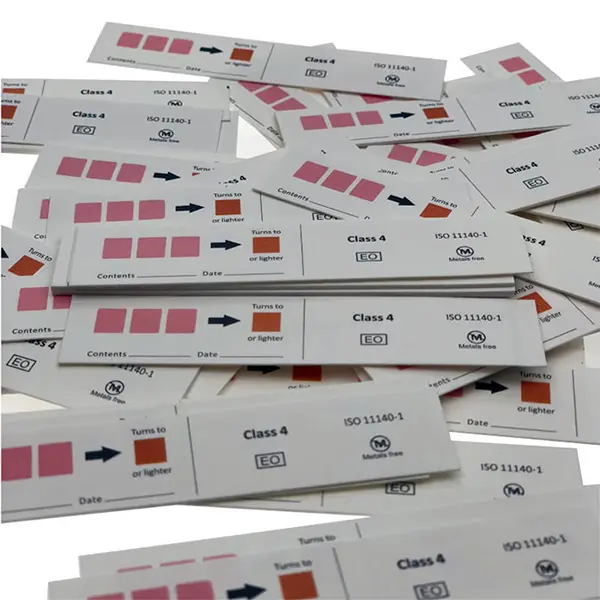
Why Sterilization Labels Require Specialized Materials
Standard label materials often fail under extreme sterilization conditions, including high temperatures, chemical exposure, and moisture.
Surfaces vary from stainless steel surgical instruments to plastic trays and glass vials, requiring adhesives that adhere without residue or peeling.
Additionally, these labels must withstand repetitive sterilization cycles while providing accurate visual indicators. Without specialized materials, labels can degrade, mislead staff, or fail compliance audits.
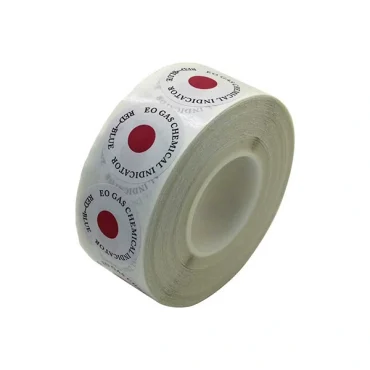
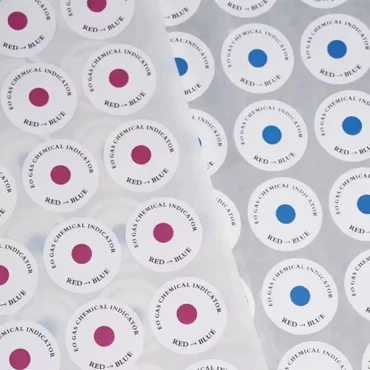
Self Adhesive EO Sterilization Indicator Labels Color change after EO gas exposure Self-adhesive for easy application Permanent visual confirmation Compatible with EO cycle conditions Suitable for heat-sensitive products Send Your Inquiry Now Clear Visual Indication for Ethylene Oxide Sterilization Self Adhesive EO Sterilization Indicator Labels provide a practical visual method to confirm that packages or […]
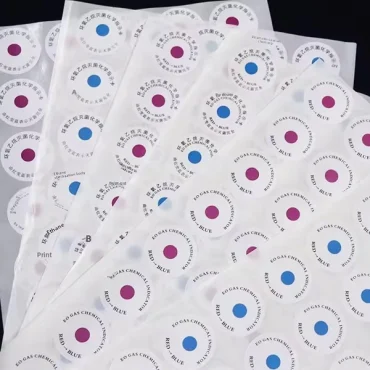
Gamma Irradiation Sterilization Indicator Labels Permanent color change after gamma dose Consistent response across industrial dose ranges Self-adhesive for packaging application Compatible with sterile barrier materials Printable for batch and process data Send Your Inquiry Now Permanent Visual Evidence of Gamma Irradiation Exposure Gamma Irradiation Sterilization Indicator Labels give manufacturers and contract sterilizers a reliable […]
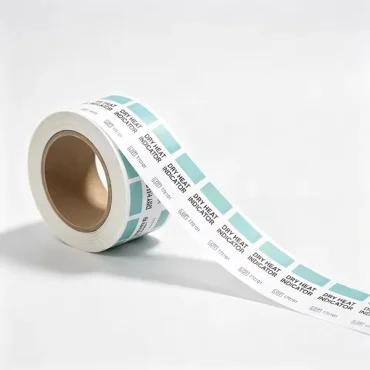
Adhesive Sterilization Indicator Labels For Dry Heat Color change after dry heat exposure Stable under high temperature conditions Self-adhesive for direct application Permanent indication after cycle Suitable for glass and metal surfaces Send Your Inquiry Now Visual Confirmation for Dry Heat Sterilization Cycles Adhesive Sterilization Indicator Labels For Dry Heat provide a straightforward visual signal […]
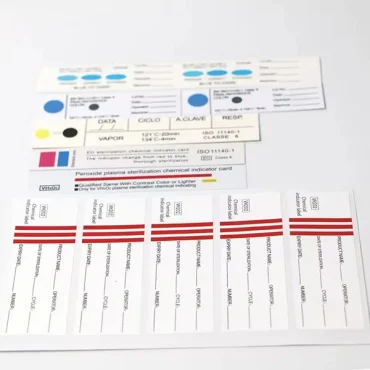
Steam Sterilization Indicator Labels Clear color change after steam exposure Compatible with standard autoclave cycles Permanent indication for documentation Self-adhesive construction Moisture and heat resistant face stock Send Your Inquiry Now Dependable Visual Proof for Steam Sterilization Processes Steam Sterilization Indicator Labels offer a practical method for confirming that items have passed through a steam […]
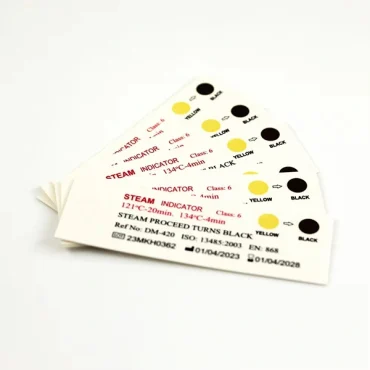
Autoclave Steam Sterilization Indicator Labels Yellow to Black Steam-sensitive color change Yellow to black indication Autoclave process monitoring Heat-resistant adhesive Medical packaging useCustom formats available Send Your Inquiry Now Visual Steam Sterilization Process Monitoring Autoclave Steam Sterilization Indicator Labels Yellow to Black are designed for steam sterilization verification in autoclave environments. The indicator ink changes […]
Gamma Radiation Labels Sterilization Indicator Gamma exposure indication Clear visual color transition Radiation-sensitive indicator chemistry Strong pressure-sensitive adhesive Medical packaging compatibility Send Your Inquiry Now Reliable Gamma Sterilization Verification Labels Gamma Radiation Labels Sterilization Indicator is designed to confirm exposure during gamma irradiation sterilization processes. The indicator layer reacts to controlled gamma radiation energy and […]
Key Material Properties for Sterilization Labels
Common Sterilization Label Applications
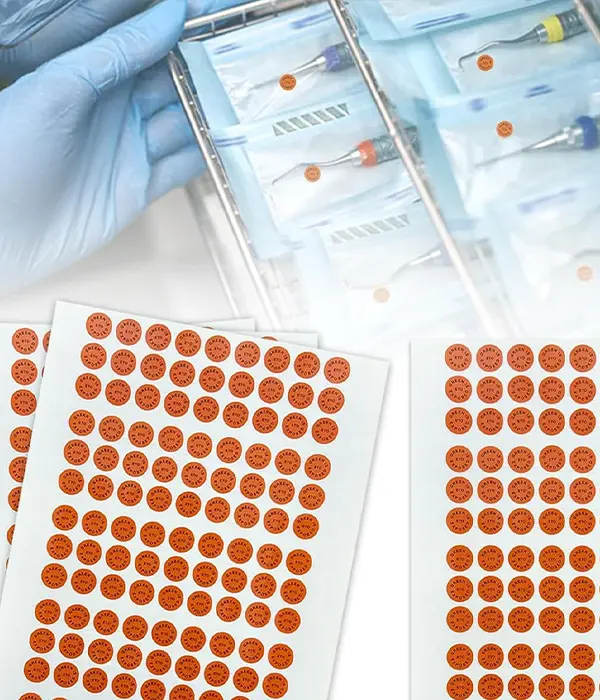
Surgical Instrument Trays: Labels applied to stainless steel trays must survive multiple autoclave cycles and provide clear color change to signal sterilization completion.
Medical Device Packaging: Adhesive labels on plastic or cardboard pouches indicate that devices have been processed in ethylene oxide or hydrogen peroxide sterilizers.
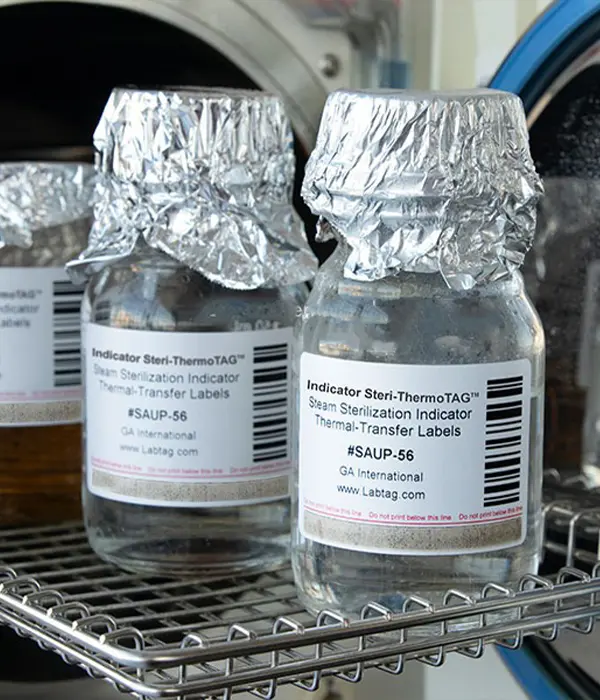
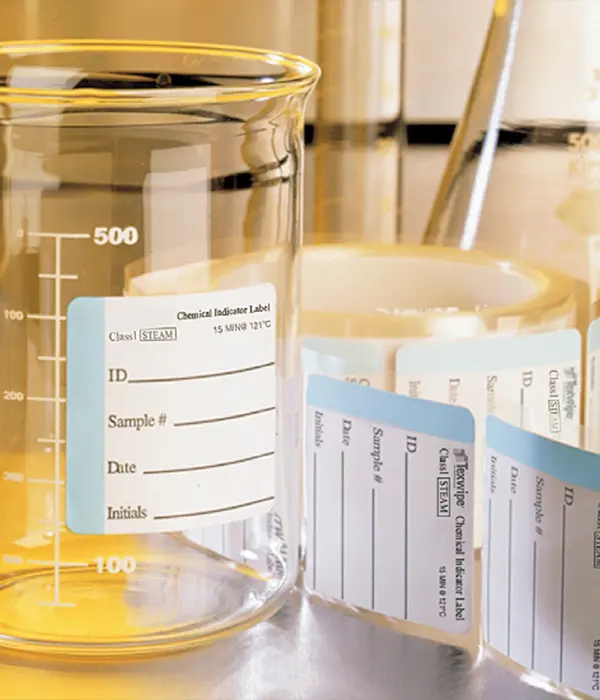
Laboratory Glassware: Labels withstand steam sterilization and repeated washing without ink bleeding, ensuring traceability in labs.
Reusable Endoscopes: Flexible labels conform to curved surfaces and tolerate both steam and chemical sterilization cycles.
Pharmaceutical Production Equipment: Tags resist harsh chemicals and high humidity, providing visual assurance during sterilization of production components.
Regulatory & Compliance Considerations
ISO 11140-1: Defines performance requirements for sterilization indicators, including color change standards.
FDA: Ensures materials used on medical devices are biocompatible and safe for healthcare environments.
RoHS: Confirms that no hazardous substances are present in adhesives or inks.
ASTM Standards: Guides testing for adhesion, chemical resistance, and heat tolerance.
GHS Compatibility: Labels may need to indicate chemical hazards when used in lab or production environments.
How to Select the Right Label Material
Application Surface: Assess whether the label will adhere to metal, plastic, or glass and select adhesives accordingly.
Exposure Conditions: Identify sterilization methods (steam, EO, radiation) and select materials that tolerate those processes.
Regulatory Requirements: Confirm compliance with ISO, FDA, and other applicable standards.
Print Method: Choose substrates and inks compatible with thermal transfer, laser, or flexographic printing.
Service Life: Consider whether labels are single-use or must survive multiple sterilization cycles.
Frequently Asked Questions
Yes, labels with high-performance adhesives are designed to adhere to diverse surfaces including stainless steel and polypropylene.
Indicator inks react to sterilization conditions, reliably changing color to signal that the process has been completed.
Only labels rated for high-temperature steam exposure, typically 121–134°C, are suitable for autoclaving.
Labels with permanent or semi-permanent adhesives are formulated to minimize residue, especially on smooth surfaces like metal trays.
ISO 11140-1, FDA, ASTM, and RoHS are commonly referenced to ensure performance and safety in medical environments.

