

What Are Security Labels
Security labels are specialized adhesive labels engineered with tamper-evident, anti-counterfeit, and authentication properties that provide visible or forensic proof when unauthorized removal is attempted.
They protect high-value products, seal sensitive containers, and validate warranty integrity across regulated supply chains.
Unlike standard pressure-sensitive labels, security labels integrate engineered failure mechanisms into the substrate, adhesive, or printed layer. When removal is attempted, the label reveals hidden messages such as “VOID,” “OPENED,” or a checkerboard pattern, or it fractures into fragments that cannot be reconstructed.
This irreversible evidence creates a permanent, auditable record of interference.
Applications span consumer electronics warranty validation, pharmaceutical closure seals, aerospace parts traceability, and high-value logistics where chain-of-custody documentation is mandatory for compliance and insurance claims.
Security labels operate at the intersection of material science, adhesive chemistry, and print engineering. A typical construction layers a release-treated face stock, a covert pattern print, a permanent or transfer-release adhesive, and a liner calibrated for automated dispensing.
VIZLENT manufactures security labels stickers using polyester, vinyl, destructible vinyl, and multi-layer void films, each selected for specific substrate compatibility and threat profiles.
Selection depends on the expected attack vector—whether adversaries are likely to attempt peel-removal, solvent dissolution, heat application, or freeze-spray defeat techniques.
Key Characteristics of Security Labels
Industrial-grade security labels share several defining attributes that distinguish them from decorative or informational labels. Tamper-evidence is the primary function: any removal attempt must produce visible, irreversible evidence.
Substrate compatibility is equally critical, since labels must bond reliably to polycarbonate electronics housings, glass vials, powder-coated metal, and low-surface-energy plastics.
Additional characteristics include chemical resistance to isopropyl alcohol, MEK, and cleaning agents; temperature tolerance from -40°F to 302°F; and service life of 3 to 7 years depending on environmental exposure.
How Security Labels Work
The tamper-evidence mechanism varies by construction type. Void labels use a differential-release adhesive system: when removed, the top layer separates cleanly while a patterned adhesive layer—pre-printed with “VOID” text or a checkerboard matrix—remains bonded to the substrate.
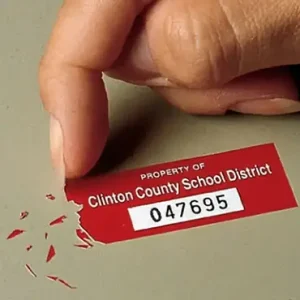
Destructible vinyl labels use a brittle, ultra-thin film that fractures into small fragments upon removal, preventing reapplication.
Holographic security labels integrate diffractive optical elements that cannot be photocopied or scanned, while covert labels embed UV-reactive inks, microtext, or taggant markers visible only under specific authentication tools.
Technical Specifications and Compliance Standards
Engineering-grade security labels must be specified against the mechanical, chemical, and environmental demands of the target application.
The following table summarizes VIZLENT’s core product families, their substrates, adhesive systems, and qualified performance parameters.
All products are tested to internationally recognized standards including ASTM D3330, UL 969, and ISO 14298.
| Label Type | Substrate | Adhesive | Temp Range | Service Life | Key Compliance |
|---|---|---|---|---|---|
| Void Polyester | 50µm PET | Modified Acrylic | -40°F to 302°F | 5-7 years | UL 969, ASTM D3330 |
| Destructible Vinyl | 60µm Brittle PVC | Permanent Acrylic | -22°F to 176°F | 3-5 years | GSA, ASTM D1000 |
| Holographic OVD | 25µm Metallized PET | Tamper-Release | -40°F to 248°F | 5-7 years | ISO 14298 |
| Non-Residue Void | 50µm PET | Transfer-Release Acrylic | -40°F to 266°F | 3-5 years | ISO 10993, RoHS |
| Pharma Tamper Seal | 38µm PET | Medical-Grade Acrylic | -4°F to 212°F | 2-3 years | 21 CFR 211.132, FMD |
Performance Standards and Testing Methodology
VIZLENT security labels are qualified against peel adhesion testing per ASTM D3330 at 180-degree and 90-degree angles, with minimum bond strength of 40 oz/inch on stainless steel after 24-hour dwell.
Thermal cycling follows IEC 60068-2-14, subjecting labels to 100 cycles between -40°F and 185°F without delamination or void pattern migration. Chemical resistance is verified via immersion testing in isopropyl alcohol, MEK, and citrus-based cleaners for 30 minutes.
UV accelerated weathering per ASTM G154 confirms 1,000-hour legibility retention for outdoor-rated variants, ensuring durability across global deployment conditions.
Certifications and Regulatory Compliance
Beyond product-level testing, VIZLENT operates ISO 9001:2015-certified manufacturing facilities with ISO 14298 security printing management system certification governing holographic and covert product lines.
Adhesive systems used in pharmaceutical applications carry ISO 10993 biocompatibility documentation, and all material compositions comply with RoHS 3 (EU 2015/863) and REACH SVHC requirements.
For applications requiring regulatory submission, VIZLENT provides full Declaration of Compliance packages, material data sheets, and batch-level test reports—supporting customer audits for FDA, EMA, and IATF 16949 certification programs without additional qualification burden.
Types and Variations of Security Labels
VIZLENT manufactures six primary categories of security labels, each engineered for distinct threat models and substrate conditions. Selection should align with the specific authentication requirements, environmental exposure, and budget of the application. The following types represent the core product families available for standard and custom configurations
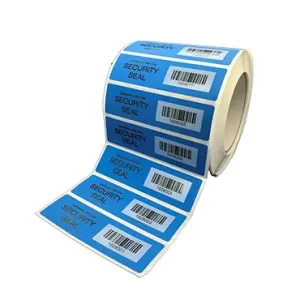
Multi-surface polyester security seals trigger a hidden void matrix upon peeling. Withstands harsh industrial cleaners. Essential for IT asset management and warranty validation on metal enclosures.
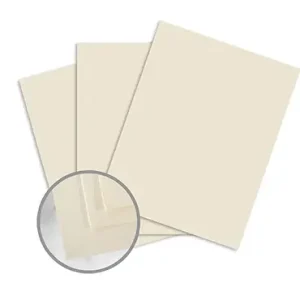
Brittle destructible facestock in A4 sheet format fractures on removal, preventing label reuse or transfer. Used for tamper-evident sealing, asset security marking, and anti-counterfeit product authentication.
Static-dissipative facestock with ESD-safe adhesive; meets IEC 61340-5-1 handling requirements. Used on PCBs, semiconductors, and sensitive instruments to indicate fragile and ESD-risk conditions.
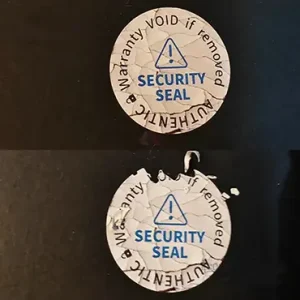
Ultra-brittle vinyl facestock tears into fragments on removal, preventing transfer or reapplication. Used for warranty seals, tamper-evident asset tags, and anti-counterfeit security labeling applications.
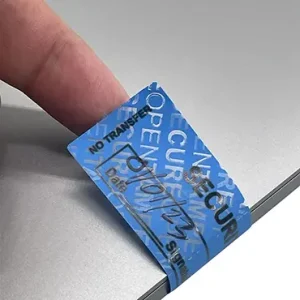
High-tack destructive packaging labels reveal a non-reversible void pattern if breached. Performs securely on corrugated cardboard and LDPE wrap. Designed for secure supply chain logistics.
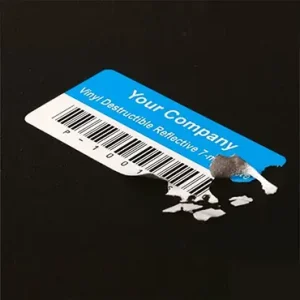
Brittle facestock with voiding adhesive leaves residue or pattern on substrate upon removal attempt. Used for asset protection, license authentication, and tamper-evident sealing in regulated industries.

Warranty Void Sticker Protect your bottom line and eliminate warranty fraud with VIZLENT’s premium Warranty Void Stickers. Designed specifically for electronics manufacturers, authorized repair centers, and IT hardware refurbishers, these tamper-evident seals provide indisputable visual proof of unauthorized access. Fully compatible with high-resolution thermal transfer printing for serialized tracking and globally compliant with RoHS and […]
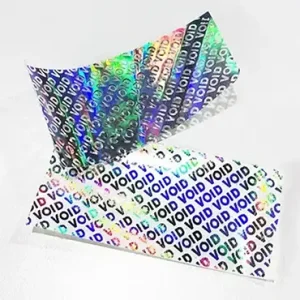
3D holographic tamper-evident seals feature custom micro-text and a hidden void layer. Resistant to solvents and UV exposure. Secures pharmaceuticals and luxury goods against counterfeiting.
Applications and Industries for Security Labels
Security labels serve as the physical enforcement layer for brand integrity, regulatory compliance, and supply-chain accountability across multiple regulated industries.
The correct label construction depends on the substrate, environmental exposure, authentication workflow, and applicable regulatory framework.
Below are the primary verticals VIZLENT supplies.
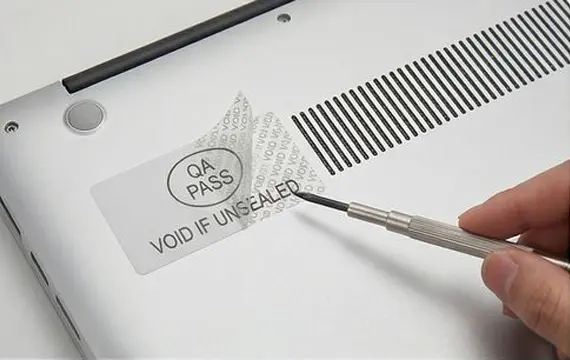
Consumer Electronics and Warranty Validation
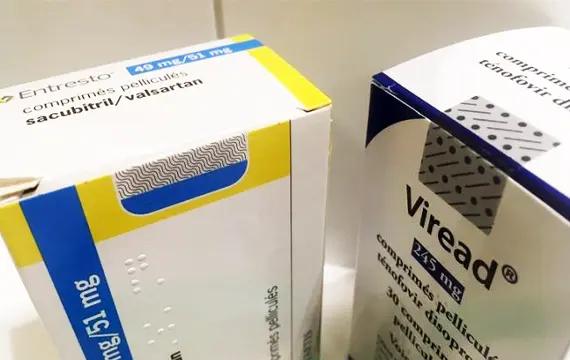
Consumer electronics manufacturers apply security labels across screw holes, battery compartments, and device seams to invalidate warranty claims when unauthorized service is performed.
Void labels and destructible vinyl dominate this vertical, with typical sizes from 5mm×10mm dots to 25mm×50mm seam seals.
The labels must survive ESD handling, reflow-adjacent temperatures, and isopropyl alcohol cleaning during assembly.
VIZLENT supplies major OEMs with polyester-based security labels stickers qualified to UL 969 adhesion and legibility standards, with service life exceeding 5 years under indoor conditions.
Pharmaceuticals and Healthcare
Pharmaceutical packaging requires tamper-evident closure seals that comply with FDA 21 CFR 211.132 and EU Falsified Medicines Directive (FMD 2011/62/EU) requirements.
Security labels on pharmaceutical bottles, cartons, and blister packs must provide first-opening indication visible to end patients.
Clean-release void labels and destructible vinyl seals are preferred, with medical-grade acrylic adhesives certified to ISO 10993 biocompatibility standards.
Serialized 2D data matrix codes printed on security labels enable track-and-trace compliance with the US Drug Supply Chain Security Act (DSCSA) and EU aggregation mandates.
High-Value Logistics, Automotive and Aerospace
In high-value logistics, security labels serve as chain-of-custody evidence for cargo containers, parcels, and pallets.
Holographic seals with sequential numbering provide forensic proof of interference during transit. Automotive and aerospace applications extend to parts traceability where counterfeit components present safety risks.
Security labels on airbag modules, brake components, and aerospace fasteners must comply with IATF 16949 and AS9100 documentation requirements.
VIZLENT supplies tier-1 automotive suppliers with high-temperature polyimide-based security labels rated for under-hood service at continuous 302°F exposure.
How to Choose the Right Security Labels
Selecting the correct security label requires systematic analysis of the substrate, threat model, environmental conditions, and regulatory context.
VIZLENT technical engineers recommend following this six-step specification workflow to ensure the selected security labels deliver the required tamper-evidence performance over the intended service life.
Confirm material type (polycarbonate, glass, powder-coated metal, low-surface-energy plastic) and surface texture. Substrate surface energy dictates adhesive selection; LSE plastics such as polypropylene require specialized adhesive chemistries.
Determine likely attack vectors—peel removal, solvent dissolution, heat defeat, freeze-spray. Each vector dictates a different substrate and adhesive combination for reliable tamper-evidence.
Decide whether adhesive residue on the substrate is acceptable after removal. Medical devices and premium electronics typically require non-residue void labels; asset tracking applications often tolerate residue.
Document temperature range, humidity exposure, UV exposure, and chemical contact. These determine substrate selection (polyester versus polyimide versus vinyl) and laminate requirements.
Map applicable standards such as UL 969, ASTM D3330, ISO 10993, or 21 CFR 211.132. VIZLENT provides compliance documentation at the product-specification stage.
Determine whether overt tamper-evidence is sufficient, or whether covert features—UV ink, microtext, holograms, serialized QR codes—are required for multi-level authentication.
You May Also Need
-
High-tack destructive packaging labels reveal a non-reversible void pattern if breached. Performs securely on corrugated cardboard and LDPE wrap. Designed for secure supply chain logistics.
-
PLA or cellulose facestock with plant-based adhesive; certified compostable per EN 13432 and ASTM D6400. Suited for eco-branded consumer goods, organic food packaging, and sustainable retail applications.
-
Brittle facestock with voiding adhesive leaves residue or pattern on substrate upon removal attempt. Used for asset protection, license authentication, and tamper-evident sealing in regulated industries.
-
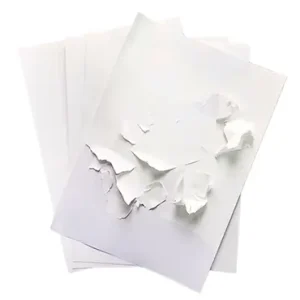
Ultra-brittle vinyl facestock tears into fragments on removal, preventing transfer or reapplication. Used for warranty seals, tamper-evident asset tags, and anti-counterfeit security labeling applications.
-
Brittle destructible facestock in A4 sheet format fractures on removal, preventing label reuse or transfer. Used for tamper-evident sealing, asset security marking, and anti-counterfeit product authentication.
Frequently Asked Questions About Security Labels
What is the difference between security labels and standard labels?
Security labels incorporate engineered tamper-evident or anti-counterfeit features that produce visible, irreversible evidence when removal is attempted. Standard labels are designed for clean removal or permanent adhesion without authentication functions. Security labels stickers also integrate covert elements such as UV ink, holograms, or microtext unavailable in conventional label constructions.
How long do security labels last in outdoor applications?
Outdoor-rated security labels using polyester substrates with UV-stable inks and acrylic laminates typically provide 3 to 7 years of service life. Performance depends on UV index, temperature cycling, and chemical exposure. VIZLENT qualifies outdoor security labels through 1,000-hour accelerated weathering testing per ASTM G154, correlating to approximately 5 years of typical US outdoor exposure.
Can security labels be customized with logos and serialization?
Yes. VIZLENT supports full customization including corporate logos, custom VOID patterns, sequential serialization, variable QR and data matrix codes, UV-reactive covert marks, and embedded microtext. Minimum order quantities for custom security labels start at 5,000 units for standard constructions and 10,000 units for holographic OVD products with custom origination tooling.
Which security label type works best for low-surface-energy plastics?
Low-surface-energy substrates such as polypropylene and polyethylene require specialized modified-acrylic or rubber-based adhesives to achieve reliable bond strength. VIZLENT’s LSE-qualified void polyester security labels achieve minimum 30 oz/inch peel adhesion on polypropylene after 72-hour dwell, verified per ASTM D3330 standard test methodology.
Are VIZLENT security labels compliant with pharmaceutical regulations?
VIZLENT pharmaceutical-grade security labels comply with FDA 21 CFR 211.132 tamper-evident packaging requirements and the EU Falsified Medicines Directive. Adhesive systems carry ISO 10993 biocompatibility documentation, and serialized 2D data matrix codes support DSCSA and EU FMD track-and-trace aggregation for prescription pharmaceutical supply chains.

