
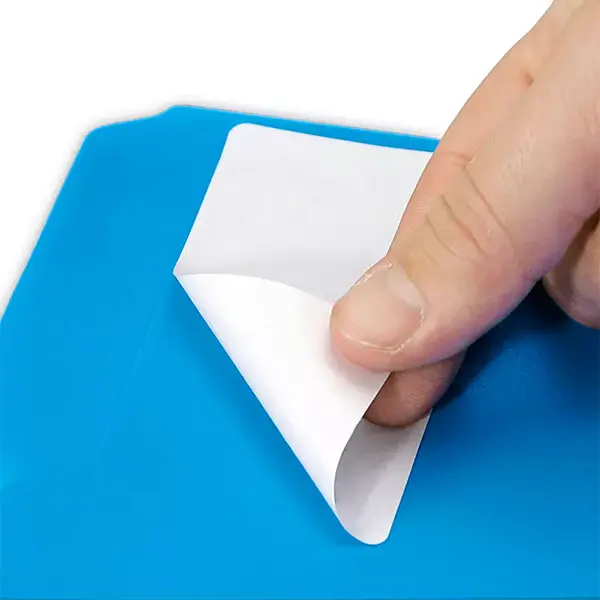
Why Removable Labels Require Specialized Materials
Standard permanent pressure-sensitive adhesives are engineered for long-term bond strength and may leave adhesive residue, tear during removal, or damage delicate surfaces. Removable labels require adhesive systems specifically formulated to provide controlled adhesion across a defined service life.
Many removable label applications involve low surface energy plastics, powder-coated metals, corrugated packaging, glass, painted surfaces, or reusable containers. Each substrate reacts differently to adhesive chemistry, especially when exposed to humidity, refrigeration, UV light, or fluctuating temperatures.
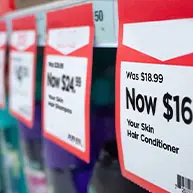
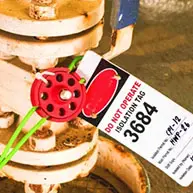
In warehouse and logistics operations, removable labels may need to withstand abrasion from handling while still removing cleanly from totes, pallets, or reusable bins. In healthcare and laboratory environments, labels may require resistance to disinfectants or cold storage conditions without edge lifting. Retail pricing and promotional labels often require short-term adhesion with residue-free removal from packaging or consumer products.
Specialized removable constructions typically combine engineered acrylic or rubber-based removable adhesives with facestocks selected for dimensional stability, printability, and clean peel performance. Release liner selection also affects dispensing performance during high-speed converting and automated application.
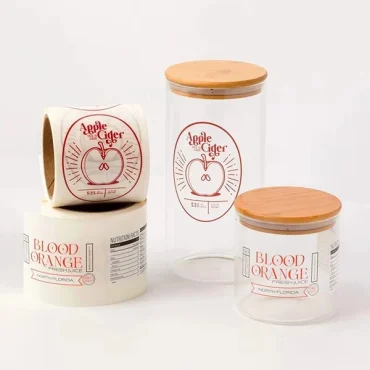
Wholesale Removable Glass Labels Removable adhesive optimised for clean peel from glass and glazed ceramic surfaces No adhesive residue or surface staining on glass after removal Available in paper, polypropylene, and polyester face materials Clear PP and clear PET face options for near-invisible label appearance on glass Suitable for glass bottles, jars, windows, display cases, […]
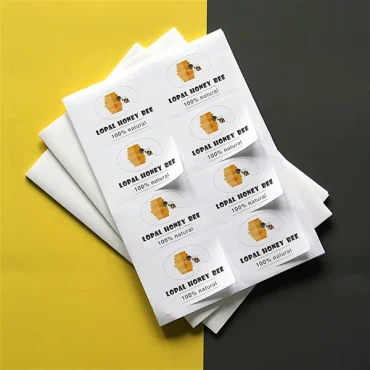
Removable Adhesive Printable Label Paper Compatible with A4 laser printers (mono and colour) and standard inkjet printers Removable adhesive backing — clean peel from paper, cardboard, and smooth surfaces Bright white printable face for sharp, high-contrast text and barcode output Sheet construction designed to feed through printers without warping or jamming Die-cut labels remain on […]
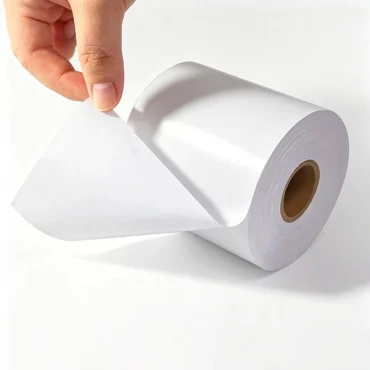
Removable Thermal Transfer Labels for Autoclaves Withstands standard steam autoclave cycles (121 °C / 134 °C, 15–20 min) Removable adhesive peels cleanly from stainless steel and polypropylene after autoclaving Thermal-transfer printable face with resin ribbon for steam-resistant legends No adhesive residue or staining on instrument tray or container surfaces after removal Face material stable through […]
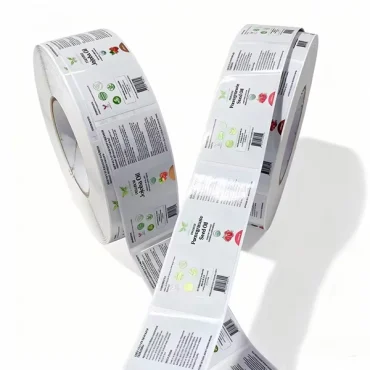
Adhesive Removable Labels Removable pressure-sensitive adhesive — peels cleanly on intended removal No adhesive residue on smooth packaging and product surfaces Face material options: paper, polypropylene, polyester — matched to application Suitable for product packaging, containers, bottles, and retail surfaces Print-compatible: thermal transfer, direct thermal, inkjet, and flexographic Send Your Inquiry Now Residue-Free Removable Labels […]
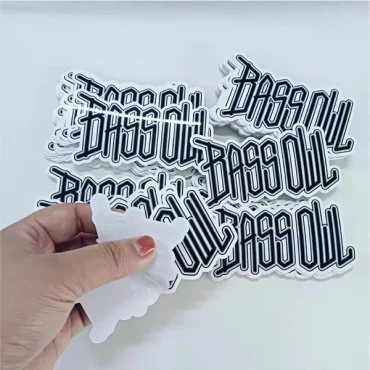
Self Adhesive Removable Stickers Removable pressure-sensitive adhesive — secure in service, clean peel on removal No adhesive residue left on smooth substrates after removal Available in paper, polypropylene, and polyester face stocks Compatible with a wide range of smooth and semi-smooth substrates Printable with thermal transfer, digital inkjet, or flexographic methods Send Your Inquiry Now […]
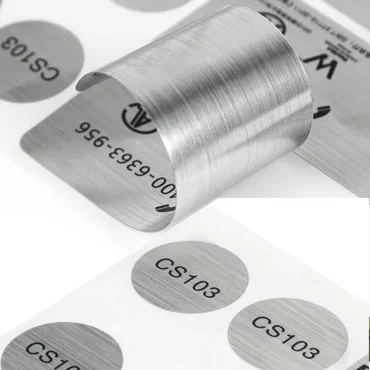
Custom Removable Labels Removable adhesive formulation — peels cleanly without adhesive residue Fully customisable: size, shape, face colour, and print content to specification Available in paper, polypropylene, and polyester face materials Suitable for smooth surfaces: glass, coated paper, plastic, painted metal Adhesive provides sufficient tack for secure in-service hold before intended removal Send Your Inquiry […]
Key Material Properties for Removable Labels
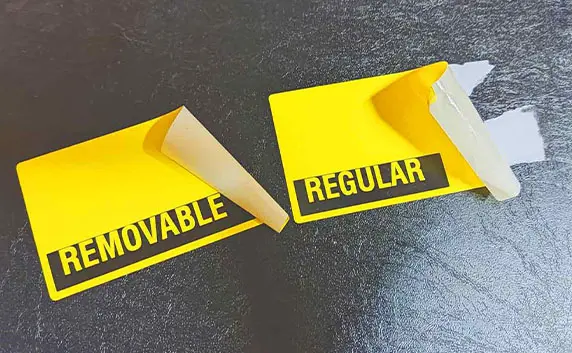
Controlled adhesion refers to the balance between secure initial tack and clean removability. In removable label applications, excessive adhesion can damage surfaces or leave residue, while insufficient adhesion may result in label flagging or premature detachment.
For most industrial removable labels, suppliers typically evaluate peel adhesion using ASTM D3330 test methods. Buyers should review both initial adhesion and aged adhesion values because removable performance can change over time and with environmental exposure.
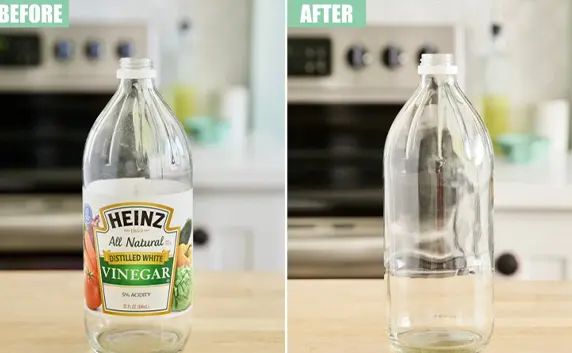
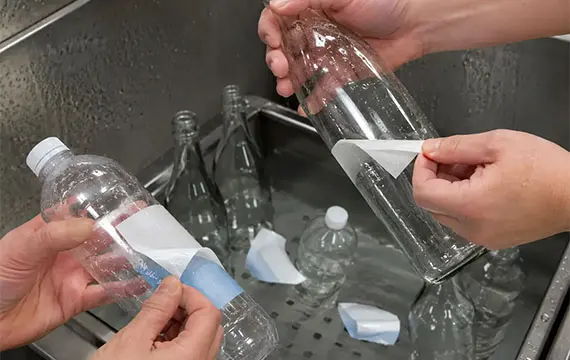
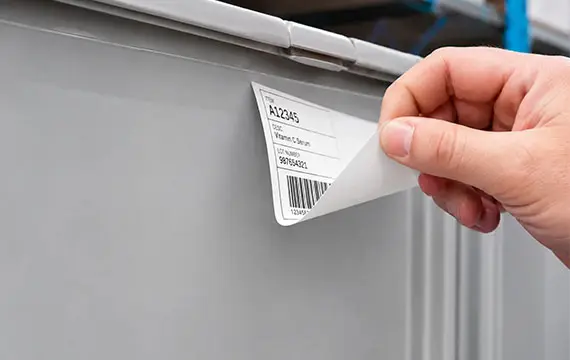
Clean removal performance measures whether the label removes in one piece without adhesive transfer, staining, or substrate damage. This property is especially important for reusable containers, rental equipment, electronics, glass, and painted surfaces.
Material suppliers often test removable performance after specified dwell times and environmental aging conditions. Engineers should verify removal performance on the actual application surface because coatings, texture, and surface energy significantly affect results.
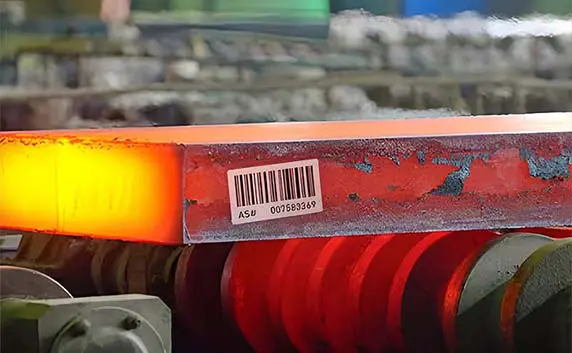
Removable labels are commonly used in refrigerated storage, cold-chain logistics, and warehouse environments where adhesives must maintain performance across wide temperature ranges. Some labels must also tolerate temporary heat exposure during transport or processing.
Typical specifications include minimum application temperature and service temperature range. Cold-temperature removable adhesives are often selected for freezer applications where standard adhesives may become brittle or lose tack.
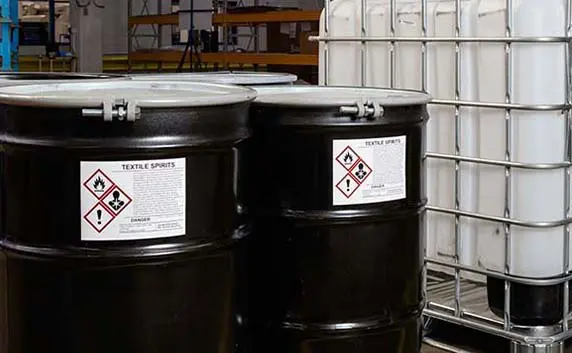
Exposure to cleaners, oils, moisture, alcohols, or industrial chemicals can degrade adhesives and printed information. In laboratories, healthcare settings, and manufacturing facilities, labels frequently encounter wipe-down procedures and repeated handling.
Film facestocks such as polypropylene or polyester are commonly paired with protective laminates or thermal transfer printing systems for improved durability. Buyers should evaluate resistance to the exact chemicals used in their environment.
Common Removable Label Applications


Regulatory & Compliance Considerations
Regulatory requirements for removable labels vary by industry, application environment, and end-use product category. Material selection should align with applicable performance, safety, and documentation standards.
UL 969 — Evaluates marking and labeling systems for durability, legibility, and adhesion performance under environmental exposure conditions commonly used in industrial and electronic applications.
RoHS — Restricts hazardous substances in electronic and electrical products. Label constructions used in electronics may require compliant facestocks, adhesives, and inks.
REACH — Addresses chemical substance safety and reporting requirements within global supply chains, especially for exported products.
FDA 21 CFR — May apply to indirect food-contact packaging or healthcare-related labeling materials depending on end use and migration requirements.
ASTM Standards — Commonly used for testing peel adhesion, shear resistance, environmental durability, and print performance. ASTM D3330 is widely referenced for peel adhesion evaluation.
ISO 9001 — Indicates quality management system controls within manufacturing and converting operations, which may be important for regulated industries.
Compliance requirements should always be validated against the final application environment and regional regulations. Material suppliers typically provide technical data sheets, compliance statements, and testing documentation to support qualification processes.
Frequently Asked Questions
Yes. Adhesive residue can occur if the label exceeds its intended service life, is exposed to excessive heat, or is applied to incompatible surfaces with high surface energy variations.
Textured plastics, low surface energy materials like polyethylene, and certain powder-coated finishes can create inconsistent adhesion and removal performance.
Some removable adhesive systems are specifically engineered for freezer and refrigerated environments, but standard removable adhesives may fail at low application temperatures.
Polypropylene and polyester films are commonly selected when removable labels require improved moisture resistance, abrasion durability, or dimensional stability.
Manufacturers commonly evaluate peel adhesion, shear strength, environmental aging, and clean removability using ASTM-based test methods and application-specific validation testing.

