
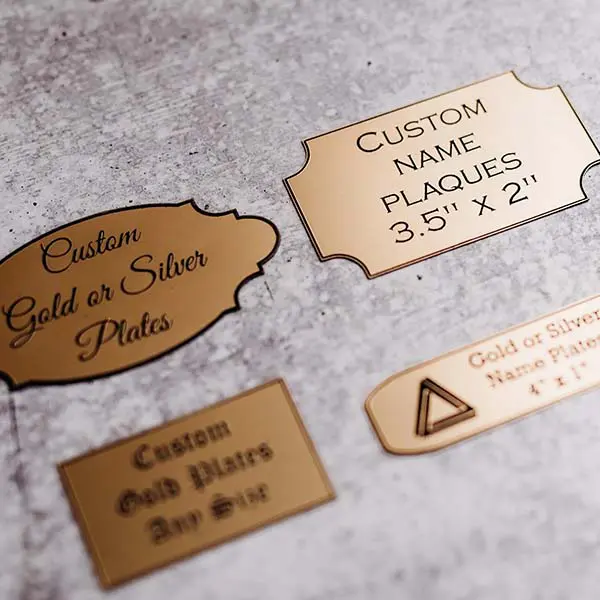
Why Name Plate Labels Require Specialized Materials
Standard paper or general-purpose film labels are often unsuitable for name plate applications because they cannot reliably withstand long-term environmental exposure or maintain adhesion on demanding surfaces. Industrial name plate labels are commonly applied to powder-coated metals, textured plastics, stainless steel housings, anodized aluminum, or low-surface-energy polymers that require engineered adhesive systems.
Many name plate labels must survive elevated operating temperatures, outdoor weathering, repeated chemical exposure, or continuous abrasion from handling and cleaning. In electronics and electrical equipment, labels may also need to resist dielectric breakdown, maintain barcode readability, and comply with permanent marking requirements under UL standards.
Service life expectations are also significantly longer than for temporary identification labels. Depending on the application, name plate labels are typically expected to remain legible and adhered for 5–15 years or more without significant fading, edge lifting, adhesive bleed, or print degradation.
Common environmental challenges include:
- Continuous heat exposure from motors, power supplies, or industrial machinery
- UV exposure in outdoor equipment and solar installations
- Exposure to oils, solvents, fuels, and cleaning chemicals
- High humidity or water immersion conditions
- Abrasion from handling, transport, or maintenance procedures
- Application to textured, curved, or low-energy surfaces
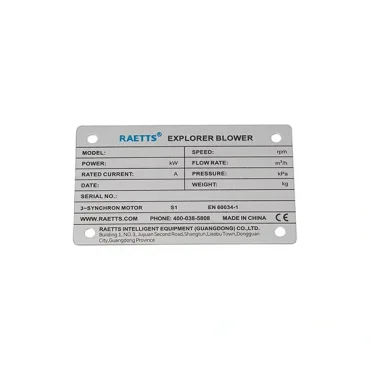
Equipment Nameplate Metal Marker Tags Aluminium or stainless steel construction for corrosion resistance in harsh environments Laser-engraved, stamped, or printed content — permanent and machine-readable Multiple mounting options: self-adhesive, riveted, wire-attached, or cable tied Withstands outdoor exposure, UV, rain, and temperature extremes without degradation Custom dimensions, hole patterns, and shapes to fit existing equipment frame […]
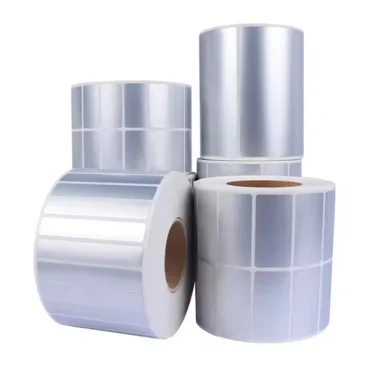
Polyester Strong Adhesive Labels for Name Plate Identification High-tack permanent acrylic adhesive for aggressive bond to challenging surfaces Polyester (PET) face material — tear-resistant, dimensionally stable, and solvent-proof Suitable for rough, textured, powder-coated, and low-surface-energy substrates Maintains bond under vibration, thermal cycling, and mechanical stress Compatible with thermal-transfer, laser, and UV inkjet printing methods Send […]
High Quality Identification Labels Premium polyester face material for mechanical strength and dimensional stability Permanent acrylic adhesive bonds reliably to metal, plastic, and powder-coated surfaces Chemical resistant to oils, solvents, and cleaning agents in industrial environments Compatible with thermal-transfer, laser, and UV inkjet printing Supports sequential asset numbers, barcodes (Code 128, Data Matrix), and QR […]
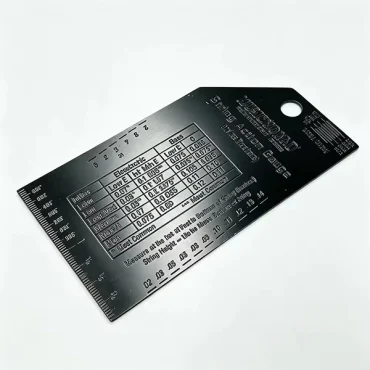
High Quality Nameplate Transformer Labels Resistant to transformer oil (mineral oil and synthetic ester dielectric fluids) High-temperature adhesive maintains bond on transformer tank surfaces up to 130 °C UV-stable face material for outdoor-rated substation and pad-mounted transformer use Printable with rating data: kVA, voltage ratio, impedance, cooling class, serial number Available in matte silver polyester […]
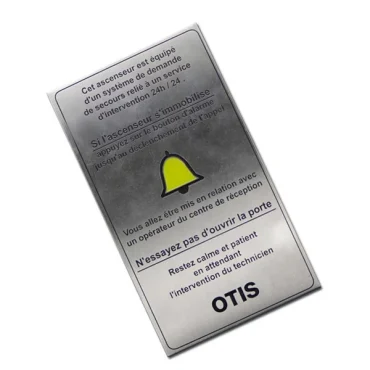
Mechanical Nameplate Custom Stainless Steel Tags Grade 304 or 316 stainless steel construction for corrosion and chemical resistance Custom engraved, etched, or printed content: model number, serial, specifications Suitable for permanent adhesive, riveted, or wire-attached mounting methods Withstands temperatures from -60 °C to +300 °C depending on mounting method Resistant to acids, alkalis, oils, and […]
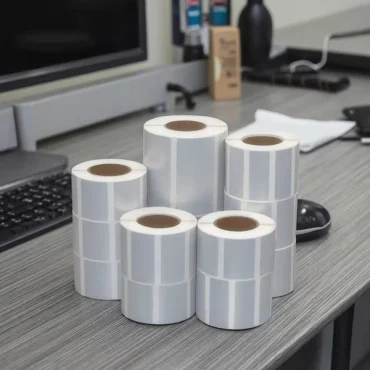
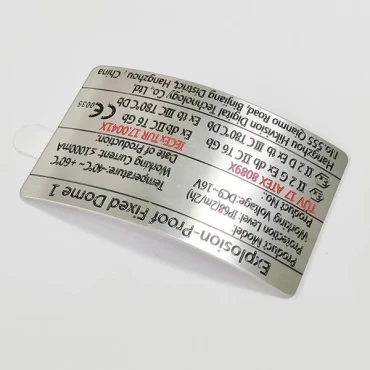
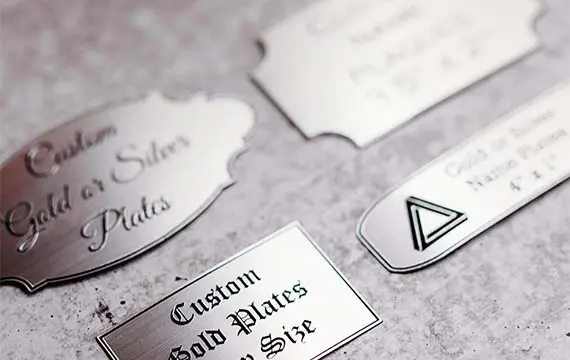
Matte Silver PET Adhesive Name Plate Labels Matte silver polyester (PET) face delivers professional brushed-metal appearance Tear-resistant and dimensionally stable under mechanical and thermal stress Aggressive permanent acrylic adhesive bonds to metal, plastic, and painted surfaces Accepts thermal-transfer (resin ribbon) and laser printing with excellent contrast UV-stable silver pigmentation resists fading under prolonged light exposure […]
Key Material Properties for Name Plate Labels
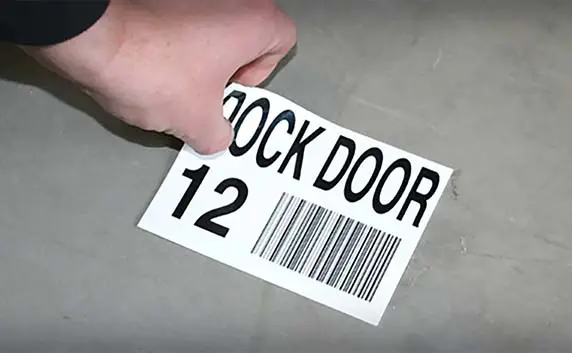
Adhesion strength determines how securely the label bonds to the application surface over time. In industrial environments, labels often encounter vibration, thermal cycling, and surface contamination that can weaken standard adhesives.
For name plate labels, high-performance acrylic adhesives are commonly used because they provide strong long-term adhesion to metals, painted surfaces, and engineered plastics. For difficult substrates such as polypropylene or powder coatings, adhesives designed for low-surface-energy materials are typically preferred.
Buyers should evaluate adhesion performance data such as peel adhesion, tack, and shear resistance under the expected operating conditions.
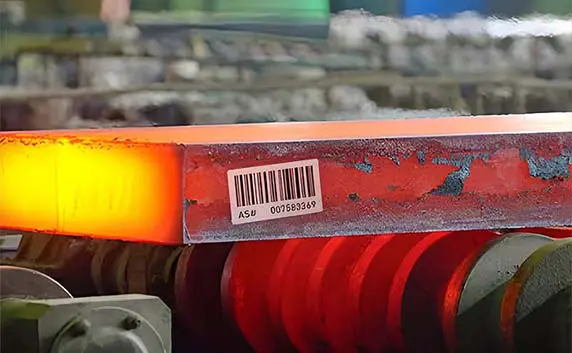
Many industrial name plate labels are exposed to elevated temperatures during equipment operation or manufacturing processes. Labels applied near motors, transformers, battery systems, or industrial controls may experience continuous temperatures exceeding 100°C.
Polyester and polyimide constructions are commonly selected for heat resistance because they maintain dimensional stability and print legibility at elevated temperatures. Typical specifications include continuous service temperature ranges and short-term heat exposure ratings.
When evaluating materials, engineers should confirm both the facestock and adhesive temperature ratings rather than reviewing only the printable surface.
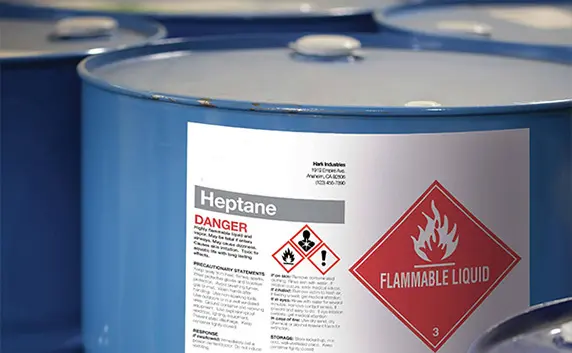
Name plate labels in manufacturing, medical, automotive, and laboratory environments are frequently exposed to oils, alcohols, detergents, hydraulic fluids, and industrial solvents.
Chemical resistance depends on the combined performance of the facestock, topcoat, print ribbon, and ink system. Polyester films with chemical-resistant topcoats are commonly used for thermal transfer printing where solvent durability is required.
Specifications often reference resistance to common cleaning agents, isopropyl alcohol, fuel exposure, or limited solvent contact testing.
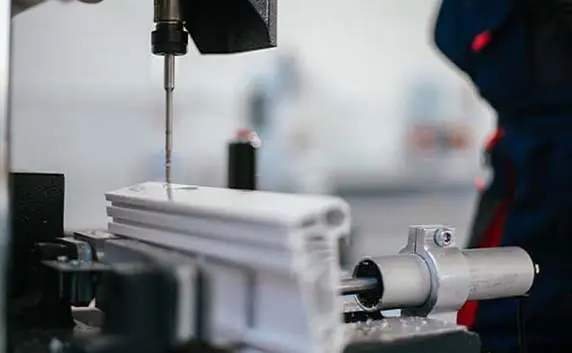
Dimensional stability refers to a label material’s ability to maintain its shape and registration during temperature changes and printing processes. Poor dimensional stability can lead to barcode distortion, edge curl, or lifting.
Polyester films are widely used for name plate labels because they provide stable performance during thermal transfer printing, die cutting, and long-term equipment operation.
Specifications may include shrinkage values, tensile strength, or thermal stability characteristics.
Common Name Plate Label Applications
Typical constructions include white or silver polyester facestocks with permanent acrylic adhesive and thermal transfer printable topcoats. These labels are expected to withstand oil exposure, abrasion, and elevated operating temperatures.
UL-recognized polyester constructions are commonly selected for these applications due to their permanence, heat resistance, and compatibility with variable data printing.
Durability requirements typically include abrasion resistance, cleaning chemical resistance, and long-term barcode readability. Polyester or anodized-look films are frequently used for these applications.
UV-resistant polyester materials with weatherable adhesives are commonly used to reduce fading, cracking, and edge lifting caused by sunlight and moisture exposure.
High-performance polyester constructions with aggressive acrylic adhesives are typically selected for under-hood or heavy-duty operating environments.
These labels are commonly applied to textured plastics or coated metal surfaces and may require thin-profile constructions with high print definition and strong adhesion.
Regulatory & Compliance Considerations
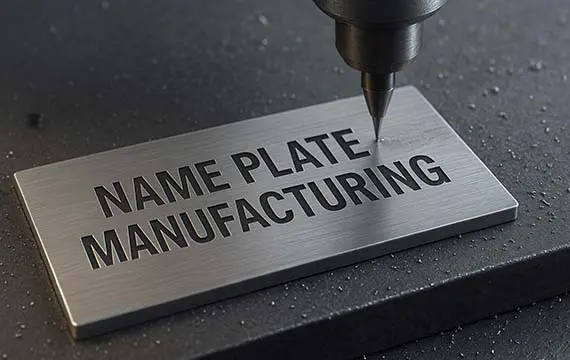
Name plate labels used in regulated industries may require compliance with industry-specific standards and performance requirements.
UL 969 — Covers marking and labeling systems for permanence, legibility, and adhesion under environmental exposure conditions commonly required for electrical and electronic products.
RoHS — Restricts the use of certain hazardous substances in electrical and electronic equipment. Material formulations may need to align with RoHS requirements.
REACH — Addresses chemical substance compliance within the European Union and may affect adhesive or coating formulations.
CSA Certifications — Canadian product safety requirements may reference permanent marking durability similar to UL expectations.
ASTM Testing Standards — Various ASTM methods are used to evaluate adhesion, abrasion resistance, environmental durability, and weathering performance.
ISO Quality Systems — Manufacturers supplying regulated industries often require label materials produced under controlled quality management systems such as ISO 9001.
Compliance requirements vary by application, industry, and geographic market. Material qualification should be reviewed within the context of the finished product and its intended operating environment.
Frequently Asked Questions
Polyester is one of the most widely used materials because it provides strong dimensional stability, chemical resistance, heat resistance, and long-term durability.
Yes, when constructed with UV-resistant facestocks and weatherable adhesives designed for prolonged outdoor exposure and temperature cycling.
Electrical and electronic equipment often require UL-recognized labeling systems to meet permanence and safety marking requirements.
High-performance acrylic adhesives formulated for textured or low-surface-energy surfaces are commonly used for powder-coated equipment.
Yes, when paired with chemical-resistant polyester topcoats and compatible resin thermal transfer ribbons designed for harsh environments.

