
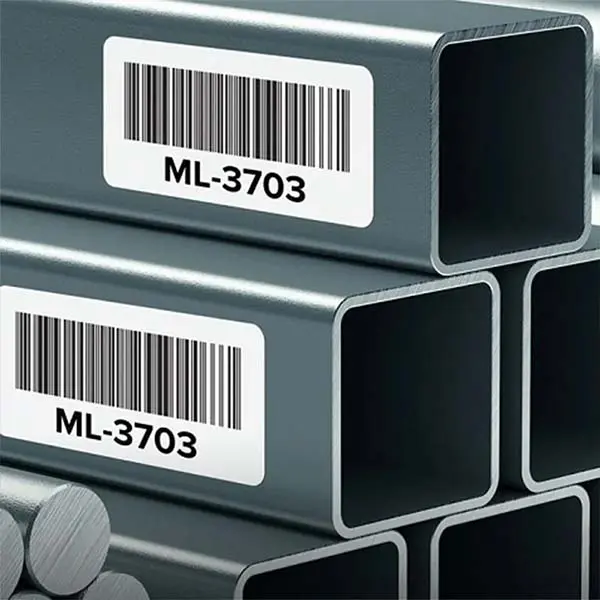
Why Metal Manufacturing Labels Require Specialized Materials
Metal manufacturing operations create some of the most demanding labeling environments found in industrial production. Components often move through multiple processing stages that include cutting, welding, powder coating, plating, machining, stamping, heat treatment, or abrasive blasting. Labels applied before or after these processes must remain attached and readable despite thermal cycling, oil exposure, moisture, and mechanical wear.
Bare metal surfaces also present adhesion challenges. Stainless steel, aluminum, galvanized steel, powder-coated metals, and textured cast surfaces all have different surface energies and contamination risks. Oils, coolants, anti-corrosion films, and metal dust can interfere with adhesive bonding if the material is not designed for industrial substrates.
Many metal manufacturers also require labels for traceability and compliance. Serialized barcode labels, rating plates, inventory labels, and hazard communication markings must maintain readability throughout the product lifecycle. In some sectors, labels may need to meet UL recognition requirements, RoHS restrictions, or chemical resistance standards tied to downstream industrial equipment applications.
Because of these conditions, metal manufacturing labels typically use durable film facestocks, industrial-grade acrylic adhesives, thermal transfer printable coatings, or metalized constructions engineered for long-term durability.
Key Material Properties for Metal Manufacturing Labels
-
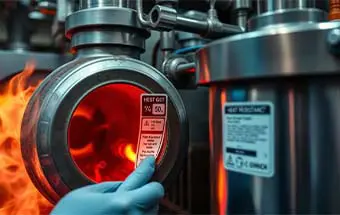
Heat resistance refers to a label material’s ability to maintain adhesion, dimensional stability, and print legibility during elevated temperature exposure. In metal manufacturing, labels may encounter ovens, curing lines, welding environments, or heated metal surfaces.
-
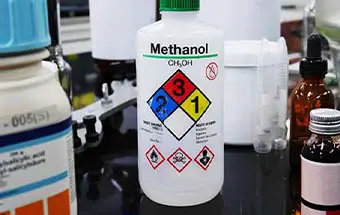
Chemical resistance measures how well a label withstands exposure to solvents, lubricants, degreasers, hydraulic fluids, and cleaning chemicals without losing print clarity or adhesive strength.
-
Printability refers to the material’s ability to consistently produce sharp barcodes, serial numbers, QR codes, and variable production data.
-
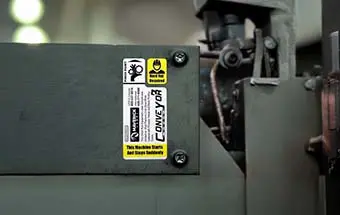
Adhesion performance determines whether the label remains attached to smooth, textured, curved, or coated metal surfaces during long-term service.
-
Weatherability measures resistance to UV exposure, moisture, temperature fluctuation, and outdoor aging.
Common Metal Manufacturing Label Applications
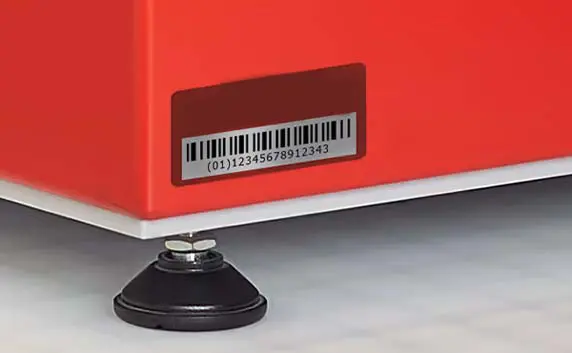
Equipment rating labels are commonly applied to industrial machinery, control panels, fabricated systems, and electrical enclosures. These labels typically contain voltage data, serial numbers, load ratings, and manufacturer identification.
They must survive heat, industrial cleaners, abrasion, and long service lives. Polyester or anodized aluminum-style constructions with permanent acrylic adhesives are frequently used in these applications.
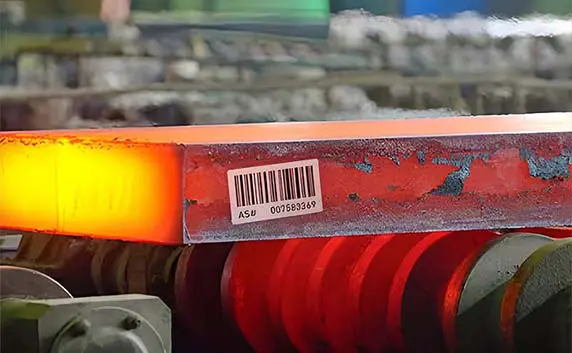
Heat-resistant labels are used for components moving through curing ovens, heat treatment processes, or powder coating lines. In some cases, labels remain attached throughout the manufacturing cycle.
Polyimide label materials paired with high-temperature adhesives are commonly used where elevated temperatures would cause standard film labels to fail.
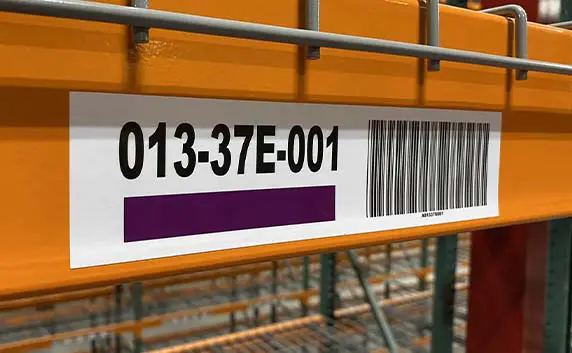
Metal storage racks, bins, and warehouse systems require durable location labels that withstand forklift traffic, repeated scanning, and industrial cleaning.
These labels are often produced using thick polyester constructions with laminate protection or abrasion-resistant topcoats for long-term barcode readability.
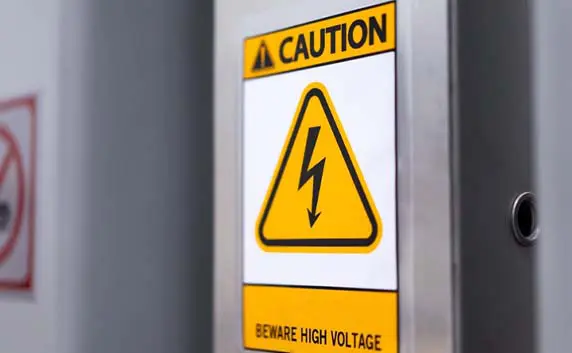
Safety labels identify pinch points, electrical hazards, PPE requirements, and chemical warnings on manufacturing equipment and processing systems.
These labels must maintain visibility despite moisture, UV exposure, cleaning procedures, and heavy industrial use. Durable printable films combined with chemical-resistant inks are commonly specified.

Regulatory & Compliance Considerations
Metal manufacturing labels may need to comply with multiple industry standards depending on the equipment type, end-use market, and operating environment.
UL 969 addresses marking and labeling systems used on durable industrial products. Materials may require testing for adhesion, legibility, and environmental resistance.
RoHS restrictions limit the use of certain hazardous substances in electrical and electronic equipment. Label constructions used in electronics-related manufacturing may need compliant components.
GHS labeling requirements apply to chemical hazard communication within manufacturing and industrial facilities.
ASTM testing standards are commonly used to evaluate adhesion, abrasion resistance, chemical exposure, and environmental durability performance.
Compliance requirements vary significantly by industry and application. Material selection should be validated against the final product environment, print method, and applicable customer specifications.
Frequently Asked Questions
Polyester is one of the most commonly used materials because it provides good heat resistance, chemical durability, and thermal transfer printability for industrial applications.
Yes, high-temperature polyimide and specialty polyester constructions are designed for elevated temperature processes, although the required temperature range should always be verified before use.
High-performance acrylic adhesives are commonly used for oily or contaminated metal substrates because they generally provide stronger long-term adhesion than standard general-purpose adhesives.
Yes, durable thermal transfer polyester labels with resin ribbons are widely used for barcode tracking in machining, fabrication, and warehouse operations.
Some industrial equipment and electrical applications require UL-recognized labeling systems, particularly when labels contain safety, rating, or compliance information tied to certified products.

