
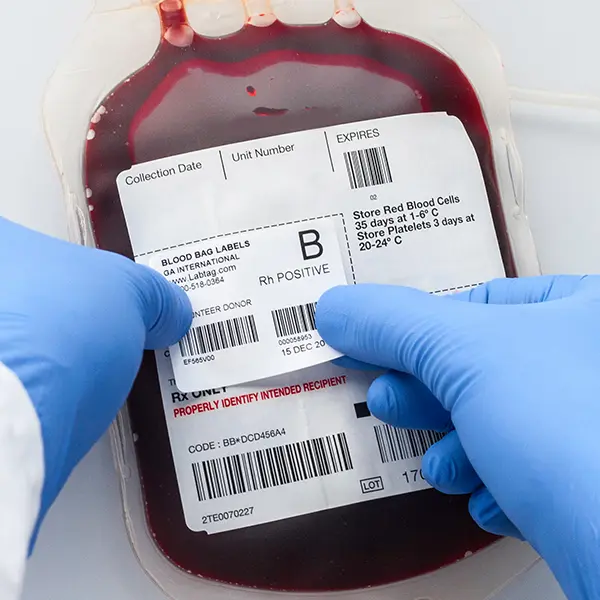
Why Blood Bag Labels Require Specialized Materials
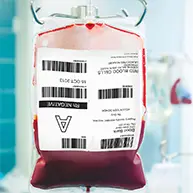
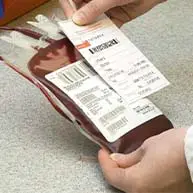
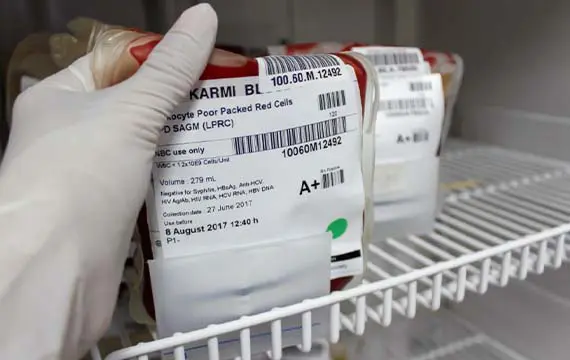
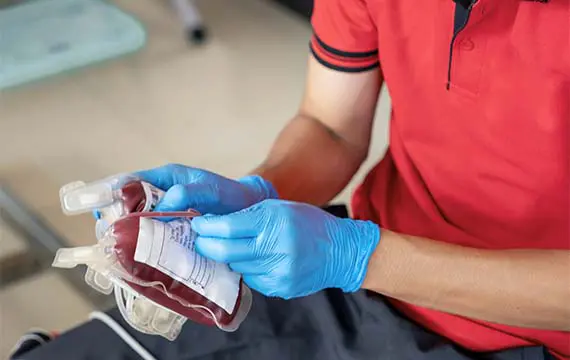
Blood bag labels operate in highly controlled medical environments where traceability and readability are essential throughout the product lifecycle. Unlike standard healthcare labels, blood bag labels are exposed to continuous cold-chain storage, condensation, aggressive handling, and sterilized polymer surfaces that can be difficult for conventional adhesives to bond to consistently.
Blood bags are commonly manufactured from flexible medical-grade PVC or polyolefin films that may contain plasticizers or low-surface-energy characteristics. Labels must maintain adhesion without adhesive bleed, flagging, or tunneling during storage and transport.
These labels are also expected to withstand:
- Refrigerated storage typically around 1°C to 6°C for whole blood products
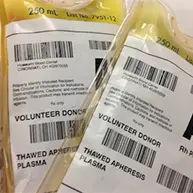
- Frozen plasma storage that may reach approximately -40°C or lower
- Condensation and repeated moisture exposure during handling
- Centrifugation and mechanical stress during blood processing
- Frequent barcode scanning and human-readable verification
Because blood products are tightly regulated, label materials must also support accurate identification systems, long-term print durability, and compatibility with automated blood management workflows.
Key Material Properties for Blood Bag Labels
Common Blood Bag Label Applications

Regulatory & Compliance Considerations
Blood bag labels used in medical and transfusion environments may need to align with multiple regulatory and industry standards depending on the application region and healthcare system.
FDA 21 CFR Part 606: Establishes requirements for blood and blood component labeling, traceability, and recordkeeping in the United States.
ISBT 128: International standard for identification, coding, and labeling of medical products of human origin, including blood products.
ISO 15189: Relevant for medical laboratory quality and competence requirements affecting specimen and blood product identification systems.
ISO 10993: May be referenced when evaluating biocompatibility considerations for medical-related materials and adhesives.
Material qualification should be validated under actual storage, printing, sterilization, and handling conditions before commercial implementation. Regulatory requirements vary by geography and application, so material selection should be reviewed within the organization’s quality management process.
Frequently Asked Questions
Polypropylene and polyester films are commonly used because they provide moisture resistance, dimensional stability, and durable thermal transfer print performance.
Yes. Cryogenic-grade label constructions are designed to remain adhered and legible during low-temperature storage and freeze-thaw exposure.
Thermal transfer printing provides durable variable data printing with strong resistance to smudging, moisture, and handling abrasion in healthcare environments.
Many transfusion and blood banking systems use ISBT 128 for standardized identification and barcode traceability of blood products.
Common causes include using general-purpose adhesives, poor surface compatibility, condensation exposure, and insufficient testing under actual cold-chain conditions.

