

Why Eto-Sterilization Labels Require Specialized Materials
Ethylene oxide sterilization involves exposure to toxic gases, elevated humidity, and temperatures typically ranging from 37°C to 63°C (98.6°F–145°F). Standard paper or adhesive labels often degrade, delaminate, or give false readings. Eto-sterilization indicator labels must adhere to sterilizer trays, medical packaging, and sometimes curved or textured surfaces, all while withstanding:
- Extended exposure to EtO gas without chemical breakdown
- High-humidity environments that can weaken adhesives
- Post-sterilization handling and storage, including cold or moisture exposure
- Compatibility with autoclave or EtO-compatible packaging materials

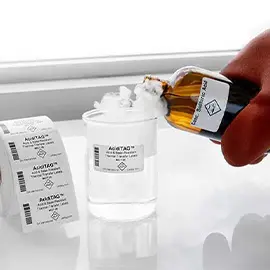
ETO Sterilization Label Chemical Indicator Labels Integrates chemical ETO indicator zone and traceability print fields in a single label Colour-change indicator reacts irreversibly to ETO gas exposure ISO 11140-1 Type 1 external process indicator classification Custom print fields: lot number, expiry date, patient/procedure ID, or barcode Adhesive bonds to Tyvek, paper/poly, and foil sterilization pouch […]

ETO Indicator Labels Color Change from Red to Blue Vivid red-to-blue colour shift confirms ETO gas exposure unambiguously ISO 11140-1 Type 1 external process indicator Colour change is complete, uniform, and permanent after a successful ETO cycle High-contrast red and blue colours readable under all standard clinical lighting Adhesive bonds to Tyvek, paper, poly/paper sterilization […]

EO Gas Indicator Stickers for Medical Sterilization Reacts selectively to ethylene oxide gas with a clear, permanent colour change Sticker format for fast peel-and-apply use in high-throughput sterilization workflows ISO 11140-1 Type 1 external process indicator classification Compatible with 100% EO and EO/diluent gas sterilization systems Adhesive compatible with Tyvek, paper/poly, and medical-grade foil packaging […]

Red Turn Blue Ethylene Oxide Sterilization Indicator Stickers Definitive red-to-blue colour change on EO gas exposure — no ambiguity High-contrast colour shift clearly distinguishable under clinical and warehouse lighting ISO 11140-1 Type 1 external chemical process indicator Irreversible colour change prevents processed packs from reverting to pre-process appearance Adhesive bonds to Tyvek, paper/poly, and foil-laminate […]

Ethylene Oxide Indicator Labels for Sterilization Process Reacts specifically to ethylene oxide gas with a clear, instrument-free colour change ISO 11140-1 Type 1 external process indicator — distinguishes processed from unprocessed items Colour change is stable and legible under standard clinical lighting conditions Adhesive formulated for sterilization pouch materials: Tyvek, paper, poly/paper laminates Resists humidity […]

Medical Sterilization Verification Chemical EO Indicator Labels Colour changes irreversibly on contact with ethylene oxide (EO) gas Provides immediate visual confirmation that packaging has been processed Classified as ISO 11140-1 Type 1 external process indicator Compatible with standard EO sterilization cycle parameters Adhesive bonds to Tyvek, paper, foil, and poly/paper sterilization pouch materials Send Your […]
Key Material Properties for Eto-Sterilization Labels


Common Eto-Sterilization Label Applications
In numerous sectors, polycarbonate sheets are used to make products and components. It serves several industries, including the electrical industry, automotive industry, glazing,mobility aids, optical, greenhouses and nurseries, and law enforcement.
Polycarbonate sheets are used in different electrical accessories and hardware due to their lightweight and impact resistance. At the same time, the automotive industry uses polycarbonate sheeting because of its lightweight, flexibility, and heat resistance.
Lower prices, higher performance, and energy savings are advantages of plastic sheeting over glass in glazing applications. Its optical properties and excellent mechanical strength make clear polycarbonate an appropriate material for machine guards and lenses.
WeProFab polycarbonate sheet solutions are your best choice for your upcoming project needs.


Regulatory & Compliance Considerations
ISO 11135: Specifies EtO sterilization process validation, influencing label color change reliability.
ASTM E2159: Defines chemical indicator performance for sterilization monitoring.
FDA Guidance: Ensures labeling materials do not introduce contamination or compromise device safety.
RoHS Compliance: Ensures labels are free from restricted hazardous substances.
GHS Compatibility: Labels on sterilized chemicals or reagents must conform to hazard communication standards.
Frequently Asked Questions
Yes, labels with low-surface-energy adhesives are designed to adhere to most plastics used in medical devices.
Typically, indicator labels maintain visible color change for 12–24 months under proper storage.
Most are specifically formulated for EtO; check the manufacturer for compatibility with steam or gamma sterilization.
Labels generally withstand 37°C–63°C without adhesive failure or ink degradation.
Labels themselves are not “approved,” but materials should comply with FDA guidelines for indirect food contact and medical device labeling.